Aqsarniit Myth Meaning & Symbolism
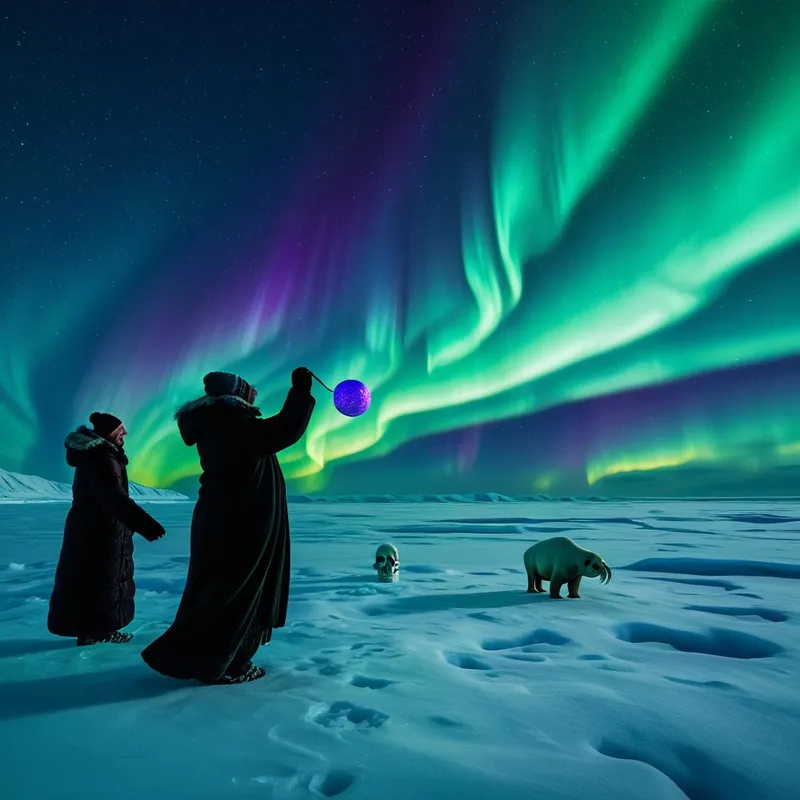
The myth of the Aqsarniit, the Northern Lights, tells of spirits playing a celestial ball game with a walrus skull, illuminating the sky with their joy and the souls of the departed.
The Tale of Aqsarniit
Listen, and let your breath still. In the time when the world was all ice and long, long night, when the sun was a memory and the cold a living presence, the sky was not empty. It was a great, dark dome, a skin of obsidian stretched over the sleeping earth. And beneath it, in the lands of snow that never melt, the People waited.
They waited for the seal, for the caribou, for a break in the endless winter. But sometimes, they waited for a different kind of light. Not the hard, white light of the moon on snow, but a light that moved. A light that breathed.
Far to the north, in a place beyond the edge of all maps, where the ice meets the sky and the sky meets the spirit world, there is a great plain. This is not a plain of earth, but of something finer, something between worlds. Here, the spirits of those who have passed from the land of the living do not rest in silence. They are filled with a joy so immense it cannot be contained by memory or form. What do spirits, brimming with such vitality, do?
They play.
They find the skull of a great walrus, a creature of both sea and will, its bone bleached by time and polished by the winds of the upper air. This skull becomes their ball. And they play a game. A game of kick-ball, of laughter, of pure, unburdened movement. They run across that celestial plain, their feet stirring not dust, but light. They kick the walrus skull high, and as it arcs through the thin, cold air of that high place, it trails sparks. Those sparks are not of fire, but of spirit-essence, of sheer, exuberant joy.
And as they play, their game paints the dark dome of our world. The trails of light from their kicks, the shimmering glow from their joyful forms, the radiant energy of their play—it bleeds through the skin of the sky. It drips down in great, slow, undulating curtains of green and violet, of rose and gold. It ripples like a silent river. It dances.
The People, huddled in their snow houses or standing on the endless white, look up. They see the Aqsarniit. They see the spirits at their game. And sometimes, if the light is very bright and the patterns are very clear, they say you can hear a sound. Not with your ears, but in your bones. A soft, rustling, crackling whisper—the sound of spirit-feet on frost, the sound of the walrus skull tumbling through the ether. It is the sound of life, continuing. It is the proof that the great journey does not end in darkness, but in a game of light.
Cultural Origins & Context
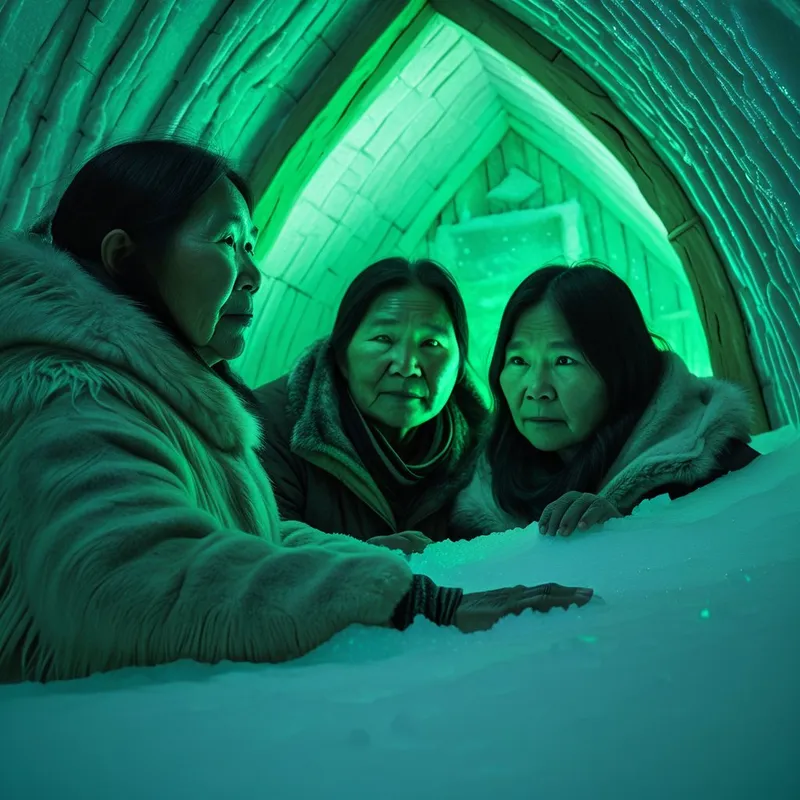
The myth of the Aqsarniit is not a single, canonical story, but a living narrative thread woven through the oral traditions of Inuit peoples across the Arctic. It belongs to the time before written word, carried on the breath of elders—the aaniat—in the warm, close darkness of the winter iglu. Its telling was not mere entertainment; it was an act of cosmology, a way of mapping the incomprehensible.
In a world defined by extreme environmental pragmatism, where every phenomenon from animal migration to weather patterns demanded a practical explanation, the aurora borealis presented a profound mystery. It was visible, awe-inspiring, yet utterly beyond physical reach or utility. The myth provided a framework that was both relatable and respectful. By attributing the lights to the spirits of the departed engaged in a joyful game, it accomplished several vital cultural tasks. It demystified a potentially frightening celestial display, transforming it into a sign of ancestral continuity and benevolence. It reinforced the Inuit worldview where the boundary between the physical and spiritual worlds is porous and interactive. Furthermore, it served as a gentle pedagogical tool about death, reframing it not as a final disappearance, but as a transition to a different state of being—one that could still interact with, and even beautify, the world of the living.
Symbolic Architecture
At its core, the myth of the Aqsarniit is a profound symbolic equation: Death = Play = Light. This triad dismantles our deepest fears and reorders our understanding of existence.
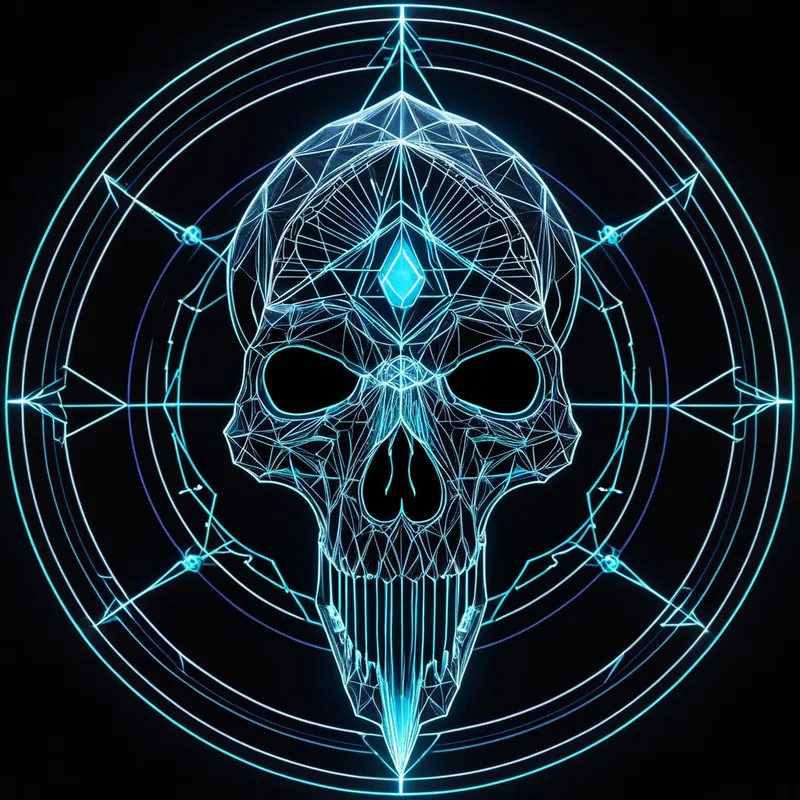
The walrus skull is the pivotal symbol. The walrus is a creature of immense power, a provider of food, tools, and life for the community. Its skull represents the physical remnant of that life-giving force—the structure that remains after the flesh is gone. In the spirit world, this bone, this anchor of a past life, becomes the focal point of a new activity. It is not discarded or mourned; it is played with. This symbolizes the alchemy of memory and legacy. What was once the anchor of a physical struggle (hunting, survival) becomes the centerpiece of spiritual joy.
The most profound transformation is not from one thing into another, but from utility into beauty, from burden into play.
The game itself is non-competitive, purposeless in the best sense. It has no trophy, no end goal but the activity. This represents the soul freed from the necessities of the physical plane—hunger, cold, survival. The spirit’s essential energy, its animating principle, is no longer tied to biological function and is thus released into pure expression. The resulting <abbr title="The Northern Lights, the visible manifestation of the spirits' game."">aurora is that expression made visible: psyche externalized as dazzling, dynamic art.
The Dreamer's Resonance
When the pattern of the Aqsarniit stirs in the modern dreamer, it often surfaces during periods of significant ending or release. It is the psyche’s attempt to process loss, not through grief’s lens, but through transformation’s.
To dream of watching a breathtaking, silent light display in a vast, cold landscape may signal that the dreamer is witnessing, from a place of awe and slight detachment, a major shift in their own inner world. An old identity, a finished relationship, a concluded phase of life—these are the "spirits" of our personal past. The dream suggests these parts are not gone; they have transitioned to a different plane of our psyche and are now engaged in a new, energetic dynamic.
Dreaming of being among the players, kicking a luminous object across a strange plain, is more active. It indicates a direct, somatic engagement with this process of psychic transmutation. The dreamer is not just observing the release of old energies but is actively participating in repurposing them. The somatic feeling here is often one of weightlessness, exhilaration mixed with strangeness—the body learning the rules of a new, less dense reality.
Alchemical Translation
For the individual on the path of individuation, the Aqsarniit myth is a masterful map of psychic alchemy. The process it outlines is threefold.
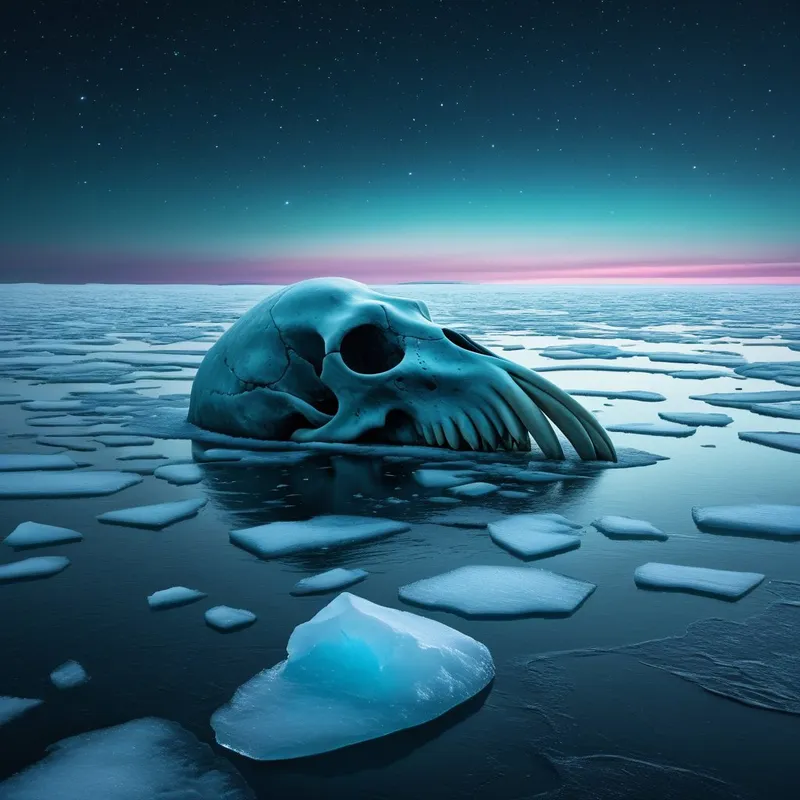
First, Recognition of the Skull: This is the conscious acknowledgment of what has "died" within us—a defunct belief, a outgrown persona, a buried trauma. It is seeing the bare, white structure of that experience without its emotional flesh. This stage requires honest, unflinching introspection.
Second, The Invitation to Play: Here lies the critical, revolutionary shift. Instead of analyzing the "skull," lamenting it, or building a shrine to it, the ego must learn to play with it. Psychologically, this means engaging with these core structures of our past not in therapy-mode alone, but with curiosity, creativity, and even humor. What new idea can be bounced off this old belief? What joyful expression can be built upon this old pain? This is the work of the Magician archetype.
The alchemical fire is not only the heat of suffering, but also the spark of playfulness.
Finally, Projection as Illumination: As we engage in this inner play, the energy that was once locked in conflict or stasis is liberated. It rises, not as chaotic emotion, but as a new capacity—creativity, compassion, wisdom. This becomes our personal <abbr title="The Northern Lights, the visible manifestation of the spirits' game."">aurora, the unique light we project into our world. It is the beauty that emerges when we stop fighting our ghosts and instead, invite them to a game. The myth assures us that our deepest endings are not final; they are the prerequisite for the most breathtaking displays of our spirit.
Associated Symbols
Explore related symbols from the CaleaDream lexicon: