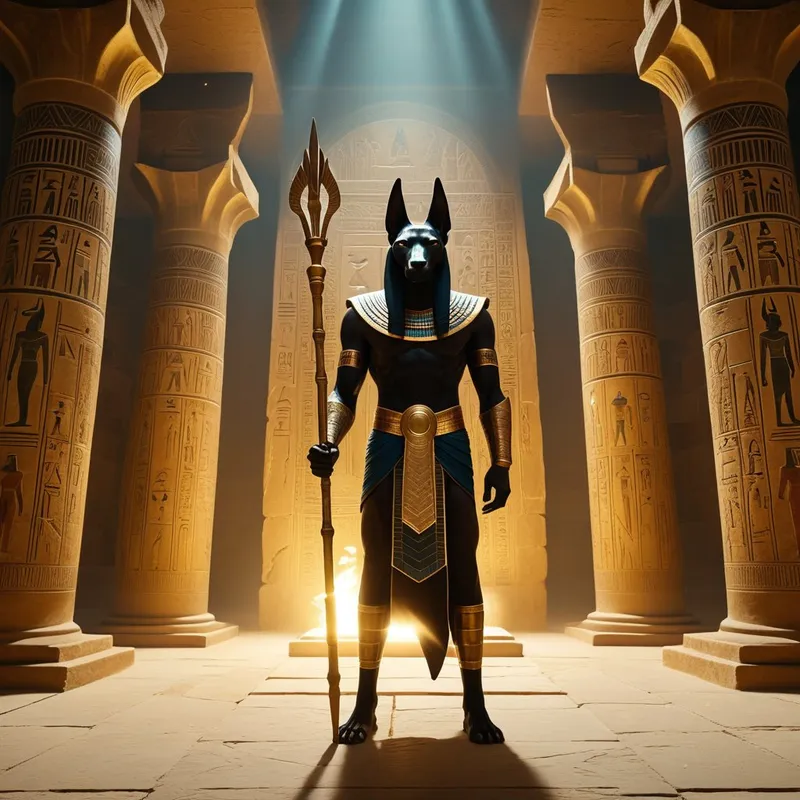
Anubis Myth Meaning & Symbolism
The jackal-headed god who weighs the heart against a feather, guiding souls through the underworld and guarding the threshold between life and death.
The Tale of Anubis
Listen, and hear the tale whispered on the hot, dry winds that sweep across the black land. Before the first pyramids pierced the sky, in the time when gods walked the earth and the Nile’s flood was the pulse of the world, there was a guardian of the silent places.
He is born of twilight, of the moment the sun drowns in the sand and the world holds its breath. His father is the burning, hidden sun, Set, lord of chaos. His mother is the velvet night, Nephthys, she of the secret lament. From this union of fire and shadow comes a child with the sleek, knowing head of a desert jackal and the form of a man, powerful and swift. He is named Anubis.
He is found not by his chaotic sire, but by his aunt, the great mother Isis, who sees in his golden eyes not monstrosity, but purpose. She raises him in the reeds, teaching him the secrets of preservation, of herbs and natron, of the sacred art of keeping form when the spirit has flown. His playground is the necropolis; his companions, the silent dead.
His great task comes with a wail that shakes the heavens. The good king Osiris, brother to Set and husband to Isis, is betrayed. Tricked, trapped, and dismembered, his body parts scattered across the Two Lands. Isis, with her sister Nephthys, searches with a grief that turns the Nile to salt. It is Anubis, the jackal-child, who finds them. With nimble, careful paws that are also hands, he gathers the pieces. He does not simply reassemble; he transforms. He invents the rite of mummification, wrapping the king in linen spun from moonlight, anointing him with oils of cedar and myrrh, speaking the first words of embalming that would echo for millennia. Under his touch, the broken king becomes the first mummy, whole, eternal, ready for the journey.
And so, Anubis claims his throne—not in the sunlit palaces of the living, but in the Hall of Ma'at, in the silent, star-filled depth of the Duat. Here, every soul that passes from the world of breath must come before him. The air is thick with incense and the scent of fear. The soul, the ka, stands trembling. Anubis, his obsidian form absorbing the torchlight, is motionless. With infinite care, he places the mortal heart—heavy with a lifetime of deeds, loves, and regrets—upon the golden pan of his scales. Upon the other, he places the feather of Ma'at, the feather of truth, lighter than a thought.
All of eternity hangs in the balance. If the heart is heavier than the feather, burdened by falsehood and corruption, a monstrous beast, part crocodile, part lion, part hippopotamus, waits to devour it—the final end. But if the heart is in balance, if it is as light as truth itself, Anubis gives a slight, almost imperceptible nod. He becomes the guide, the psychopomp, leading the justified soul through the treacherous, beautiful landscapes of the Duat, to the Field of Reeds, to stand before the resurrected Osiris. Anubis does not judge; he measures. He is the guardian of the threshold, the master of the sacred transition, the one who ensures the integrity of the journey from what is, to what forever shall be.
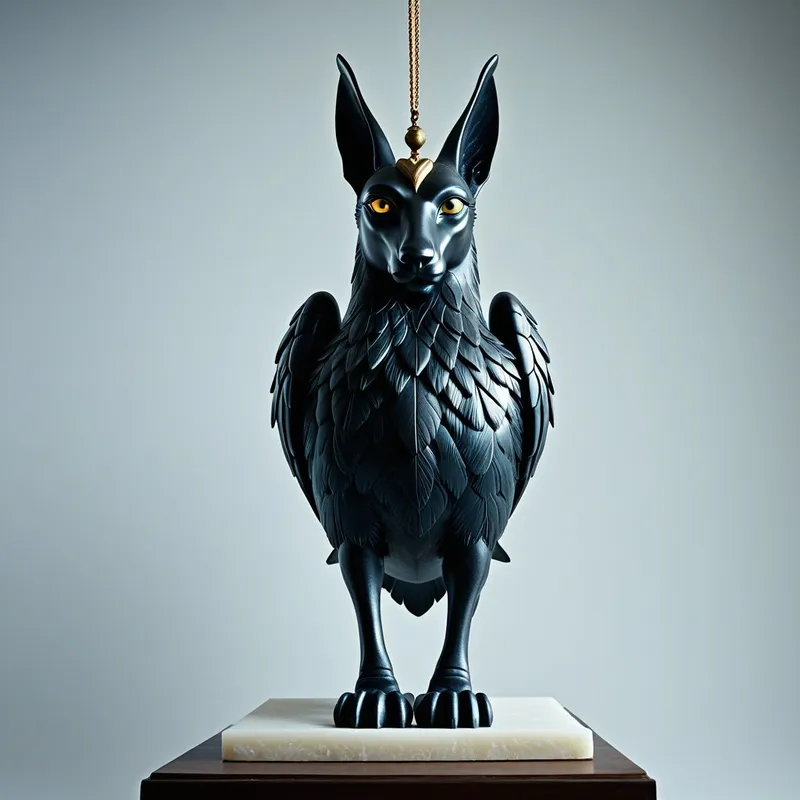
Cultural Origins & Context
The myth of Anubis is woven into the very fabric of ancient Egyptian civilization, a culture uniquely and intimately preoccupied with the architecture of death as a mirror to life. His worship stretches back to the Predynastic Period (c. 6000–3150 BCE), making him one of the oldest deities in the Egyptian pantheon. He was not a distant, philosophical concept but a daily, practical presence. His priests were the embalmers, the morticians, the technicians of eternity who performed the elaborate 70-day mummification rites, during which they may have worn jackal masks to channel the god’s power and protection.
The myth was passed down not as a single, canonical text, but through a constellation of sources: the Pyramid Texts carved into royal burial chambers, the Coffin Texts for the nobility, and most famously, the Book of the Dead, a personalized guidebook placed in tombs. These were not mere stories but operational manuals for the soul, with Anubis as the chief operator. His primary cult center was at Cynopolis, "the City of the Dog," but his presence was felt in every tomb, every necropolis. Societally, the myth of Anubis served a profound dual function: it provided a detailed, reassuring map for the terrifying unknown of death, and it enforced a powerful moral code for the living. To live a life in ma’at (truth, order) was to ensure a favorable weighing. The myth was the ultimate existential accountability partner.
Symbolic Architecture
Anubis is not the god of death, but the god of the dead and the process of dying. This is a critical distinction. He symbolizes the necessary intermediary stage, the sacred liminal space where transformation occurs.
His jackal head is the master symbol. Jackals are scavengers of the desert edges, creatures intimately associated with cemeteries on the fringes of the cultivated land. Yet the Egyptians did not see this as morbid, but as protective. By aligning their guardian of the dead with the creature that frequented burial grounds, they effectively domesticated the threat. Anubis’s jackal form symbolizes keen perception (he sees in the dark), fidelity (he guards), and a connection to the untamed, instinctual borderlands between the civilized world and the wild unknown of the afterlife.
The scales do not measure good versus evil, but the weight of a life lived in alignment with its own essential truth against the gravity of self-deception.
The Weighing of the Heart is the core psychodrama. The heart (ib) was considered the seat of intellect, emotion, and conscience—the record of the self. The feather of Ma’at represents the fundamental principle of cosmic order, truth, and harmony. The ritual is an image of profound self-confrontation. The monster Ammit awaits not as a punishment from an external god, but as the natural consequence of a life out of balance with reality itself. Anubis, as the facilitator, represents the objective, non-judgmental aspect of consciousness that must witness this ultimate audit of the soul.
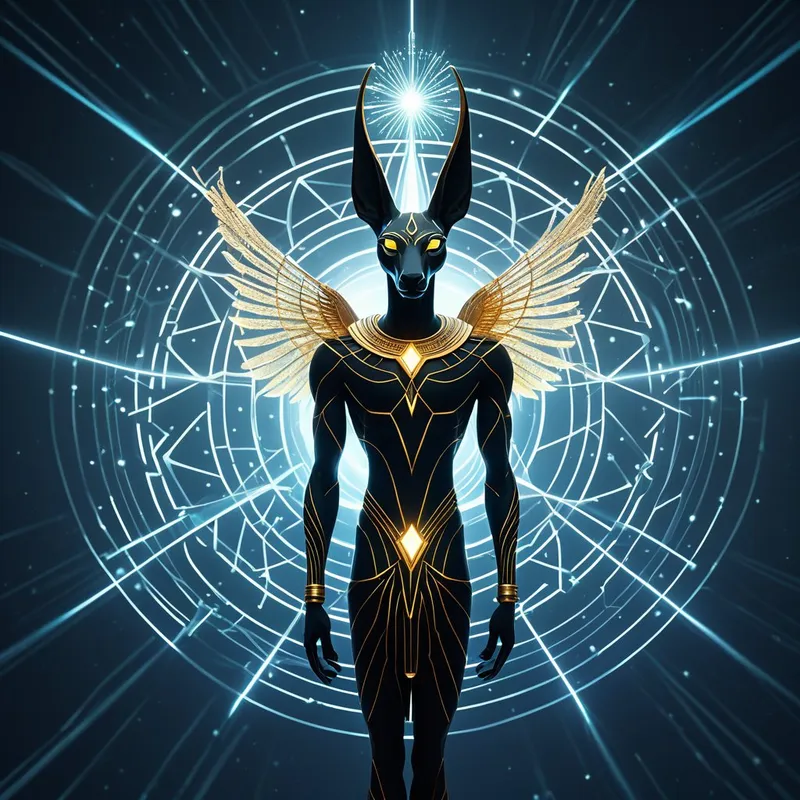
The Dreamer's Resonance
When Anubis appears in the modern dreamscape, he rarely comes in full Egyptian regalia. He manifests as the pattern he represents: the Psychopomp at a crossroads. To dream of a dark, guiding canine figure, a silent guardian at a threshold, or of being subjected to a test or measurement of one’s worth, is to dream the Anubis archetype.
Psychologically, this signals a profound interior transition. The dreamer is navigating a death—not a physical one, but the end of an identity, a relationship, a career, or a deeply held belief. The somatic feeling is often one of weight, anxiety in the chest (the "heart" being weighed), and a sense of being in a liminal, in-between state—jobless, between relationships, in recovery. Anubis dreams occur when the psyche is conducting its own "weighing of the heart," assessing what from the old self is authentic and essential (the feather-light truth) and what is a heavy burden of outdated patterns, lies we tell ourselves, or unprocessed grief (the weight that attracts Ammit). The dream is an invitation to self-honesty, to prepare for a journey into an unknown part of oneself.
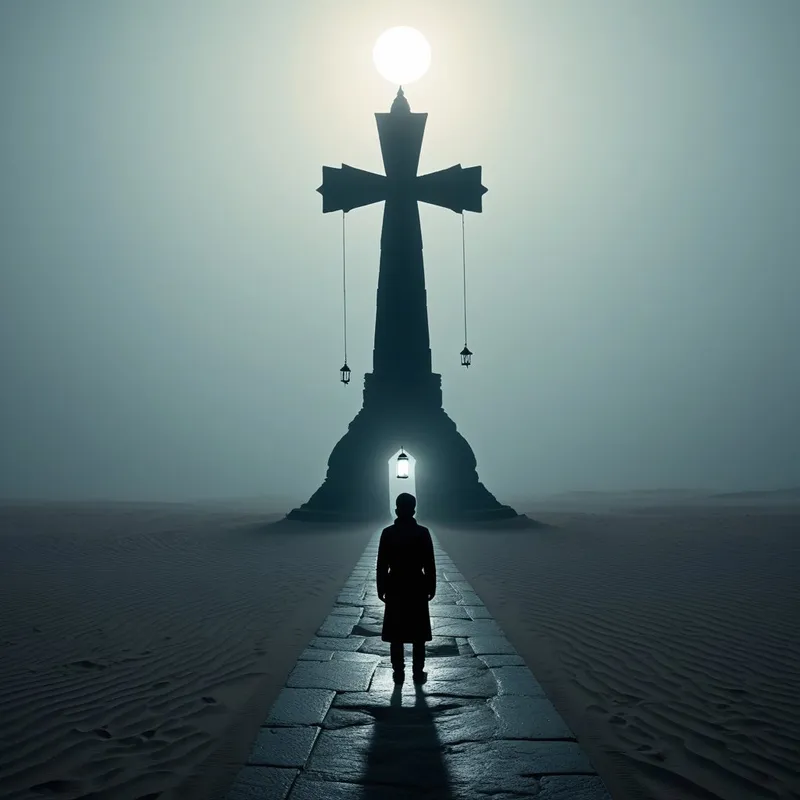
Alchemical Translation
The myth of Anubis is a precise alchemical manual for the process of psychic individuation—becoming an integrated, whole self. It models the necessary "death" and "embalming" of the ego to allow for the birth of the conscious Self.
First, the Dismemberment (The Osiris Crisis): Life inevitably shatters our naive, unified identity. We experience betrayal, failure, loss—the breaking apart of who we thought we were. This is not pathology; it is the necessary prelude.
Second, the Embalming (Anubis’s Art): This is the conscious work of psychic preservation. Instead of letting the shattered pieces rot in denial or despair, we must gather them with care. This is the therapeutic, reflective work: examining our memories, honoring our grief, "wrapping" our experiences in understanding and narrative. It is holding the form of our pain long enough to learn from it, to transform it from raw wound into sacred artifact.
The ultimate goal is not to avoid the scales, but to live a life so consciously integrated that the heart meets the feather without a tremor.
Third, the Weighing (The Hall of Two Truths): This is the ongoing, moment-to-moment practice of inner discernment. It is the conscious questioning: Is this action, this thought, this relationship in alignment with my deepest truth (ma’at), or is it a weight of fear, people-pleasing, or illusion? It is the cultivation of an inner Anubis—a witness consciousness that can observe our impulses and choices without immediate identification or judgment.
Finally, the Guidance (The Psychopomp’s Path): When we pass through this inner ordeal, when we have faced our shadows and integrated our truths, the Anubis within does not abandon us. It becomes our guide into the new, unknown territory of a more authentic life. He leads us from the tomb of the old self to the "Field of Reeds"—a state of psychic equilibrium and renewed vitality. In this alchemy, Anubis transforms from an external god of the dead to the internal architect of the soul’s rebirth.
Associated Symbols
Explore related symbols from the CaleaDream lexicon: