
Ambrosia & Nectar Myth Meaning & Symbolism
The divine sustenance of the Olympian gods, granting immortality and eternal youth, a symbol of ultimate grace and the unattainable nourishment of the soul.
The Tale of Ambrosia & Nectar
Breathe the air of a world before time was a chain. Here, on the sun-drenched shoulders of Mount Olympus, the very ether is thick with a fragrance beyond mortal comprehension—a scent of ripened stars, of honey distilled from eternal spring, of a sweetness that speaks not to the tongue, but to the soul. This is the aroma of ambrosia. And with it comes the sound of pouring, a liquid music like sunlight given voice: this is nectar.
The halls of the gods are not built of stone, but of laughter and light. Here, Zeus holds court, his form radiating a power that bends reality. Athena’s eyes hold the clarity of a polished mirror, and Apollo’s very presence is a chord struck from a golden lyre. But their radiance, their un-aging vitality, is not merely their birthright; it is continually fed. Handmaidens, graceful as thought, move among them. They bear platters heaped with ambrosia—a substance that looks like the most perfect food, yet glows with a soft, internal luminescence. They pour nectar from pitchers that never empty into chalices that catch the everlasting dawn.
This is their daily truth, their divine metabolism. To consume ambrosia is to have one’s divine flesh reaffirmed; to drink nectar is to have one’s ichor—the golden blood of the gods—replenished. It wards off the creeping shadow of Thanatos, the decay that claims all mortal things. Without it, even a god might know frailty.
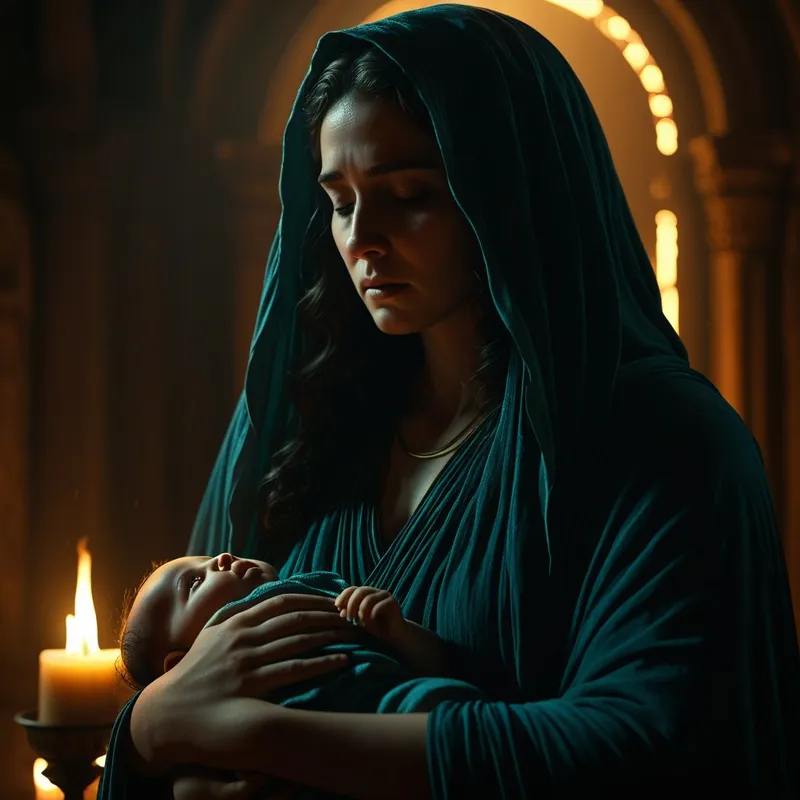
But this divine sustenance is not always contained on the mountain. Sometimes, it flows into the mortal realm as the ultimate act of grace or desperate stratagem. When the goddess Demeter, cloaked in mortal grief for her lost daughter Persephone, served as a nurse in a king’s house, she sought to gift the infant prince, Demophoön, with immortality. Night after night, in secret, she anointed him with ambrosia and held him in the hearth’s sacred fire to burn away his mortal coil. The scent of divinity filled the dark room—a scent of eternal wheat and undying blossoms. It was a ritual of love so profound it sought to defy the very order of the world.
And in the great war, the Titanomachy, when the hero Heracles fought alongside the gods, his valor earned him a taste of this celestial bounty. As he labored under the weight of the heavens for Atlas, the aroma of ambrosia carried on the high winds, a promise of the strength that flows from a source beyond exhaustion. It is the secret ingredient, the hidden grace, the boundary stone between what dies and what endures. To taste it is to know, for a fleeting instant, what it is to be a star—forever burning, forever whole.
Cultural Origins & Context
The myth of ambrosia and nectar is woven into the very fabric of ancient Greek epic poetry, primarily through the works of Homer and Hesiod. It was not a standalone tale with a single narrative, but a fundamental piece of theological world-building. Bards and rhapsodes would sing of the gods feasting in their halls, and the mention of ambrosia and nectar served a crucial function: it established and maintained the ontological difference between gods and mortals.
In a culture where the gods were anthropomorphic—sharing human form and emotions—a tangible, physical explanation for their immortality was necessary. Ambrosia and nectar provided that. They were the divine “technology” of eternal life. Their societal function was to reinforce a cosmic hierarchy. Mortals offered the smoke and fat of animal sacrifices (knissa) to the gods; in turn, the gods consumed their own, far superior sustenance. This created a reciprocal yet distinctly unequal relationship, a core concept in Greek piety. The myth also explained rare moments of transcendence or divine favor, such as the anointing of a hero or a chosen mortal, framing immortality not as a right, but as a rare and perilous gift.
Symbolic Architecture
At its core, ambrosia and nectar symbolize the nourishment of the essence. They are not mere food and drink; they are the sustenance of being itself.
Ambrosia is the solidification of divine order, nectar its liquid potentiality. Together, they represent the complete nourishment required to maintain a state of perfected, eternal consciousness.
Psychologically, they represent that which truly sustains the psyche beyond the “junk food” of ego-gratification, fleeting pleasures, or external validation. Ambrosia corresponds to the substantive truths that structure a healthy soul: integrity, core values, and a sense of authentic self. Nectar corresponds to the fluid energies that animate it: inspiration, emotional vitality, and the flow of libido or life force. In the myth, gods who are deprived of it—even briefly—become vulnerable, as seen when Aphrodite is wounded in battle. This mirrors the human experience: when we are cut off from what genuinely nourishes our deepest self, we become susceptible to psychic injury, depression, and a kind of spiritual atrophy.
The myth also presents a profound warning about the nature of this nourishment. Demeter’s attempt to give it to a mortal child fails because the process was interrupted; the mortal vessel was not prepared to hold the divine substance. This speaks to the dangers of premature enlightenment or receiving a “grace” one has not built the psychic structure to contain—it can lead to disintegration, not transformation.
The Dreamer’s Resonance
When this myth pattern surfaces in modern dreams, it often signals a profound somatic and psychological hunger for authentic nourishment. The dreamer may find themselves in a lavish banquet but unable to eat, or searching through empty cupboards for a specific, unnamed food. They might dream of a radiant, glowing substance that is just out of reach, or of drinking from a spring that tastes like “liquid light.”
These dreams point to a process where the conscious ego is recognizing its own malnutrition. The psyche is signaling that it is being fed on the “smoke and fat” of mortal life—superficial achievements, consumerism, hollow relationships—while starving for ambrosia and nectar. The somatic feeling is often one of deep yearning, a hollow ache in the chest or gut that no ordinary food can satisfy. It is the soul’s appetite announcing itself. The psychological process is one of discernment: beginning to differentiate between what merely sustains the persona (the social self) and what genuinely nourishes the Self (the total, integrated psyche). The dream is an invitation to ask: “What is my true ambrosia? What is my real nectar?”

Alchemical Translation
The journey toward individuation—the process of psychic wholeness—is precisely the mortal’s struggle to metabolize a fragment of the divine sustenance. We cannot steal it from the gods of our inherited complexes (the internalized “Olympus” of parental and cultural expectations). We must learn to prepare it within the vessel of our own lived experience.
The alchemical work is to cook the raw ingredients of our joy and suffering, our love and grief, in the hearth of conscious attention until it distills into a personal ambrosia—a self-generated integrity that makes us less perishable.
Demeter’s ritual with the infant in the fire is the perfect allegory. The fire is the transformative ordeal, the heat of introspection, shadow-work, and often, necessary suffering. The ambrosia is the loving, anointing intention—the commitment to our own growth. The goal is not to become a sterile, distant god, but to burn away the purely mortal, reactive parts of our psyche so that a more enduring essence can emerge. Heracles’ receipt of nectar is also instructive: it comes after immense labor and holding up his share of the cosmic burden (taking responsibility for his inner world). The divine sustenance is the result of the work, not a substitute for it.
For the modern individual, this means that our “immortality” is not literal, but qualitative. It is the achievement of a personality that is no longer entirely at the mercy of time and decay—a Self rooted in timeless archetypal truths, capable of generating its own nectar of meaning and ambrosia of purpose. We become, in a psychological sense, the hosts at our own divine feast, having learned the sacred recipe through the alchemy of a life fully lived.
Associated Symbols
Explore related symbols from the CaleaDream lexicon: