Amadlozi Ancestor Spirits Myth Meaning & Symbolism
A myth of the living-dead, the Amadlozi, who dwell in the spirit world, guiding and demanding remembrance from the living to maintain cosmic and familial order.
The Tale of Amadlozi Ancestor Spirits
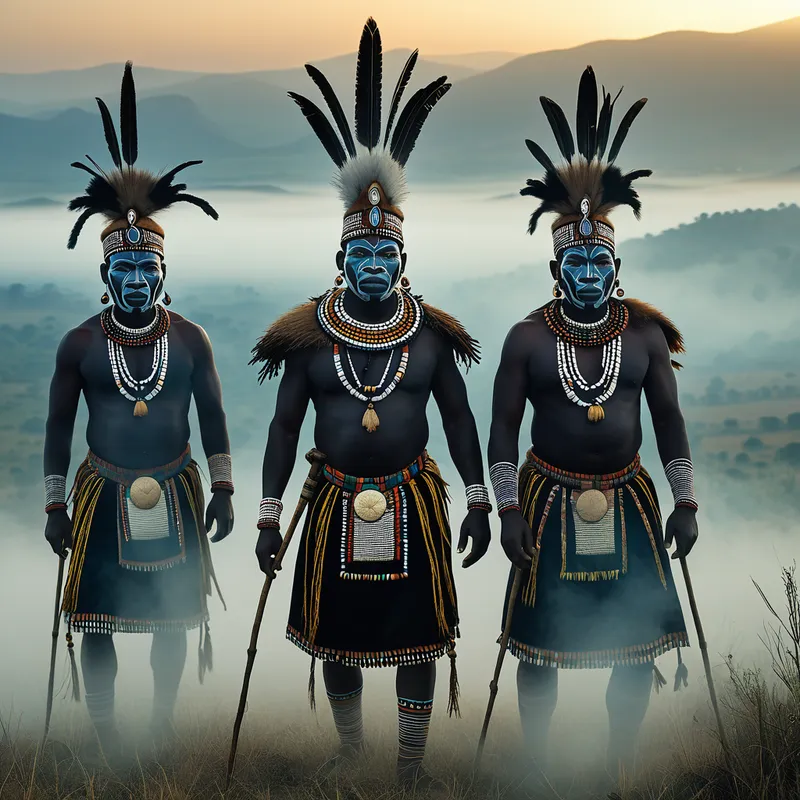
Listen. The world is not as thin as it seems. Between the breath of the living and the silence of the departed, there is a place where the sun sets but never fully darkens. This is Unkulunkulu, the great ancient deep, and from its mist-woven plains, they watch. They are the Amadlozi.
They are not gone. When a respected elder closes their eyes for the last time, their breath does not vanish. It travels, a warm sigh upon the wind, crossing a river that has no water but flows with memory. They arrive in the land of the shades, their forms now light and shadow, but their hearts remain tethered by cords of love and duty to the hills where their cattle grazed, to the hearth where their stories were told.
A man forgets. In the rush of seasons, planting and harvest, he begins to speak only of tomorrow. He no longer whispers the clan praises, the izibongo, at dawn. He lets the beer for the ritual grow stale. A coldness seeps into his home. His children fall ill with a sickness no herb can touch. His crops wither under a sun that feels suddenly hostile. The world has grown thin, and the wind now carries only dust.
It is the Amadlozi who have drawn back. In their realm, a silence has fallen where once there was the murmur of connection. They feel the neglect as a chilling emptiness. To remind him, they send a dream. Not a clear vision, but a feeling—a heavy hand on his chest as he sleeps, the scent of his grandfather’s pipe tobacco in an empty room, the unmistakable sound of a familiar cough from the darkness. He awakes with a heart pounding not from fear, but from recognition. The forgotten weight of lineage settles upon him.
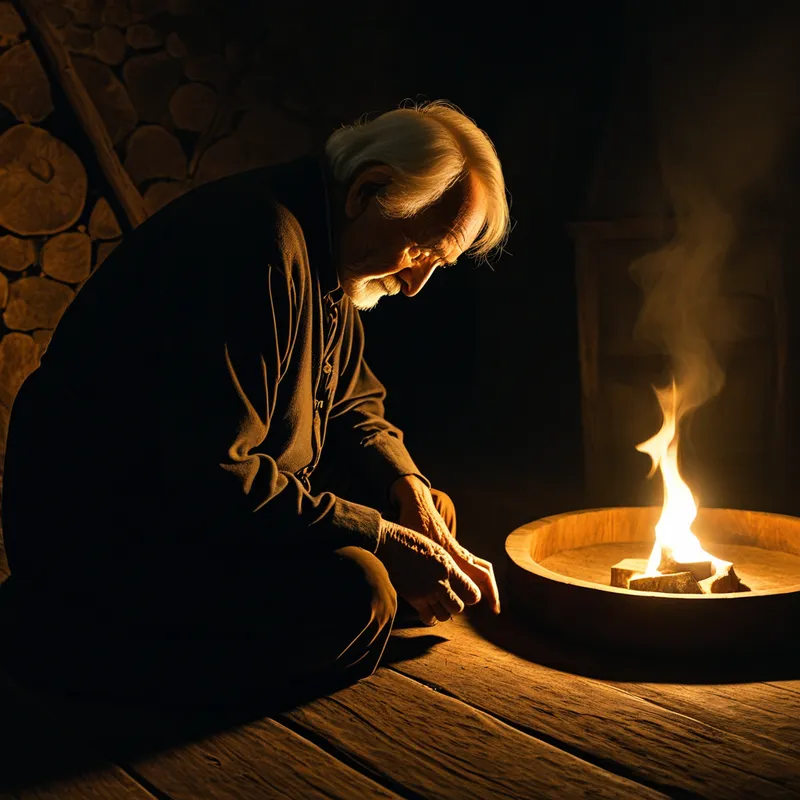
He goes to the isangoma, her eyes seeing what his cannot. She hears the chatter of the spirits in the thrown bones, the amathambo. “They are thirsty,” she intones. “They are cold. You have let the bridge of smoke collapse.” Guided, the man prepares. He brews the fresh, frothy umqombothi. At the sacred spot behind the homestead, where the umsamo resides, he kneels. He calls the names, from his father back to the founders of the line. He pours the beer onto the dark earth, a libation sinking into the roots of reality. He speaks the izibongo, each title a spark struck in the twilight.
And they come. Not as ghosts, but as a sudden warmth in the air, a sense of profound attention. The sickness in the children begins to lift, not by miracle, but as a fever breaks. The man feels a strength in his bones that is not his own. The bridge is rebuilt, not of stone, but of memory and breath. The Amadlozi are placated, honoured, and once again, they lean close, their whispered guidance the oldest wind beneath the wings of the living.
Cultural Origins & Context
The mythos of the Amadlozi is central to the spiritual cosmology of the Nguni peoples of Southern Africa, including the Zulu, Xhosa, Swazi, and Ndebele. This is not a single, frozen story but a living, breathing framework that permeates daily life, ethics, and community structure. It was and is passed down not in sacred texts, but in the oral tradition: in the evening stories told by grandparents, in the ritual instructions of the isangoma, and in the performance of clan praises during ceremonies, births, weddings, and deaths.
Its societal function is profound. It acts as the ultimate social glue, enforcing continuity, respect for elders, and ethical behaviour. The ancestors are moral arbiters; to act against the community’s welfare is to invite their displeasure, manifesting as misfortune. This belief system creates a powerful, extended sense of self—the individual is a node in a vast, living network of lineage that stretches backwards and forwards in time. The rituals of remembrance, from simple libations to elaborate umsebenzi ceremonies, are the practical technology for maintaining this network, ensuring the flow of blessing, protection, and wisdom from the realm of Unkulunkulu.
Symbolic Architecture
At its core, the myth of the Amadlozi is a powerful symbolic statement about the nature of consciousness, memory, and the psyche’s structure. The ancestors represent the accumulated psychic substance of the lineage—the inherited patterns, talents, wounds, and wisdom that pre-exist the individual.
The ancestor is not a dead relative, but a living layer of the psyche, a psychic organ of memory and orientation that demands integration, not mere recollection.
The homestead and the umsamo symbolize the conscious ego and its sacred, interior space where dialogue with these deeper layers must occur. Neglect of ritual symbolizes the ego’s inflation, its belief in its own autonomy and separation from its roots. The resulting misfortune—sickness, drought, strife—is the symbolic language of the psyche in distress; it is the Self (the total, archetypal psyche) enforcing a correction through symptoms, forcing a reconnection with the neglected, guiding structures of the ancestral soul-layer. The isangoma represents the mediating function of intuition and symbolic intelligence, necessary for interpreting the messages from this deeper realm.
The Dreamer's Resonance
When this mythic pattern activates in the modern dreamer, it often manifests as dreams of forgotten or neglected family homes, encountering specific deceased relatives who seem to want something, or feeling a pressing, unspoken responsibility towards one’s lineage. One might dream of trying to clean a derelict family tomb, of being given a cryptic message by a grandparent, or of a foundational pillar in one’s house cracking.
Psychologically, this signals a process where contents of the personal and collective unconscious—the “ancestral layers” of one’s own psyche—are seeking recognition and integration. The somatic feeling is often one of a heavy, sacred weight, or a pull backwards into history. It is the psyche’s attempt to heal transgenerational wounds, reclaim lost talents, or correct a life path that has strayed too far from one’s authentic, inherited nature. The dreamer is being called to perform an internal umsebenzi: to consciously remember, acknowledge, and dialogue with the inner figures and inherited patterns that shape them, which have perhaps been ignored in the pursuit of a modern, atomized identity.

Alchemical Translation
The myth models the alchemical process of psychic transmutation—individuation—as a sacred dialogue with one’s inner ancestry. The initial state of neglect represents the nigredo, the blackening: a life feeling barren, meaningless, or plagued by repetitive failures (the “sickness”). The dream or crisis is the mortificatio, the death of the ego’s illusion of separateness.
Individuation is not about becoming someone new, but about becoming profoundly who you always were, by consciously integrating the chorus of voices within your own blood.
The consultation with the isangoma symbolizes turning inward to engage one’s own symbolic, intuitive mind to interpret the psyche’s messages (dreams, synchronicities, moods). The ritual act of remembrance—the pouring of the libation and speaking of names—is the albedo, the whitening. It is the conscious, devoted act of honouring these inner figures: through journaling, active imagination, art, or simply speaking their stories aloud. This act of sacred attention “feeds” and placates the unconscious, transforming its disruptive, symptomatic energy into guiding wisdom.
The resulting healing and renewed strength is the rubedo, the reddening. The reconnected ancestor-spirits within now function as an internal council of elders. Their guidance is not a voice of command, but a deepened instinct, a sudden knowing, a resilience that feels inherited. The individual no longer lives as an isolated unit, but as a conscious vessel for a stream of life that is both uniquely theirs and eternally ancient. They achieve order not by imposing their will on the world, but by aligning their life with the deeper, ancestral order of their own soul.
Associated Symbols
Explore related symbols from the CaleaDream lexicon:
- Ancestral Spirits — The core symbol of the living-dead, representing the psychic layer of inherited memory, wisdom, and pattern that guides and demands recognition from the conscious self.
- Ritual — The essential act of conscious engagement and remembrance that maintains the connection between the living present and the ancestral past, both externally and internally.
- Bridge — Symbolizes the permeable boundary between the conscious world and the spirit world (Unkulunkulu), which must be actively maintained through memory and practice.
- Root — Represents the deep, foundational connection to lineage and origin, the psychic and genetic substrate from which the individual grows and draws sustenance.
- Circle — Symbolizes the cyclical, non-linear nature of time in this cosmology, where ancestors are contemporaneous influences, and the relationship between living and dead is one of continuous reciprocity.
- Cup — The vessel of offering (like the umqombothi), representing the ego’s capacity to hold and pour out devotion, thereby creating a channel for blessing to flow in return.
- Memory — The active faculty of remembrance, which is not mere nostalgia but a sacred, world-sustaining force that keeps the ancestors “alive” and influential.
- Earth — The receptive element onto which libations are poured, symbolizing the grounded, embodied nature of this spirituality and the belief that the ancestors are intimately connected to the specific land of their lineage.
- Guidance — The primary function of the integrated ancestral layer: not as external command, but as an internalized compass of instinct, wisdom, and ethical direction.
- Healing — The outcome of successful reconnection, where the fractures in the self and community caused by neglect are mended through restored relationship with the ancestral whole.