
Achilles' Heel Myth Meaning & Symbolism
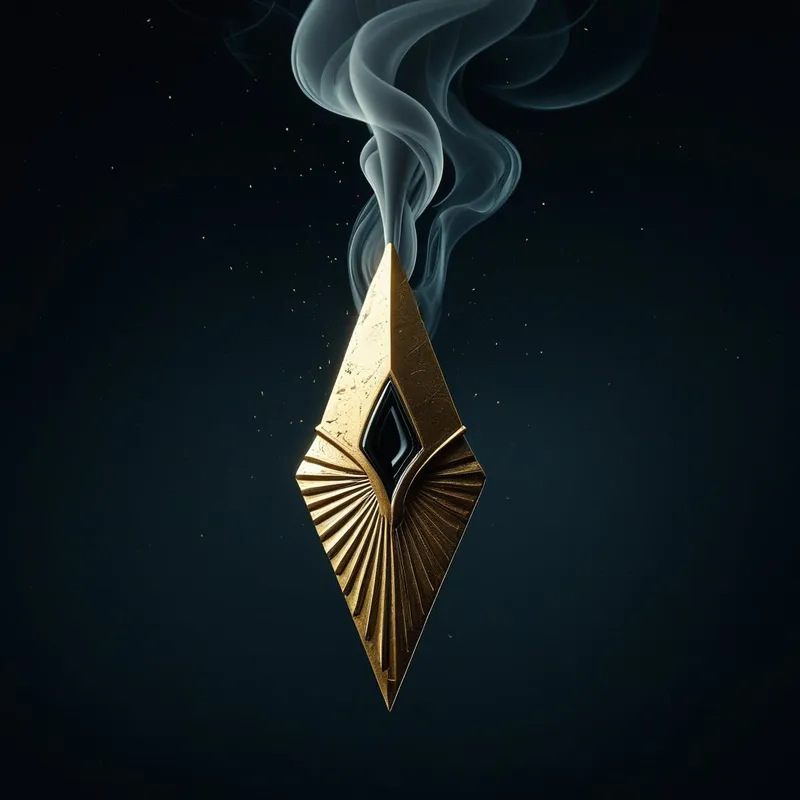
The warrior Achilles, made invulnerable by a divine ritual, is fated to die from a single unprotected spot, revealing the paradox of mortal strength.
The Tale of Achilles’ Heel
Hear now the tale of the swift-footed one, the greatest of the Achaeans, whose name was both a war cry and a lament. Before he was a legend, he was a child, born of a mortal king, Peleus, and an immortal sea goddess, Thetis. From the moment of his birth, a shadow lay upon his mother’s heart, for she had heard the whispers of the Moirai: her glorious son was destined for a life that was brilliant, brief, and bound for the halls of Hades.
Driven by a love as vast and desperate as the ocean depths, Thetis sought to cheat destiny. One night, when the moon was a sliver and the world held its breath, she carried her infant son to the banks of the Styx. Its waters were blacker than pitch, cold with the chill of eternity, and sacred with the power of unmaking and remaking. Whispering incantations older than the gods themselves, she grasped him firmly by the heel and plunged him, body and soul, into the dark current.
The waters of the Styx did not reject him. They flowed over his skin, seeping into his essence, transmuting his mortal flesh into something akin to divine armor. Where the sacred waters touched, his skin became impervious, a living bronze that no spear could pierce, no sword could cleave. But where her fingers held him, where her mortal love made contact with his form, the waters did not wash. That one spot on his heel remained as it was born: soft, human, vulnerable.
Thus, Achilles grew. He became a storm of a man, a hero whose rage could shake the foundations of Ilium. He fought beneath the Trojan sun, a figure of terror and awe, his Patroclus by his side. Blades shattered against his chest. Arrows fell from him like rain. He was invincible, a living embodiment of his mother’s defiant love. Yet, in his tent, he would sometimes feel a dull ache in that one spot, a phantom reminder of the part of him that had never been submerged, that remained tethered to the world of loss and pain.
The threads of fate, however, are not so easily severed. When Patroclus fell, wearing Achilles’ own armor, the hero’s grief was a vulnerability no river could harden. He returned to the war, a spirit of pure vengeance, and drove the Trojans back to their gates. It was there, in the dust and chaos beneath the Scaean Gate, that the god Apollo, who had long guided the arrow of the Trojan prince Paris, saw what no mortal could. He saw the faint, unmarked spot on the hero’s heel, the sole testament to his humanity.
Apollo guided the fated arrow. It flew, not with the force to shatter mountains, but with the precision of a surgeon’s blade. It found the one place it was meant to be, the place held by a mother’s hand. The poison—some say divine, some say mortal—did its work. The invincible man fell. The storm was stilled. The heel that had never known the Styx’s gift became the gateway for his soul, proving that the part we hide, the part we think too small to matter, is often the very thread by which the whole tapestry unravels.

Cultural Origins & Context
The story of Achilles is the cornerstone of the Iliad, an epic that served as the foundational cultural text for the ancient Greeks. Passed down orally for centuries by bards known as rhapsodes before being codified, these poems were not mere entertainment but a sacred repository of history, ethics, and identity. The detail of the invulnerable heel, however, is a later accretion to the myth, not found in Homer’s original text. It emerges more fully in Roman sources like Ovid’s Metamorphoses, suggesting the tale evolved to answer a haunting question left by the Iliad: How could the greatest of heroes be killed by a single arrow?
This evolution speaks to the myth’s societal function. For a culture that idealized the heroic arete and the glory won in battle, Achilles represented the pinnacle of human potential. Yet, his death by a seemingly trivial flaw served as a profound cultural corrective. It was a narrative embodiment of the Greek concept of hubris and its inevitable consequence, nemesis. The myth taught that no mortal, no matter how favored by the gods or mighty in arms, could transcend the fundamental human condition of vulnerability and mortality. It was a story that balanced the celebration of individual glory with a solemn, communal acknowledgment of fate (moira) and the limits set by the gods.
Symbolic Architecture
At its core, the myth of Achilles’ heel is a masterful exploration of the paradox of wholeness. Achilles is not a hero despite his vulnerability, but a complete being precisely because of it. The heel is the symbolic locus where several profound truths intersect.
The wound is the place where the Light enters you. In the myth, it is also the place where it leaves.
First, it represents the price of transformation. Thetis’s act is an alchemical ritual of protection, but all such rituals demand a sacrifice. The part held back—the heel—becomes the repository for everything the ritual sought to eliminate: mortality, connection, sensitivity. It is the “untouched place” in the psyche, the core of original feeling that survives even the most thorough attempts at self-armoring.
Second, it symbolizes the mother complex. The heel is literally the point of contact with the divine mother’s attempt to alter fate. It is the scar of her love, a love that was both salvific and smothering. Psychologically, this points to the ways in which our earliest bonds and protections, however well-intentioned, can create our most sensitive points of later conflict. The very source of our strength (the divine parent) can also mark the blueprint for our downfall.
Finally, it is the archetypal flaw in the system. In any structure designed for perfection—be it a hero, a nation, an ideology, or a psyche—there is always a flaw. This flaw is not an error but a necessity; it is the crack that allows the system to be dynamic, to interact with the world, and ultimately, to be real. The perfect, invulnerable being is a statue, not a living soul.
The Dreamer’s Resonance
When this myth pattern stirs in the modern dreamer, it often manifests not as a literal heel, but as a recurring, inexplicable point of failure or sensitivity in an otherwise competent life. One may dream of a magnificent, fortified castle with a single, unnoticed, crumbling brick. Or of giving a powerful speech while standing on a floor that turns to gossamer-thin ice beneath one foot. The somatic sensation is often one of a sudden, shocking weakness in a moment of perceived strength—a knee buckling, a voice cracking, a shield arm going numb.
Psychologically, this dream signals a confrontation with the shadow of invincibility. The dreamer is likely operating from a persona of great strength, capability, or resilience, but the unconscious is highlighting the repressed cost of this armor. The “heel” is the denied vulnerability: perhaps a hidden grief, a secret shame, a dependence masked as independence, or a creative sensitivity buried under pragmatism. The dream is an invitation from the psyche to acknowledge this spot, not as a fatal flaw to be concealed, but as the very point of access to one’s deeper, more authentic humanity. It is the soul’s way of saying, “Here. Attend to this. This is where you are still alive.”

Alchemical Translation
The journey of individuation, the process of becoming a whole and integrated Self, is mirrored perfectly in the alchemy of this myth. The first, unconscious stage is Thetis’s act: the attempt to create a perfect, invulnerable ego through the waters of the unconscious (the Styx). This creates the heroic persona—the successful, defended, seemingly complete self we present to the world. But individuation requires more than a well-armored ego; it requires the assimilation of the shadow.
The goal is not to become invulnerable, but to become responsible for one’s vulnerability.
The “heel” is the shadow in this myth—the small, hidden, vulnerable part that holds the key to the totality of the self. The alchemical work is to reverse Thetis’s ritual. Instead of hiding the heel, we must bring it into conscious relationship. This means consciously holding and immersing our point of sensitivity in the transformative waters of awareness, not to harden it, but to understand it, integrate it, and give it a voice.
The arrow of Paris, guided by Apollo (the god of consciousness and light), represents the inevitable moment of crisis when life itself targets our hidden flaw. In the individuation process, this is not a literal death, but a necessary “defeat” of the invincible persona. It is the failure, the heartbreak, the diagnosis, the betrayal that pierces our defenses. This wounding is the beginning of true healing, for it forces the conscious ego to surrender its claim to total control and acknowledge its dependence on the larger Self.
The ultimate transmutation is the realization that wholeness includes the flaw. The integrated individual is not Achilles before the arrow, proudly ignorant of his heel. He is Achilles aware of the heel, carrying that knowledge as part of his strength. He fights not from a fantasy of invincibility, but from the sober, profound courage of one who knows exactly where he can be hurt, and chooses to engage with the world anyway. In this, the mortal wound becomes the sacred wound—the enduring reminder of our humanity, the source of our compassion, and the very aperture through which the soul’s deepest meaning can enter and exit the world.
Associated Symbols
Explore related symbols from the CaleaDream lexicon: