The Dream of Virtue: The Soul’s Forge
The Somatic Echo
Before it is a thought, virtue is a sensation. It is not the warm glow of praise, but a deep, structural hum in the marrow. It feels like a spine that has remembered its true vertical axis after years of accommodating a slouch. It is the quiet, unyielding pressure at the center of your chest when you are asked to betray a truth you did not know you held. In the body, virtue announces itself as a specific gravity—a density of being that makes you heavier, more substantial, more here. It is the opposite of flight; it is the decision to root. This is the somatic echo: a profound alignment that resonates not as joy, but as a kind of solemn, earned peace. The muscles of deceit relax, not because the consequence is gone, but because the cost of their tension has finally become too great to bear.
The Dreamer’s Log
The dreamer stands in the grand, ruined hall of a forgotten palace. The floor is marble, veined and beautiful, but cracked and stained. In the center of the room lies a single, luminous pearl. A voice, neither kind nor cruel, echoes: “You may take the pearl, but you must leave a stain of equal size.” The dreamer looks at their own hands, clean, and weeps—not from sadness, but from the sheer weight of the choice.
Alchemical Interpretation: The dream presents virtue not as purity, but as the conscious acceptance of a necessary stain, the integration of shadow as the price of possessing one’s own luminous value.

The False Lead
A dream of virtue is easily mistaken for a sermon from a moralizing superego, a simplistic pat on the back for “being good.” This is the false lead. The psyche does not waste its symbolic language on congratulatory notes for following external rules. The dream of virtue is not about social propriety or the avoidance of blame. It is the opposite of innocence preserved; it is integrity forged. It is not the absence of the stain, but the conscious relationship to it. To misinterpret this dream as a call to mere ethical compliance is to mistake the soul’s forge for a finishing school. The terror here is not of punishment, but of consequence—the terrifying, liberating truth that your choices etch the permanent contours of your character.
Psychological Architecture
Beneath the dream-image lies the architecture of Individuation—the process of becoming an undivided whole. Here, Shadow work is not about battling monsters, but about reclaiming exiles. Think of your psyche as an internal family: there is the part that wants to be praised (the Innocent), the part that wants to seize power (the Rebel), the part that fears exile (the Orphan). Virtue, in its depth, is the emergence of a true Sovereign—not the Ruler who controls these parts, but the presence that can hear their petitions, feel their fears, and make a choice that honors the integrity of the entire system.
This is the profound shift: moving from a psyche governed by reaction (to shame, to desire, to fear) to one capable of response from a centered, inner axis. The grief in this process is for the simpler, more divided self you must leave behind. The old you, who could blame circumstance or others, must be mourned. You are building a foundation in bedrock, and the first step is clearing the loose gravel of self-deception.
Mythic Resonance
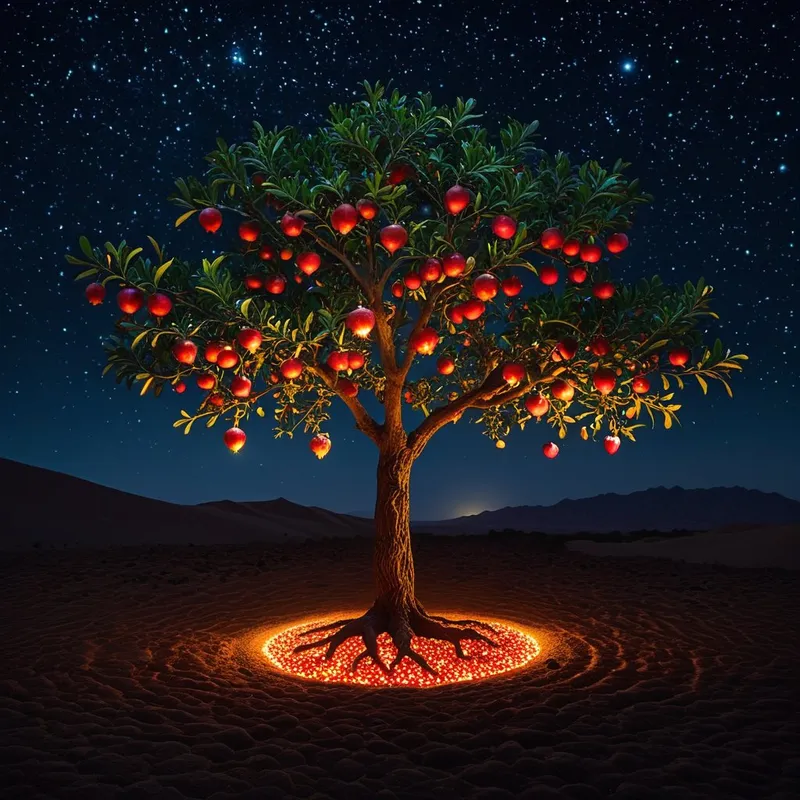
This alchemy echoes in the myth of the Silver Branch. In Celtic tales, the hero cannot enter the Otherworld—the realm of profound truth and sovereignty—unless they bear a branch laden with silver apples. This branch is not found through conquest, but is given only when the hero’s actions, often seemingly small and ethically nuanced, resonate with a deeper harmony. The branch is both key and proof; it is the external symbol of an internal alignment that has been earned, not taken. Your dream of virtue is that silver branch forming in the hidden grove of your soul. It is the psyche’s proof that you are preparing for a passage into a more authentic, and thus more responsible, state of being.
Symbolic Nodes
- Unshakeable Foundations: Bedrock, deep roots, a plumb line, a cornerstone.
- The Conscious Stain: A deliberately chosen scar, a tattoo of meaning, a piece of coal held in the hand until it becomes a diamond.
- The Silent Witness: A still pool that reflects without judgment, a single star in a dark sky, an empty throne.
- The Test of Weight: Heavy keys, a burden that straightens the spine, a coin that cannot be spent.
Archetypal Resonance
The energy at the core of the virtue dream is that of The Ruler Archetype. Not its shadow of tyranny, but its mature expression of Sovereignty.
This archetype resonates perfectly because virtue is the ultimate internal governance. The somatic echo of alignment—that deep, structural hum—is the feeling of the Sovereign’s court coming to order within. The Ruler’s task is to establish a just and prosperous kingdom, and in the psyche, that kingdom is the totality of the self. The dream presents the alchemical potential: to move from being a subject of chaotic impulses and external demands to becoming the author of your own inner law. This archetype does not seek to control the wildness of the Rebel or the neediness of the Orphan; it seeks to integrate them into a cohesive, functional whole where each part’s energy is directed toward the kingdom’s good—which is your wholeness. The virtue dream is the call to take that throne.
The Alchemical Process
The transmutation here is of experience into character. The raw prima materia is the cumulative weight of your choices, both glorious and shameful. The alchemical fire is the intense, sustained pressure of conscious reflection without self-flagellation. This is the nigredo: you must sit in the dark with the full record of your actions—not to judge them as good or bad, but to see them as data, as the very substance you have to work with.
The heat comes from refusing the easy escapes: the blame, the justification, the spiritual bypassing that says “it was all a lesson.” The pressure is in asking, “What does this action build in me? What pattern does it reinforce?” The albedo, or whitening, occurs when you stop seeing your past as a crime scene and start seeing it as a quarry. The grief and terror are for the self that could remain innocent; the sovereignty is born for the self that can say, “This happened. I chose this. This is now part of my foundation.” The gold that emerges is not moral perfection, but reliability to oneself. You become a covenant unto your own soul.

The Integration Protocol
Question 1: When in your waking life have you felt that deep, somatic “click” of alignment—not when you were praised, but when you were alone and knew you had chosen the harder, truer path? What did that resonance feel like in your body?
Question 2: Where in your life are you still performing “virtue” for an external audience (family, society, a spiritual ideal)? What would it cost you to let that performance go?
Question 3: If your integrity were a physical structure you are building within, what single, neglected cornerstone needs your attention first?
Action 1 (The Somatic Anchor): For one week, pause three times daily. Place a hand on your sternum. Breathe deeply and ask inwardly: “Does my energy flow outward from here, or am I pulling it in from an external source?” Do not analyze, just feel. Note the subtle difference.
Action 2 (The Unwritten Ledger): Take two pieces of paper. On one, write a list of actions you consider your “failures” or “stains.” On the other, write the core inner quality (e.g., courage, self-preservation, desire for connection) that was attempting to express itself in each action, however clumsily. Burn the first list. Keep the second.
Action 3 (The Cornerstone Ritual): Find a small, ordinary stone. Hold it and imbue it with the energy of the one “cornerstone” quality you identified in Question 3. Then, go to a place that holds meaning for you—a park, a riverbank, your backyard. Bury the stone there, not as a discard, but as a conscious act of laying that quality into the foundation of your world.
Final Validation
This work is not for the faint of heart. To dream of virtue is to feel the immense gravitational pull of your own potential wholeness, and that pull can feel like a crushing weight. It asks you to exchange the light, scattered identity of the wanderer for the dense, rooted reality of the sovereign. It is difficult because it is real. Yet, within that difficulty lies your liberation. You are not being called to be good. You are being called to be integral—to become a being whose outer actions are in unbroken conversation with an inner truth. The dream is your soul’s blueprint for that architecture. The materials are the life you have already lived. You are both the quarry and the builder. Begin.