The Tyrant Within: Dreams of Oppression and the Call to Sovereignty
The Somatic Echo
Before the mind conjures the image of the dictator, the prison, or the unyielding law, the body knows tyranny. It is a specific, chilling density in the chest—a sensation of being encased in a shell of cold marble. The breath becomes shallow, rationed, as if the very air belongs to someone else. The shoulders hunch forward, not in fatigue, but in a pre-emptive cringe, anticipating the blow of a judgment that has not yet been spoken. The jaw locks. The hands may curl into impotent fists or lie perfectly still, paralyzed by the unspoken command. This is the somatic architecture of internalized control: a fortress built not to keep others out, but to keep the wild, the messy, the unpredictable parts of you securely imprisoned within.
The Dreamer's Log (Case Vignette)
I am standing in a vast, silent server farm. The air hums with a low, electric thrum. Rows of black monolithic towers stretch into darkness. On a central console, a single green cursor blinks on a black screen. A voice, synthesized and genderless, issues commands that scroll endlessly: "OPTIMIZE. COMPLY. ERASE DEVIATION." I try to move, to unplug something, but my body is heavy, slow, responding only to the voice's directives. I am both the administrator and the system being administered.
This dream is not about external control, but the alchemical recognition of the self as both the architect and the prisoner of a perfectly efficient, soul-crushing internal logic.

The False Lead
Do not mistake the dream of tyranny for a simple nightmare of bad luck or an external oppressor. It is not a prophecy of a controlling boss or an overbearing partner, though it may use their masks. The tyranny dream is a profound structural signal. It points to a system within you that has ceased to be a useful governor and has become an absolute monarch. It is the difference between the necessary discipline of a practice and the joyless rigor of a regime. The dream is not showing you what is being done to you, but what you are doing to yourself in the name of order, safety, or perfection.
Psychological Architecture
The work here is Shadow work of the most intimate kind: confronting the internalized authority. This is the part of the psyche that absorbed the rules, the "shoulds," the conditions for belonging, and then turned them into an immutable, self-policing code. In Internal Family Systems language, this is a powerful "Manager" part that has gone rogue, believing total control is the only way to prevent chaos or pain. Its intentions were once protective—to keep you safe, acceptable, functional. But in its zeal, it has outlawed spontaneity, silenced intuition, and declared any vulnerable emotion a threat to state security.
The individuation process demands a quiet, courageous coup. It begins not with brute force, but with witnessing. You must sit in the throne room of your own psyche and finally see the tyrant not as a monstrous other, but as a terrified, exiled part of yourself that believes rigidity is the only form of strength. The grief here is for the life not lived, the choices not made, the love not risked, all sacrificed on the altar of this internal regime. The terror is the abyss of uncertainty that yawns wide if this ruler is deposed.
Mythic Resonance
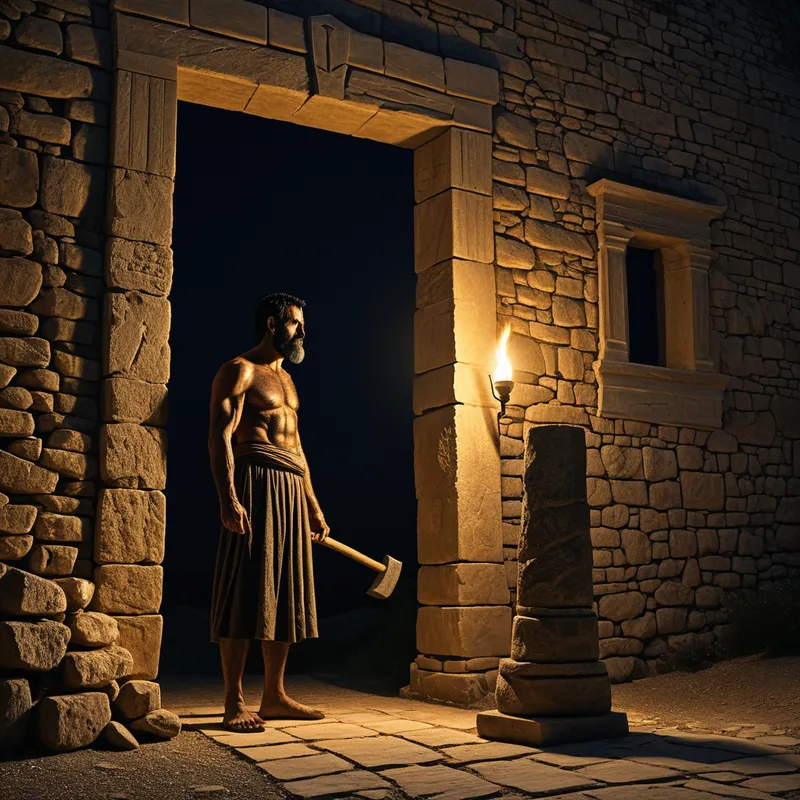
We see this drama etched in the firmament of myth. Consider Kronos (Saturn), the Titan who ruled during the Golden Age but who, fearing a prophecy of being overthrown, devoured his own children. He is the archetype of the ruler who consumes his own future, his own potential, to maintain a sterile, unchanging present. The tyranny is one of chronological control, of swallowing new life to preserve an old order. The liberation comes only when Zeus, representing a new, more conscious authority, forces Kronos to disgorge what he has consumed. The myth tells us that the tyrant within must be made to relinquish the vital, creative energies it has imprisoned.
Symbolic Nodes
- Impersonal Systems: Server farms, ticking clocks, endless paperwork, bureaucratic labyrinths, unfeeling robots.
- The Unreachable Ruler: A figure on a high throne seen from behind, a booming voice from a hidden speaker, a blank-faced official stamping forms.
- Architectures of Control: Windowless rooms, endless identical corridors, high walls without gates, silent prisons of glass or steel.
- The Enforced Ritual: Being forced to march in lockstep, repeat a meaningless chant, or perform a precise, joyless action ad infinitum.
Archetypal Resonance
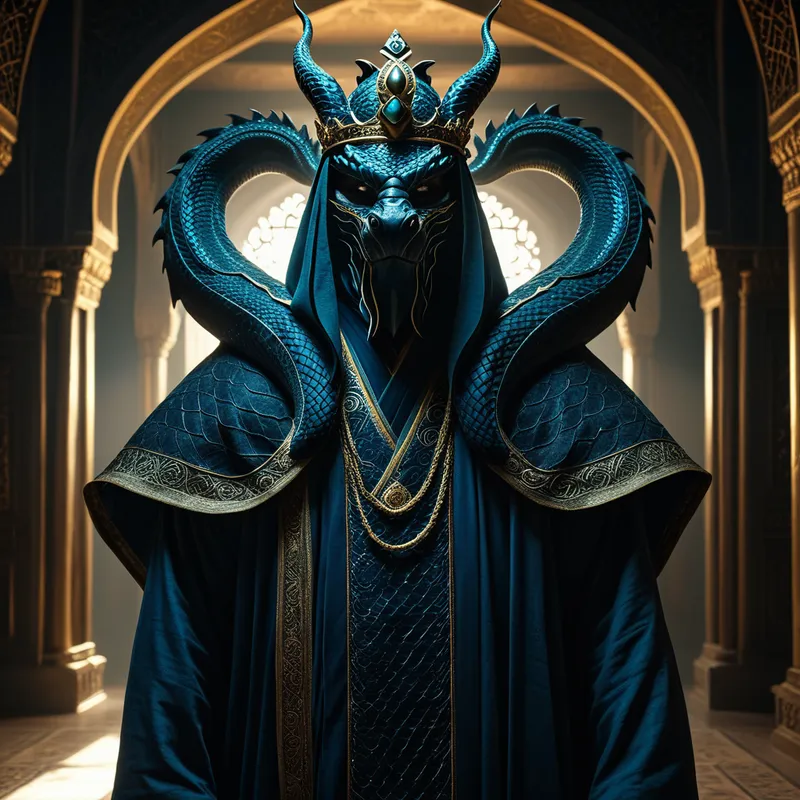
The energy at the core of this theme is The Shadow Ruler. This is the Ruler archetype in its corrupted state, where the innate drive for order, structure, and responsibility curdles into absolutism, control, and fear of any deviation. Its somatic echo is that cold, marble rigidity—the body itself becoming a kingdom under martial law. The Shadow Ruler does not lead for the good of the whole self; it governs to perpetuate its own fear-based idea of safety. Its alchemical potential lies in its immense power; this is not a weak part, but a formidable one. The task is not to destroy the ruler, but to depose the tyrant and initiate the true Sovereign—a part that can create order with compassion, structure with flexibility, and authority with wisdom.
The Alchemical Process
The transmutation of tyranny into sovereignty is an alchemy of dissolution. The old, rigid structures must be softened, not shattered. The required heat is the sustained, uncomfortable warmth of conscious attention placed on the internal control matrix. The pressure is the courageous allowance of what the tyrant forbids: a tear, a rebellious thought, a moment of "unproductive" stillness.
First comes Calcination: the burning away of your identification with the tyrant's laws. You feel the heat of shame as you break a minor, arbitrary internal rule. Then, Dissolution: the structure begins to soften in the waters of feeling. You allow the grief for your constrained life to rise, and as it does, the marble shell cracks. Separation follows, where you consciously distinguish the protective intent of the internal manager from its tyrannical methods. In Conjunction, you invite this exiled, fearful ruler-part into dialogue, offering it a new role. Through Fermentation, a new vision of personal authority—based on choice, not coercion—begins to bubble up. Distillation refines this into a clear principle of inner governance, and Coagulation embodies it as a new, fluid strength in your bones and breath.

The Integration Protocol
Question 1: Where in your current life do you feel a sense of rigid, non-negotiable "must" or "should"? Can you trace its origin to a protective strategy that has now outlived its purpose?
Question 2: If the internal tyrant had a face and a voice, what would it look and sound like? What is it most afraid would happen if it stopped controlling everything?
Question 3: What one small, beautiful, "inefficient" or "unproductive" act of rebellion could you perform for yourself today? (e.g., leaving a dish unwashed to watch the sunset, taking a different route for no reason).
Action 1 (Somatic Amnesty): For five minutes, sit quietly and scan your body for areas of held tension—the locked jaw, the tight shoulders, the held breath. Instead of commanding them to relax, simply acknowledge them. Whisper internally, "You are allowed to be here." Feel the subtle, internal shift from enforcement to allowance.
Action 2 (Manifesto of the Unruly): Take a piece of paper and write, draw, or collage a "Manifesto for a More Unruly Life." List the qualities the tyrant suppresses (e.g., messiness, spontaneity, quiet, play). Don't create goals; declare values. Let it be illogical, colorful, and imperfect.
Action 3 (Ritual of the Broken Seal): Find a small, rigid object that symbolizes control to you—an old key, a stiff ruler, a sealed envelope. In a private moment, deliberately alter it. Bend the key. Break the ruler's edge. Tear open the seal. As you do, state aloud: "I dissolve the contract that trades my vitality for a false security." Bury or dispose of the object respectfully.
Final Validation
To dream of tyranny is to feel the profound weight of a self-imposed prison. It is a difficult, often terrifying theme, for it asks you to confront the very structures you built for survival. Validate this difficulty. Honor the fear. And then, remember this: the dream itself is the first act of rebellion. The fact that you can see the prison means you are not wholly of it. The tyrant fears nothing more than being seen, for in the light of your conscious, compassionate awareness, its absolute power begins to dissolve. You are not dismantling yourself. You are, at long last, coming home to a sovereignty vast enough to hold both order and chaos, discipline and wildness—the true kingdom of the integrated self.