The Threshold: Where the Psyche Prepares to Cross Over
The Somatic Echo
Before the image of a door, a bridge, or a shoreline forms in the mind, the body knows. It is a specific, hollow tension in the solar plexus—a vacuum that pulls inward, a silent, gravitational ache. The breath catches, not in fear, but in suspension. The skin becomes a sensitive membrane, registering the subtle pressure differential between here and there. It is the feeling of standing at the edge of a high dive, the moment after the command to jump but before the muscles obey. The body is not in panic; it is in profound, resonant calibration. Every cell is listening to the hum of a potential it cannot yet see, weighing the density of the known self against the terrifying lightness of the one waiting to be born. This is the somatic echo of the threshold: the architecture of the psyche preparing to reconfigure its own foundations.
The Dreamer's Log
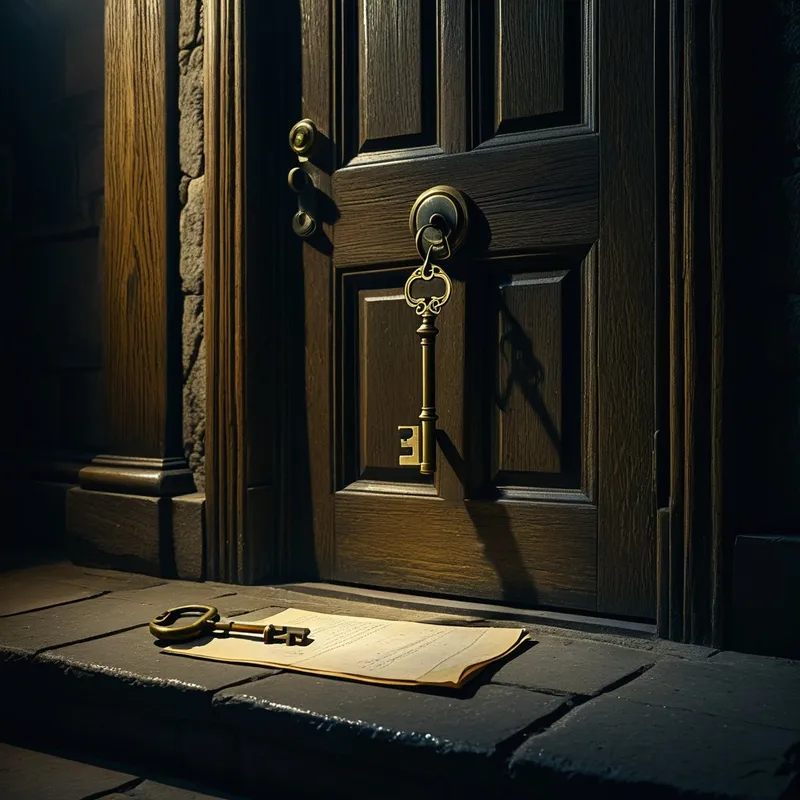
She stands before the heavy oak door of her childhood home, but the street behind her is unfamiliar, a maze of neon and fog. In her hand is a key she doesn’t remember owning, warm and humming. The door is already slightly ajar, revealing not a hallway, but a vast, star-filled silence.
This is not a dream about returning home, but about using the icon of the past to unlock a future self that exists in a completely different dimension of being.
The False Lead
The threshold is not a symbol of mere change or random transition. It is not the anxiety of a job interview or the nervous excitement of a first date. Those are events within a territory. The threshold marks the edge of the territory itself. To mistake it for simple "bad luck" or "indecision" is to confuse the earthquake with the tremor. The terror of the threshold is not about the practical outcome of a choice; it is the vertigo of the psyche sensing that the very rules of its existence—the internal family system that has governed your reactions, the stories you’ve called identity—are about to be rewritten. The old currency of your wounds and triumphs will no longer spend in the country on the other side.
Psychological Architecture
To stand at a threshold in a dream is to stand at the limit of your current psychological architecture. Behind you is the constructed self: a village of internal parts—the vigilant Orphan who learned to survive, the striving Hero who built your achievements, the careful Ruler who maintains order. This village has walls, roads, and laws. It is known. The threshold is the village gate. Beyond it lies the wilderness of the Shadow, not as a monster, but as the disowned potential, the unfelt grief, the unlived life that your internal system had to exile in order to build a coherent world.
Crossing is an act of radical hospitality. It is the Ego, the mayor of the village, consenting to its own temporary dissolution. The Shadow work here is not a battle; it is a negotiation at the border. You are not slaying dragons, but recognizing that the "dragon" is a exiled part of yourself that holds the very fire needed to warm the new home you will build. The individuation process demands you cease being merely the ruler of a small, familiar kingdom and become the cartographer of an unknown, vaster self. The pressure at the threshold is the strain between the psyche’s need for cohesion and its longing for wholeness.
Mythic Resonance
Consider Inanna, the Sumerian goddess, descending through the seven gates of the Underworld. At each threshold, she is stripped of a royal garment or symbol—her crown, her lapis beads, her robe. She does not fight the gatekeepers; she submits to the ritual. Each crossing is a deconstruction, not of her essence, but of her office, her known identity. She arrives naked and bowed, only to be reborn. The myth does not glorify the clinging to form, but the sacred surrender of it at each gateway. Similarly, in the Greek tradition, the river Styx is not just a boundary between life and death, but the very water of oath and irreversible transition. To cross it is to be altered at a constitutional level. These stories are our firmware, encoding the truth that profound becoming requires an un-becoming at the border.
Symbolic Nodes
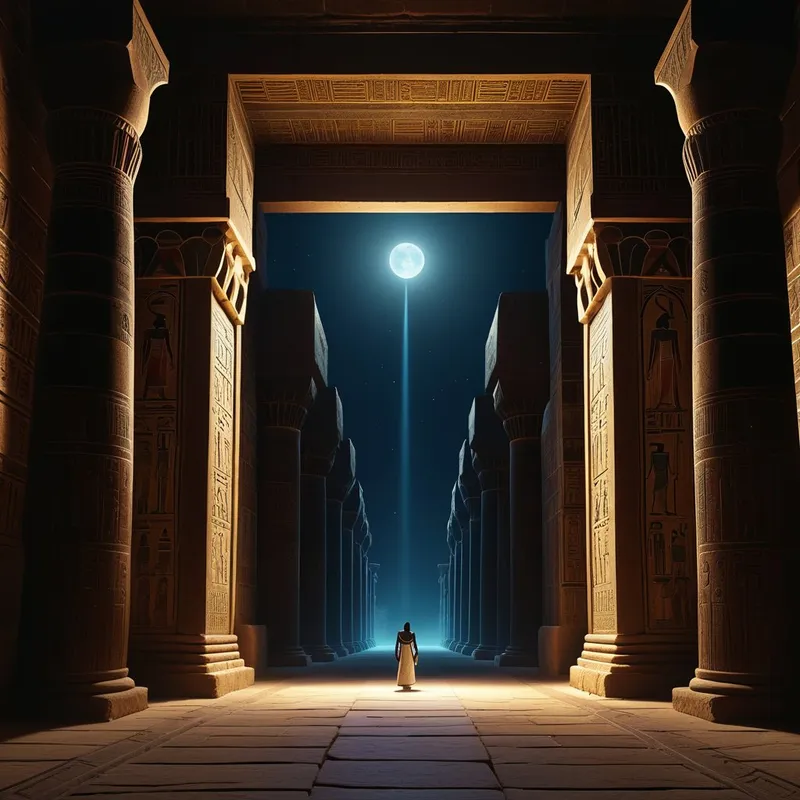
- Doors, Gates, Arches: The classic form. Is it locked, ajar, or opening toward you?
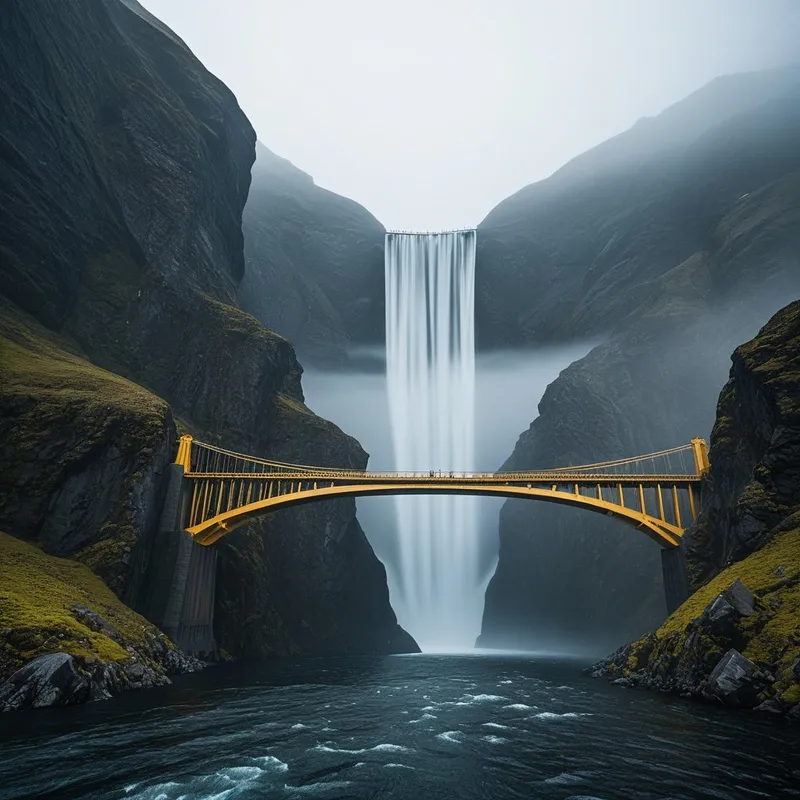
- Bridges, Passes, Isthmuses: Connectors over or through a divide. Note the stability of the structure and what lies beneath.
- Shorelines, Riverbanks, The Edge of a Forest: Natural boundaries between elemental kingdoms (water/land, civilization/wilderness).
- Staircases, Elevators, Portals: Thresholds that imply movement between levels or dimensions of consciousness.
- Veils, Curtains, Membranes: Thresholds of perception, separating the seen from the unseen.
- A Key, A Password, A Riddle: The mechanism of permission. The psyche asking, "What quality must I embody to pass?"
Archetypal Resonance
The Magician Archetype is the sovereign of the threshold. While the Explorer seeks new lands and the Hero conquers territories, the Magician understands that the true power lies in the liminal space itself, the crack between worlds where transformation is possible. The Magician’s core energy is the conscious alteration of reality through will, symbol, and the alignment of inner and outer forces. This resonates perfectly with the threshold’s somatic echo—that humming calibration is the Magician sensing the latent energy in the liminal field. The alchemical potential here is the Magician’s art: to not just cross the threshold blindly, but to work with it, to use its disorienting pressure as the prima materia for transmutation. The shadow of the Magician—the Manipulator or Illusionist—appears when we try to fake the crossing, to manipulate the symbols of change without enduring the authentic dissolution.
The Alchemical Process
The alchemy of the threshold is Dissolution followed by Coagulation. The intense psychological heat is generated by sustained, conscious tension. You must hold the fully felt reality of the "village" you’ve built—with all its comforts, wounds, and familiar pains—in one hand, and the terrifying, formless call of the wilderness in the other, without fleeing into either. This is the solve: the old structures, the rigid identities, the predictable internal dialogues, must soften, liquefy, and lose their form in the solvent of this liminal awareness.
The pressure is the commitment to stand in that liquefied state, to tolerate the identity-less, "I-don't-know-who-I-am" void. This is the nigredo, the blackening. The transmutation occurs not when you reach the other side, but in the very act of taking the first step from within that void. The new form that coagulates is not a better version of the old you; it is a you with a more permeable boundary, a psyche that has integrated the wilderness into its domain. The sovereignty gained is not control over circumstance, but authority over the internal process of becoming. You become the gatekeeper of your own thresholds.

The Integration Protocol
Question 1: In my waking life, what familiar "room" or pattern have I outgrown, where the walls now feel more like a cage than a shelter?
Question 2: What is the one quality or truth I would need to embody (like a key) to give myself permission to leave that room? Is it courage, grief, forgiveness, or perhaps a simple, stark honesty?
Question 3: If the part of me that is most afraid to cross could speak, what is its primary, protective function? What catastrophe is it legitimately trying to prevent?
Action 1 (Somatic Mapping): For one week, pause three times a day. Place a hand on your solar plexus. Breathe into that space and ask, "Where is the threshold in me right now?" Don't seek a mental answer. Note the subtle pulls, tensions, or images that arise in the body. Just listen.
Action 2 (Unstructured Writing): Set a timer for 10 minutes. Write from the perspective of the threshold itself. Let it speak. "I am the doorway between... and... To pass through me, you must leave behind... and be prepared to find..." Do not edit or judge the flow.
Action 3 (Ritual of Passage): Find a physical threshold—a doorway in your home, a bridge, a tree line in a park. Stand at it. Consciously name and thank one old pattern, story, or identity you are leaving behind. Then, step across. On the other side, state one quality of your potential self you are inviting in. Make it a deliberate, embodied ceremony.
Final Validation
The terror at the threshold is not a sign of weakness, but a measure of the transformation at hand. Only that which is real and deeply structured needs to tremble at its own remaking. This difficulty is the seal of authenticity on your journey. You are not lost at the border; you are in the most sacred and potent place a psyche can occupy—the generative void where the self is both artist and clay. The courage to stand here, to feel the hollow ache and not numb it, is the first and most profound act of crossing. The doorway opens inward. Your willingness to be unmade is the key.