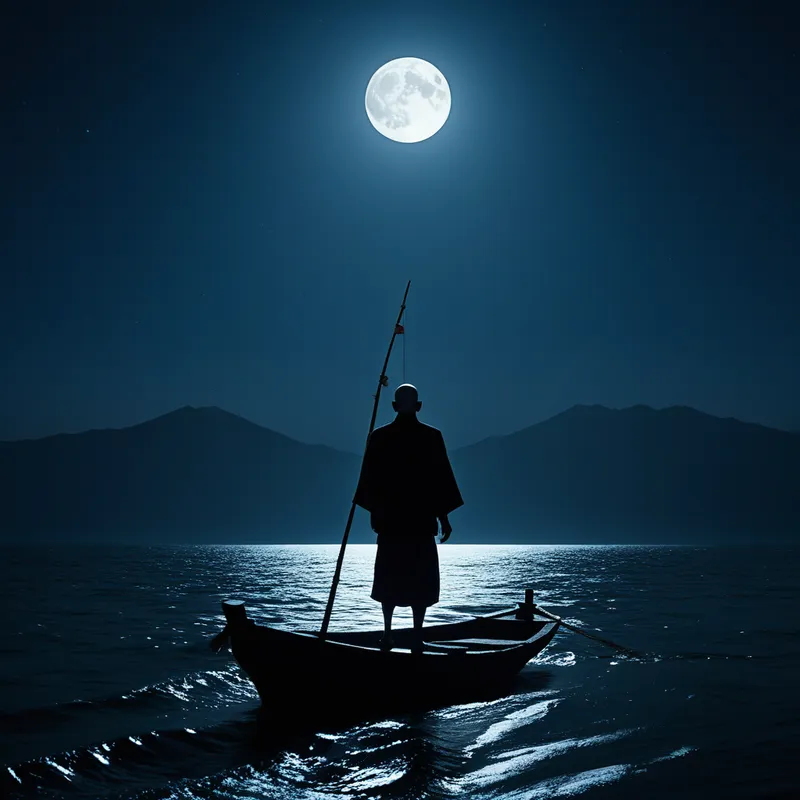
The Unknown: An Invitation from the Uncharted Self
The Somatic Echo
It begins not as a thought, but as a presence. A hollowing in the solar plexus, a subtle drop in internal pressure, as if the floor of your being has become porous. The breath catches, not in fear, but in a kind of suspended recognition—a pre-verbal knowing that the map has ended, and the territory ahead is unmarked. The skin prickles with a static charge, the air itself tasting of ozone and potential. This is the body’s first, truest language for The Unknown: a visceral, cellular acknowledgment of a frontier. It is the somatic echo of a system—your personal, psychological system—standing at the edge of its own operating parameters, sensing a vast, un-coded expanse of being. The mind will later rush in with its stories of monsters or voids, but the body knows the truth first. It knows the feeling of a boundary dissolving, of the familiar internal family of thoughts, roles, and personas falling silent, leaving only the raw hum of potentiality.
The Dreamer's Log
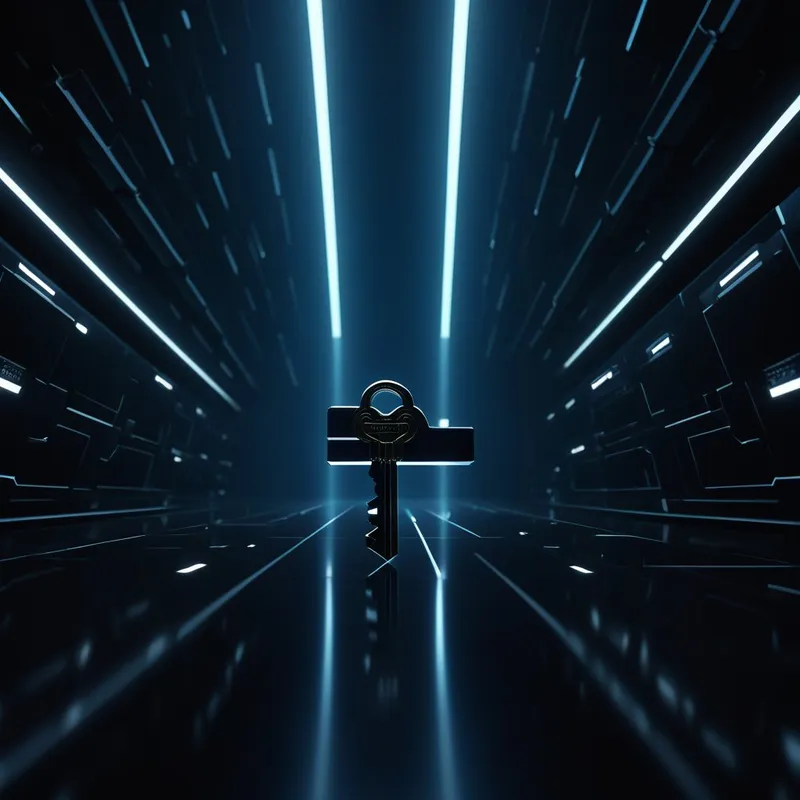
You stand before a monolithic door in a featureless corridor. It is made of a single piece of polished, depthless obsidian. There is no handle, no keyhole, only your reflection staring back, warped and unfamiliar. In your hand, you feel the weight of a key you cannot see. The door is not locked; it is waiting.
This dream is not about a literal obstacle, but the alchemical moment of confrontation with the Self-as-Unknown. The key you hold but cannot see is your own unrecognized agency, and the door is the threshold of your unlived life.
The False Lead
The Unknown is not chaos, nor is it merely the external circumstance of "bad luck" or surprise. To mistake it for random misfortune is to project the inner condition onto the outer world, a sleight of hand performed by a psyche not yet ready to own its own frontier. It is not the absence of information, but the presence of a different kind of knowing—one that has not yet been translated into the linear syntax of the conscious mind. The terror it can evoke is not the fear of a specific threat, but the vertigo of infinite possibility. It is the structural silence between notes, the fertile void from which new forms must emerge. To interpret it as a simple warning is to shrink its profound invitation back into the known, to force the infinite back into a finite box labeled "danger."
Psychological Architecture
To engage with The Unknown in dreamspace is to consent to a radical act of Shadow work—not by confronting a repressed "monster," but by dismantling the very architecture that defines what is "known" and what is "other." Your psyche, in its current configuration, is a city. It has its familiar districts (the Caregiver sector, the Ruler’s citadel, the safe suburbs of the Innocent), well-trodden pathways of thought, and defended borders. To dream of The Unknown is to receive a report from the surveyors you sent beyond the city walls. They return speaking of lands that cannot be plotted on your existing maps. The process of Individuation here is not about beautifying the city, but about realizing the city itself is built on a continent whose true shape you have never seen. The work is to let the maps burn. It is to feel the grief of that loss—the loss of a coherent, manageable self-concept—and to stand in the naked awareness that you are both the cartographer and the uncharted land. This is the deepest Shadow: not a hidden part, but the boundless context that holds all parts.
Mythic Resonance
We see this eternal process in the Norse myth of Odin, who hangs himself on the World Tree, Yggdrasil, for nine nights, pierced by his own spear. He is not seeking a known answer, but making a sacrifice to The Unknown—sacrificing his "known" self (his sight, his comfort, his sovereignty) to the well of primal wisdom. He emerges not with a simple secret, but with the runes, the very tools to create meaning from the formless. Similarly, the Greek goddess Nyx, the primordial night, is not a villainess of darkness, but the personified, generative void from which all other gods and the cosmos itself emerge. She is the ultimate Unknown, not to be conquered, but acknowledged as the essential, fecund ground of all being. Our dreams of endless corridors, blank pages, or starless skies are personal encounters with Nyx, with the World Tree’s roots in the unseen—a direct experience of the source code of reality, which is inherently mysterious.
Symbolic Nodes
- Unmarked Doors/Gates: Thresholds to unlived aspects of the self.
- Blank Canvases/Empty Pages: The pressure and promise of pure potential.
- Featureless Landscapes (fog, desert, open ocean): The dissolution of ego-boundaries and known reference points.
- Unfamiliar Rooms in a Known House: The discovery of unexplored psychic structures within the apparent whole.
- Mute or Faceless Figures: Encounters with parts of the self that have no voice or identity in the current psychic regime.
- Floating/Weightlessness: The release from the gravity of old identities and narratives.
Archetypal Resonance
The core energy of The Unknown is most potently embodied by The Explorer Archetype in its pure, essential form. This is not the Shadow Explorer, who wanders aimlessly in alienation, but the archetype in its zenith: the Seeker whose entire purpose is to move toward the horizon for its own sake.
The Explorer’s somatic echo is that very restlessness in the bones, the magnetic pull toward the unmarked part of the map. Its core energy is not conquest (the Hero) nor understanding (the Sage), but the visceral, driven experience of venturing. In the alchemy of The Unknown, the Explorer provides the essential motion. It is the part of you that can tolerate the hollow feeling in the solar plexus and interpret it not as a warning, but as a compass needle swinging true. The Explorer’s potential is to transmute the terror of the void into the curiosity of the frontier, to become the internal function that says, "This emptiness is not an end; it is a direction." It is the archetypal force that turns the static charge of potential into a forward step.
The Alchemical Process
The alchemical transmutation of The Unknown is the process of Solve et Coagula—to dissolve and to coagulate—applied to the very substance of the self. The intense psychological heat, the nigredo, is felt as the unbearable tension between the mind’s desperate need to name the experience and the experience’s essential quality of unnamability. This is the pressure cooker. You must hold that tension without prematurely resolving it by labeling the void "fear" or "nothingness." You must let the known structures of your identity—your stories, your roles, your certainties—dissolve in this solvent of mystery. This dissolution feels like grief, like a death. It is the death of the self that knew itself.
From this black, fertile solution, the new form coagulates. It is not a better version of the old you; it is a reorganization of your psychic matter around a new, previously unknown center of gravity. This is the birth of sovereignty—not control over the external, but an unshakable internal orientation that can navigate the formless because it has consented to be partially formed by it. The Unknown ceases to be a threatening external force and becomes recognized as your own deepest, most creative interiority. You haven’t illuminated the darkness; you have learned to see in the dark.

The Integration Protocol
Question 1: In the dream, what did my body do when confronted with the Unknown? Did it freeze, float, or move forward? What does that somatic response tell me about my deepest, pre-verbal relationship with potential?
Question 2: If the Unknown in the dream were not a void, but a substance—a kind of air, water, or light—what would be its properties? Is it heavy or light, viscous or thin, warm or cold? Describe its texture.
Question 3: What one known, comfortable certainty about myself am I most afraid to lose? What might exist on the other side of that loss?
Action 1 (Somatic Anchoring): For three minutes upon waking, do not try to remember or interpret the dream. Instead, lie still and re-inhabit the primary body sensation from the dream. If it was a hollow feeling, breathe into that hollow space. If it was static on the skin, feel it without naming it. Let the sensation be enough.
Action 2 (Unstructured Cartography): Take a large piece of paper. In the center, make a small mark or shape representing the "known" you from the dream. Then, with your non-dominant hand, let your pen move intuitively outward from that center, creating abstract lines, shapes, and textures that feel like the "unknown" territory. Do not draw objects. Let it be a map of sensation and impulse, not meaning.
Action 3 (Threshold Ritual): Physically stand at a threshold in your home—a doorway, a gate. Stand for a moment facing the "known" space behind you, acknowledging its structure and comfort. Then, turn to face the "unknown" space ahead. Step across the threshold not as a mundane act, but as a conscious, embodied ritual of moving into potential. Whisper an intention: "I step into the mystery that I am."
Final Validation
It is right to feel disoriented. It is honest to feel the grief of the map burning. The encounter with The Unknown is the most profound and demanding courtesy your psyche can offer you—it is the soul refusing to be contained by its own previous definitions. This is not a sign of breaking, but of an imminent, unimaginable becoming. The sovereignty you seek is not found in securing the borders of the known self, but in the courageous, daily consent to be a citizen of the frontier. You are not lost. You are in conversation with the source.