The Architecture of the Sacred
The Somatic Echo
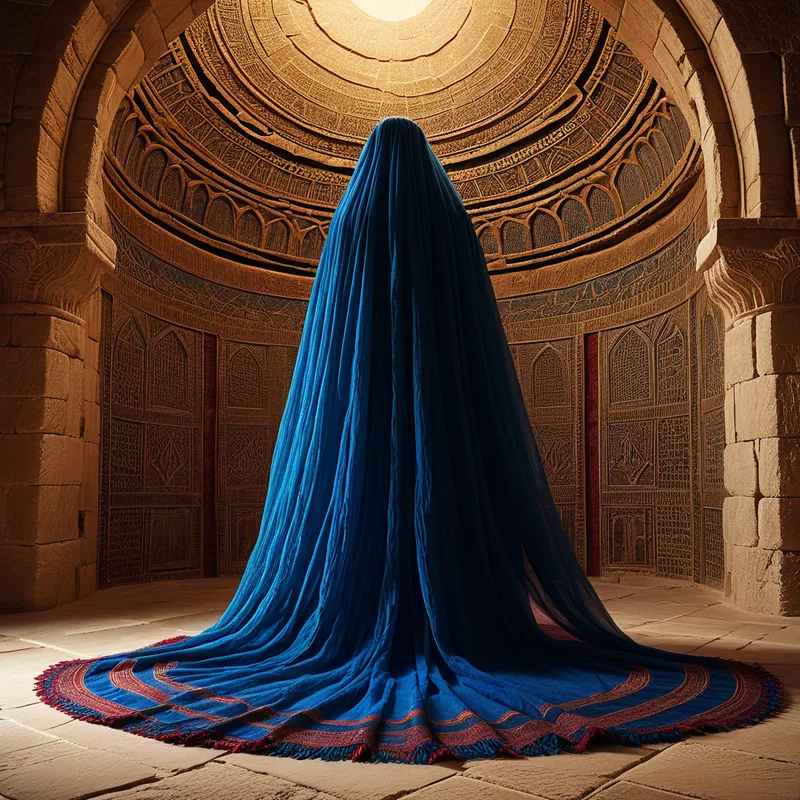
It arrives not as a thought, but as a pressure change in the inner atmosphere. A sudden, profound silence that is not an absence of sound, but a presence of something else. The body knows it first: a hush in the bloodstream, a stillness in the diaphragm, a prickling along the scalp that has nothing to do with fear. It is the somatic echo of a boundary being crossed—not a physical one, but a membrane between the profane clutter of daily identity and a chamber within the psyche that has remained inviolate. This is the feeling of approaching the sacred in a dream. It is a visceral gravity, pulling attention away from narrative and into a state of awe-filled witness. The mind, accustomed to parsing symbols and solving plots, goes quiet. In its place is a deep, wordless recognition. You are in the presence of something that does not negotiate, does not explain, and demands nothing but your complete, trembling attendance.
The Dreamer's Log
In the dream, I am sorting through the ruins of an abandoned server farm. Wires hang like dead vines, consoles are dark. In a forgotten corner, I find a single, ancient terminal. Its screen is cracked, but from the fracture, a soft, unwavering gold light emanates. When I touch the cold casing, a single, perfect tone resonates in my bones, and I know, with absolute certainty, that this broken thing contains the only uncorrupted copy of a foundational code—not for a machine, but for a world.
This dream is an alchemical discovery of the prima materia—the indestructible, essential core—amidst the wreckage of outmoded personal systems.

The False Lead
The sacred in dreams is not a synonym for the religious, the morally pure, or the aesthetically pleasing. It is not a pat on the back from the universe, nor is it a guarantee of safety. To mistake it for mere "positive vibes" or divine approval is to commit a profound error of translation. The sacred is often austere, terrifying in its otherness, and disruptive to the status quo of the self. It does not always comfort; it often dismantles. A dream of a sacred object is not about acquiring a spiritual trophy, but about being confronted by an aspect of your own psyche that possesses an authority greater than your ego’s daily governance. It is the structural, not the decorative.
Psychological Architecture
To encounter the sacred is to meet the bedrock of the Self beneath the soil of the persona. This is the heart of Shadow work and Individuation, not as a concept, but as an experience. The ego, our conscious manager, spends its life building a functional identity—a city of habits, roles, and defenses. The sacred dream reveals the immutable geological formation upon which that city was built, and which its foundations have perhaps obscured. This encounter forces a terrifying and necessary humility. The ego must kneel. It must recognize a sovereignty beyond its own. This is not a defeat, but a homecoming to a deeper order. The grief that can accompany this is the grief for the illusion of total control. The terror is the awe of realizing you contain something vast, ancient, and utterly indifferent to your petty worries. Integrating this means allowing this inner sovereignty to inform your outer life—not by becoming pompous or "enlightened," but by letting your actions align with that deep, resonant tone heard in the bones. Your choices begin to emanate from the core, not from the noise.
Mythic Resonance
This process echoes in the myth of the Grail Castle. The knight does not find the Grail in a bustling marketplace or a royal court, but in a wasted land, in a castle that appears only to the destined. The castle itself is a sacred precinct. Within, the knight witnesses a mysterious procession—the Grail, the lance, the holy relics—but he fails to ask the crucial question: Whom does the Grail serve? His failure condemns the land to continued barrenness. The sacred is present, palpable, but integration requires the correct gesture: not seizure, but inquiry; not possession, but relationship. The myth tells us the sacred is found in the desolate places of the psyche (the abandoned server farm), and its power is unlocked not by claiming it for oneself, but by understanding its purpose and service to a whole greater than the individual ego.
Symbolic Nodes
- Immaculate or impossibly ancient geometry (a flawless sphere, a monolithic slab).
- A sealed chamber or pristine, untouched natural space (a glade, a underground spring).
- A source of light that does not cast shadows, or sound that is felt, not heard.
- A simple, humble object radiating immense significance (a stone, a cup, a key).
- An animal encountered in utter stillness and mutual gaze.
- Thresholds that mark a clear division (a veil, an archway, a change in air pressure).
Archetypal Resonance
The Ruler Archetype is the sovereign energy activated by dreams of the sacred. This is not the Ruler as external administrator, but as the internal embodiment of rightful order, integrity, and ultimate authority. The somatic echo—the gravity, the silence, the humbling awe—is the ego’s recognition of this inner sovereign’s presence. The sacred object or space in the dream is the Ruler’s scepter or throne room: a symbol of the psyche’s own foundational law. The alchemical potential here is the transition from being ruled by external expectations and internal chaos to being governed from this unshakable core. The dream invites the dreamer to move from subject to sovereign within their own being, to inhabit the authority of their authentic nature.
The Alchemical Process
The transmutation here is of chaos into cosmos—of fragmented experience into ordered, meaningful reality. The intense psychological heat is applied by the confrontation itself. The pressure is the unbearable weight of significance, the responsibility that the sacred encounter implies. You cannot un-see it. The old, profane ways of being become intolerable because you have touched the template. The "lead" of your scattered, reactive life is exposed as disordered. The "gold" is not a reward, but the establishment of an inner citadel—a psychic structure organized around the sacred core. This process feels like a dismantling because it is. The ego’s makeshift governance is dissolved in the presence of this greater authority. The sovereignty you gain is not over others, but over the alienation from your own deepest nature. You become the ruler of a kingdom that is, finally, coherent.

The Integration Protocol
Question 1: In your waking life, where do you feel that same somatic echo of profound, non-negotiable presence? Is it in a place, a piece of music, a state of deep focus, or in the presence of a certain truth?
Question 2: If the sacred element in your dream is an object, what fundamental, inner law or code does it represent? If it is a space, what part of your life or psyche needs to be accorded that same level of reverence and boundary?
Question 3: How has your ego’s management style—its anxieties, its posturing, its compromises—obscured or built walls around this inner sanctum?
Action 1 (The Silent Audit): For one week, carry a small, plain stone in your pocket. Whenever you feel compelled to say "yes" out of obligation, fear, or noise, hold the stone. Let its silent, unmoving weight remind you of the sacred "no" that protects your inner sanctum.
Action 2 (Cartography of the Core): Create a non-representational drawing or digital collage. Do not try to illustrate the dream. Instead, using only shapes, lines, and a very limited palette (perhaps black, white, and one color), map the architecture of the feeling. Where is the center? Where are the boundaries? What is solid? What is space?
Action 3 (The Votive Space): Dedicate a small surface—a corner of a desk, a shelf, a windowsill. Place upon it a single object that has no utilitarian purpose, but that, to you, embodies integrity or essence (the stone, a spent match, a fallen leaf). Once a day, for one minute, let your attention rest there without narrative. You are not praying to it; you are practicing alignment with the quality it represents.
Final Validation
To dream of the sacred is to be called to a responsibility that can feel crushing in its solemnity. It is okay to wish for a simpler dream, a lighter touch. The awe can border on terror, the silence on loneliness. This difficulty is the measure of the thing’s reality. It is not meant to be easy. But within that austere encounter lies the most profound empowerment: you are being shown that you are not rootless. You are built upon, and you contain, something unassailably real. Your task is not to become a priest, but to let that reality become the cornerstone of your daily life. The world of noise and fragmentation needs nothing more than people who have found their way back to their own silent, shining core and who, from that place, can truly build.