The Stage of the Soul: On the Dream of Public Performance
The Somatic Echo
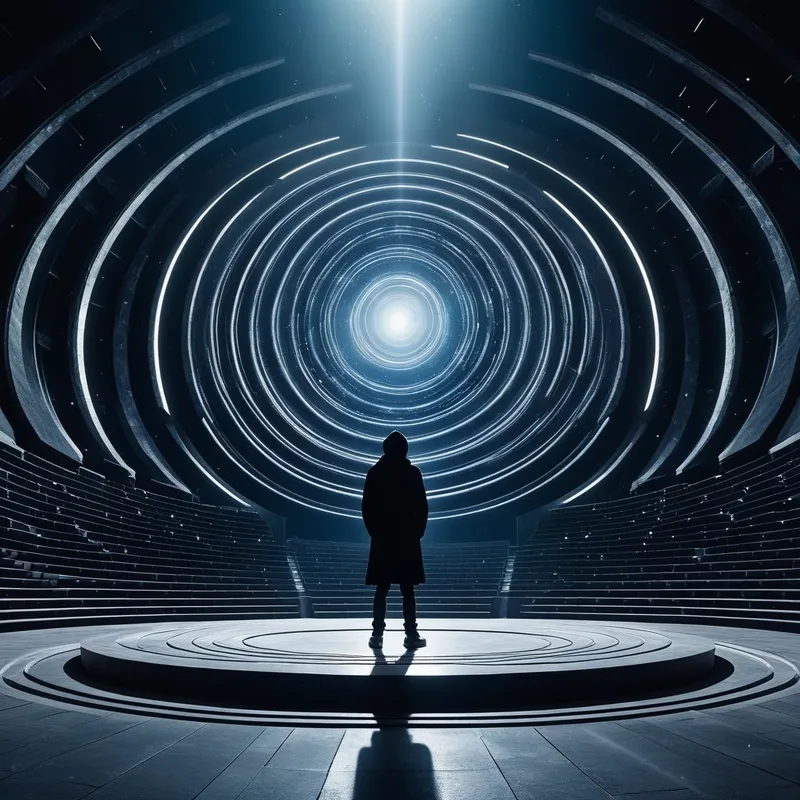
It begins not as a thought, but as a cavity. A hollowing out beneath the sternum, a sudden vacuum where certainty once sat. The breath becomes shallow, a thin currency. The skin prickles with a thousand invisible eyes, a phantom audience whose gaze is felt as a physical weight, a low-grade electrical hum across the shoulders and scalp. The throat constricts, not with sickness, but with the prescience of a sound that must be made—a word, a note, a truth—that has forgotten its own shape. This is the somatic echo of the public performance dream: the body’s ancient, pre-verbal recognition that you are about to be seen. Not glanced at, but witnessed in your essence. It is the visceral tremor of the soul stepping into the light, naked and scriptless.
The Dreamer's Log
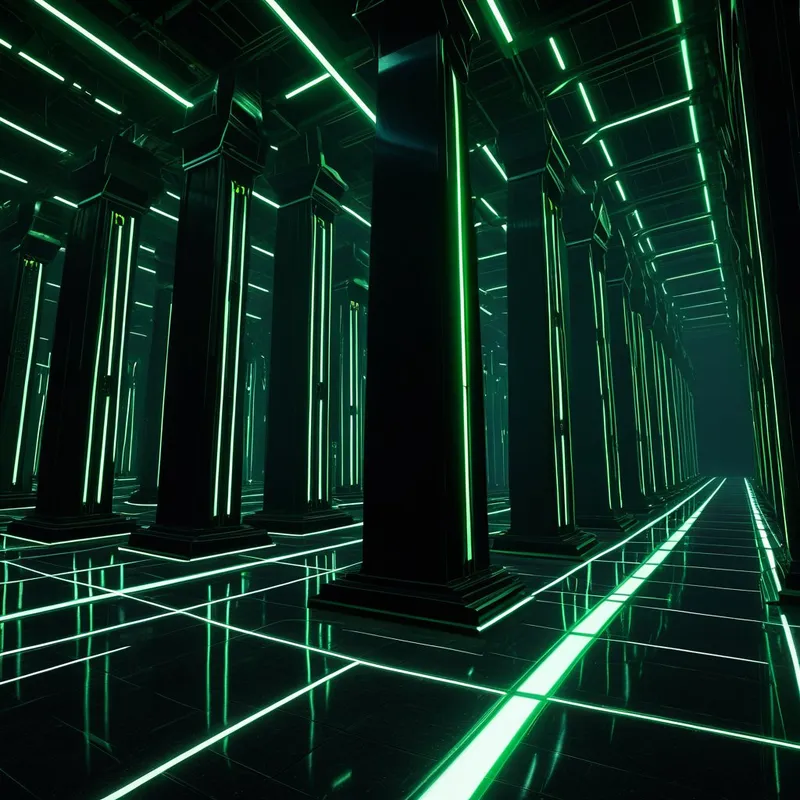
The server hall is endless, a cathedral of silent data. You stand before the master terminal, tasked with inputting the core command that will reboot the entire system. The keyboard is familiar, yet the keys are blank. A silent, expectant audience of shadowy administrators watches from the gantries above. You type, but the characters that appear on the screen are not your own, forming a sentence of perfect, meaningless gibberish. The hum of the servers grows louder, accusatory.
This is the alchemy of exposure: the terror that when called upon to manifest your core code, you will produce only noise, revealing an inner emptiness to the waiting world.
The False Lead
This theme is not about social anxiety, though it wears its clothes. It is not a simple fear of crowds or a replay of past embarrassment. To interpret it as such is to mistake the symphony for a single sour note. The dream of public performance is a profound structural event in the psyche. It is the soul’s council convening to debate a critical, internal referendum: What version of this self is fit for external sovereignty? The panic is not about the audience, but about which internal faction—the Critic, the Child, the Imposter, the Sage—will seize the microphone of your being. It is the chaos of democracy within, mistaken for a tyranny without.
Psychological Architecture
Beneath the dream-stage lies the architecture of Individuation, the process of becoming an undivided whole. Here, Shadow work is not done in a dark closet, but under a spotlight. Every part of you that you have hidden—the clumsy passion, the un-cooled anger, the fragile hope—clamors for representation. The dream presents the ultimate crisis of integration: can these exiles be allowed to speak their piece, to sing their off-key song, as part of your total performance? Or must you continue to deliver a polished, monochrome monologue authored only by your inner Ruler? The pressure of the dream is the pressure of the psyche demanding authenticity over cohesion, truth over tidiness. It asks you to dissolve the single, heroic protagonist and become a repertory company.
Mythic Resonance
We see this eternal drama in the myth of Psyche herself. Her final, most harrowing task is not a battle with a monster, but a descent to the Underworld to retrieve a box of beauty from Persephone. She is given strict, impossible instructions: do not open the box. Of course, she does. This is not mere disobedience; it is the essential, catastrophic act of the self stepping into its own authority. She performs the ultimate public act—defying a divine decree—for a private truth. The beauty in the box was never for Venus; it was the final ingredient for her own sovereignty. The performance dream often places us in Psyche’s moment: holding the box, knowing the rules, feeling the eyes of heaven upon us, and deciding if we will deliver the sealed performance or open it and claim what’s inside, damn the consequences.
Symbolic Nodes
- The Empty Stage: The potential of the unlived life, the blank page of identity.
- The Forgotten Lines/Script: The disconnect between the social mask (the persona) and the authentic self.
- A Hostile or Absent Audience: The fear of external judgment, or deeper, the fear that your truth will resonate with no one.
- Malfunctioning Microphone or Instrument: The terror that your means of expression—your voice, your art, your logic—will fail you at the crucial moment.
- Performing in Inappropriate Attire (or Naked): The vulnerability of being seen without your protective roles and achievements.
Archetypal Resonance
The energy here is most potently that of The Shadow Ruler.
The Shadow Ruler archetype resonates with the core fracture of this theme. Its somatic echo is the tyranny of control—the clenched jaw, the rigid spine, the desperate need to command every outcome and perception. In the performance dream, the Shadow Ruler is the internal director who insists on a flawless, pre-approved script, who sees the audience as subjects to be managed and pacified, not souls to be connected with. Its fear is the chaos of authenticity. Yet, its alchemical potential is immense. The heat of the dream is the pressure that can melt this rigid control into true sovereignty—the Ruler who governs not from fear of revolt, but from a deep, compassionate authority that can allow all parts of the self to have a voice in the kingdom. The transformation is from a dictator of a narrow state to a sovereign of a vast and varied interior realm.
The Alchemical Process
The alchemical transmutation of the public performance terror is called Enantiodromia—the profound process by which a thing turns into its opposite under sufficient pressure. Here, the leaden fear of exposure is turned into the gold of authentic expression. The nigredo, the blackening, is the moment of pure panic on the dream-stage, the feeling of annihilation. The albedo, the whitening, is the searing realization: "I am afraid because a part of me I have denied is demanding to be seen." The heat is applied in the liminal space between waking and sleep, where the ego’s defenses are down. The pressure is the unbearable weight of the audience’s expectation, which is ultimately the weight of your own unmet potential. In this crucible, the persona cracks. Through that crack, not chaos, but coherence emerges—not a single, polished note, but the capacity to hold the entire chord of your being, dissonance and all, and let it resonate. You move from performing a role to inhabiting a presence.

The Integration Protocol
Question 1: In the dream, what was the specific nature of the "failure"? Was it a forgotten script, a broken tool, or the audience's reaction? What part of you feels that failure is its defining truth?
Question 2: If the audience in the dream were not judges, but compassionate witnesses, what is the one thing the most vulnerable part of you would dare to perform?
Question 3: Where in your waking life are you delivering a "scripted performance" that is costing you your vitality? What is the single, unscripted sentence waiting beneath it?
Action 1 (Somatic Re-scripting): In a safe, private space, stand and physically embody the dream panic—the hunched shoulders, the shallow breath. Then, slowly, deliberately, alter the posture. Plant your feet. Place a hand on your sternum. Breathe into that hollow space. Do not "calm down"; instead, channel the energy of the panic into a stance of grounded readiness. Hold it for three minutes. You are rehearsing the body’s memory of sovereignty.
Action 2 (Exiled Voice Journal): Take a notebook. Write a monologue in the voice of the dream’s failure—the forgotten line, the broken instrument. Let it speak. What does it want to say that the "successful" performance never allowed? Do not edit for sense or beauty. This is creative excavation.
Action 3 (Micro-Ritual of Exposure): Choose a small, true expression you normally withhold. It could be singing aloud in your car, dancing badly in your kitchen for one full song, or stating a genuine opinion in a low-stakes conversation. Do it not to be seen by others, but to practice the act of allowing an internal impulse to become external motion. You are depositing a new memory in the psyche: that exposure does not equal catastrophe.
Final Validation
The terror is real. The hollow feeling, the dry mouth, the sense of being an impostor on the stage of your own life—these are not signs of weakness, but of a profound threshold. Your psyche only constructs such a vivid, punishing theater when you are ready, at a soul-level, to graduate from a bit-player in someone else’s narrative to the author-performer of your own. The dream is not a prophecy of failure; it is the dress rehearsal for your emancipation. The very fact that you can stand in that spotlight, even in terror, means the part of you that is meant to be seen is already there, waiting in the wings. It is waiting for you to drop the script, turn to the light, and begin the only performance that ever mattered: your own.