The Dream of Progress: An Alchemy of the Internal Architecture
The Somatic Echo
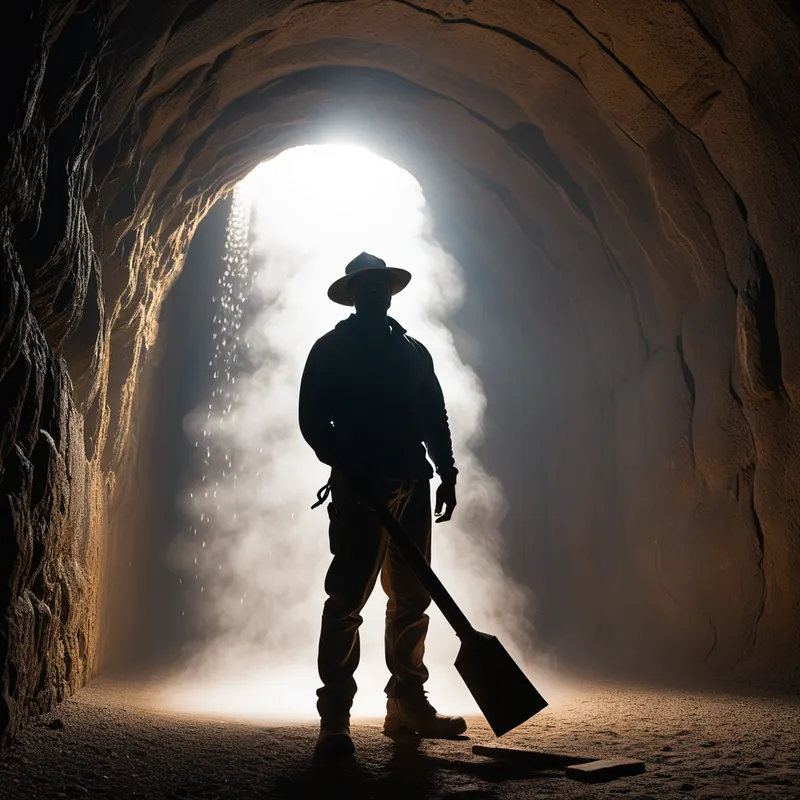
Before the mind can conceive of progress, the body registers it as a tectonic pressure. It is not the thrill of acceleration, but the deep, grinding hum of a foundation being tested. You feel it in the jaw, clenched against an unseen weight. In the solar plexus, a dense, magnetic knot of anticipation and dread. In the spine, a subtle, persistent ache—the sensation of an old structure groaning under the imposition of a new blueprint. This is the somatic echo of true progress: the visceral, often uncomfortable, recognition that the internal geography is shifting. The psyche is not merely adding a new room; it is excavating the bedrock, and the entire organism trembles with the reverberations.
The Dreamer's Log
The dreamer stands in a cavernous, abandoned server farm. The air hums with a residual static. All the drives are dark, save one—an obsolete, bulky unit glowing with a faint, amber light. A single cable, thick and root-like, runs from it into a crack in the concrete floor. The dreamer knows, with absolute certainty, that this drive contains everything. To move forward, they must unplug it, severing that root, and carry its impossible weight into the unknown.
Alchemical Interpretation: The psyche confronts the paradox of progress: to evolve, one must willingly disconnect from the very system that holds one’s entire history, and become the sole bearer of that weight.

The False Lead
Progress, in the dreamscape, is not a linear report of successes. It is not the dream of a promotion easily won, a car that never breaks down, or a path cleared of all obstacles. These are often fantasies of avoidance, the ego’s wish for a world without friction. True progress is almost always preceded by dreams of profound disassembly: engines that stall not from lack of fuel, but because they are being reconfigured; bridges that you must cross knowing they will collapse behind you; maps that rewrite themselves as you walk. The terror is not a sign of failure, but the signature of authentic structural change. Do not mistake the dismantling for disaster; it is the prerequisite.
Psychological Architecture
This is the Shadow work of the foundation. Our conscious life is built upon a hidden substructure—a network of inherited beliefs, trauma responses, and archaic survival strategies that function like the operating system of the self. Progress, in its deepest sense, is the terrifying, glorious project of rewriting that source code. It requires entering the server room of the subconscious, not as a tourist, but as a systems architect with a sledgehammer. You meet the internal family of parts: the Orphan who fears abandonment if things change, the Shadow Ruler who maintains brutal control to keep the system "stable," the Caregiver who smothers new growth to protect old wounds. Progress is the act of negotiating sovereignty with these exiled parts, not by overthrowing them in a coup, but by listening to the truth in their protests. The individuation process here is the slow, deliberate integration of these subsystems into a more fluid, conscious, and self-authored whole. You don't just build a new wing; you learn to breathe life into the entire, once-silent mansion.
Mythic Resonance
Consider the labors of Hercules. His progress was never a straight line to glory; it was a circuit of impossible tasks that forced him to engage with the monstrous, the sacred, and the filth of the world. Cleaning the Augean stables—a lifetime of accumulated waste—not by bucket, but by diverting two rivers through it. This is the mythic blueprint: progress as a fundamental rerouting of your inner rivers to cleanse a foundational, neglected space. It is not a battle with an external monster, but the rearrangement of your own elemental flow to accomplish what piecemeal effort cannot. Similarly, in the Norse myth, the god Tyr places his hand in the wolf Fenrir’s mouth as a pledge of good faith, knowing he will lose it. True progress often demands a covenant sealed with a sacrifice—a piece of your old certainty, your old security, willingly given to gain a greater binding, a greater freedom.
Symbolic Nodes
- Obsolete Technology: Rotary phones, cathode-ray tube monitors, floppy disks. The psyche highlighting an internal program that is functional but no longer compatible with the emerging world.
- Under Construction Sites: Scaffolding on familiar buildings, open walls exposing wiring, floors torn up to the subfloor. The active, messy state of internal renovation.
- Bridges (in mid-crossing): The focus is on being upon the bridge, with both shores visible, committed to the transition.
- Heavy, Essential Objects: A single suitcase you cannot leave but can barely lift, a cornerstone you must carry. The conscious burden of integrated history.
- Rewriting Text: Words dissolving as you write them, ledgers whose ink changes color, maps that redraw their contours. The updating of the personal narrative.
Archetypal Resonance
The energy of profound progress is most intimately aligned with The Creator Archetype. This is not the Creator in its gentle, artistic guise, but in its full, formidable aspect as the Architect and the Demolitionist. The somatic echo—that pressure in the foundation—is the Creator’s hand testing the integrity of the materials. The dream of the obsolete server is the Creator’s critical eye, identifying the component that must be salvaged and redesigned for a new system. This archetype provides the ruthless vision and the compassionate blueprint required to tear down what is no longer sound and to imagine a structure that can hold the complexity of your becoming. Its shadow—the Mad Scientist or Self-Centered Artist—looms when the drive to progress becomes an obsession with novelty for its own sake, discarding vital parts of the self in a manic pursuit of an inhuman ideal. The alchemical potential lies in marrying the Creator’s vision with the Caregiver’s reverence for what already exists, building not from nothing, but from the reclaimed stones of your own history.
The Alchemical Process
The transmutation here is from Burden to Foundation. The prima materia is the leaden weight of your history, your patterns, your "old self"—experienced as a suffocating burden or an obsolete machine. The nigredo, the blackening, is the conscious descent into that server room, the acknowledgment of the weight and the terrifying decision to pick it up anyway. The albedo, the whitening, is the phase of carrying. This is the intense pressure. It is the daily walk with the suitcase, the feeling of the root tearing as you unplug the drive. It is not action, but sustained, conscious bearing. Grief and terror are the heat of this phase. The rubedo, the reddening, is the moment the burden’s nature changes. The suitcase is no longer what you carry; it becomes the platform upon which you stand. The obsolete drive is no longer a relic, but the core processor of your new, integrated system. The weight integrates into your center of gravity. You have not dropped the past; you have metabolized it into sovereignty. The gold is a self that is both archive and architect, grounded in its own transformed history.
The Integration Protocol
Question 1: Where in my waking life do I feel the "grinding hum" of foundational pressure? Is it in a relationship, a career, a belief about myself? Can I describe the sensation without jumping to a story about what it means?
Question 2: What is the "obsolete server" in my psyche? What old program, belief, or identity still glows with the amber light of deep importance, yet feels incompatible with my forward motion?
Question 3: If the weight I am carrying (the grief, the history, the responsibility) were not a burden to be shed, but the essential material for my new foundation, how would my relationship to it change?
Action 1 (Somatic Cartography): For one week, keep a log of the "pressure points." When you feel the jaw clench, the stomach knot, the shoulder tension, pause. Do not analyze. Simply place a hand on the location and breathe into it for three cycles. Note the context after the sensation softens.
Action 2 (Blueprint Session): Using any medium—collage, digital drawing, charcoal on large paper—create an abstract "Blueprint of Progress." Do not draw goals. Instead, depict the process: the pressure, the old structure, the new materials emerging from the old. Let it be messy, technical, and symbolic.
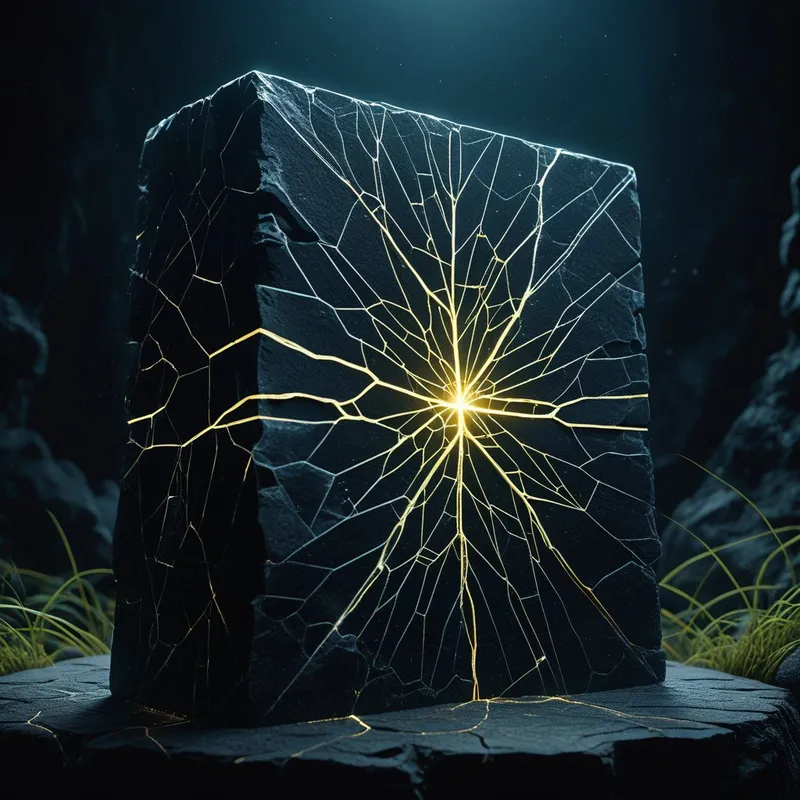
Action 3 (The Conscious Burden Ritual): Find a stone of a weight that is noticeable but carryable. This is your "cornerstone." Carry it with you on a walk, fully feeling its weight. At your destination, place it down. Sit with the physical memory of the weight now absent, and the knowledge that you chose to carry it. Leave the stone there. Your body has integrated the lesson.
Final Validation
It is hard. It is meant to be. The difficulty is not proof that you are failing, but evidence that you are engaging with the authentic, granular work of soul-making. The dream of easy progress is a seductive illusion; the dream of grinding gears and heavy stones is the psyche's honest report from the frontier of your own becoming. Trust the tremor in the foundation. It signals not collapse, but the arrival of the Architect. You are not falling apart. You are being rebuilt, from the ground up, by a wisdom that knows the weight of every stone it asks you to carry, and the majesty of the cathedral it is preparing you to inhabit.