
The Alchemy of Perseverance: When the Dream Asks You to Become the Mountain
The Somatic Echo
It begins not as a thought, but as a weight. A density in the marrow of your bones, a slow, tectonic pressure in your joints. Your breath becomes shallow, a thin resource measured against an invisible, rising tide. There is a familiar ache in the shoulders, not from a burden placed upon them, but from the act of holding a shape—your own shape—against a force that seeks to dissolve it. This is the body’s knowing of perseverance: a deep, cellular hum of resistance. It is the somatic signature of a structure—your psyche—under the necessary stress of its own becoming. Before the mind conjures images of endless stairs or locked doors, the body is already speaking in the ancient language of geology, of stone remembering it was once magma, of roots remembering they must split rock to drink the sky.
The Dreamer's Log
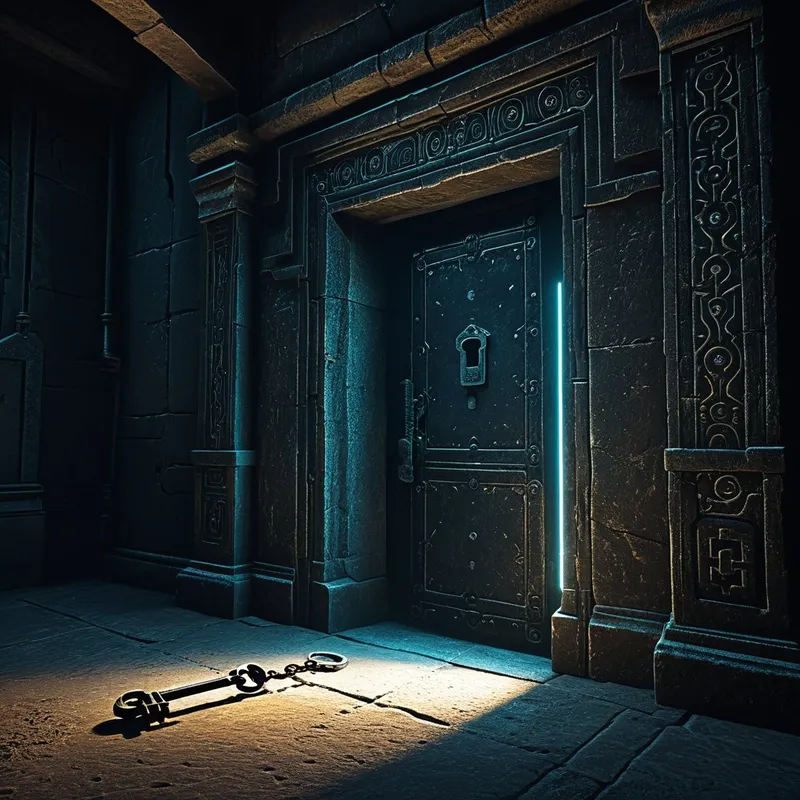
The dream is always the same: you stand before a colossal, featureless stone door in a silent, cavernous hall. You possess a key, but it is rusted, its teeth worn smooth from a thousand futile attempts. You know, with a certainty that bypasses logic, that you must turn it. Not once more, but forever. The act is not about opening the door; it is the turning itself that is the destination.
The alchemy here is in the transmutation of the goal: from opening (an external event) to turning (an internal, eternal gesture of will).
The False Lead
Perseverance is not stubbornness. It is not the ego’s brittle refusal to admit defeat, nor is it the masochistic romance of suffering. To mistake it for mere endurance is to confuse the mountain for the path. The shadow of true perseverance is a grinding, circular motion that polishes the soul into numbness, a Sisyphus without the moment of lucidity where the rock becomes his own. This dream theme is not reporting on a streak of bad luck or an unfair obstacle course laid out by life. It is signaling a profound, structural negotiation within the self. It is the difference between pushing against a wall and discovering you are the wall—and the space beyond it—simultaneously.
Psychological Architecture
Here, the work is of the foundation. In the language of internal family systems, it is the moment when the exiled, weary part that whispers “I can’t” is not fought, but invited to sit at the council fire. The pressure of perseverance creates the heat needed to differentiate the Self from the legion of managers and firefighters within. One part screams to quit, another to fight harder, a third to find a clever bypass. Perseverance, in its depth, asks you to witness this civil war without enlisting in any faction. It is the slow, often agonizing process of Individuation where you are forged in the tension between opposites: strength and surrender, action and being, the will to proceed and the grace to accept the present step. You are not overcoming a challenge; you are metabolizing it into the very substance of your consciousness. The shadow work is to confront the secret relief hidden in the idea of failure, the orphaned part that believes ceasing the effort is the only way to find rest.
Mythic Resonance
Consider the Norse myth of Odin, who hung himself on the World Tree Yggdrasil, pierced by his own spear, for nine nights. He was not battling an external foe, but suspending himself in the void between worlds, sacrificing his own comfort to the tree of existence itself. His perseverance was not movement, but a profound, agonizing stillness—a willingness to remain in the wound until the secret of the runes, the structures of reality, bled into his awareness. His gain was not a trophy, but a rewiring of his own sight. Similarly, the trials of Inanna descending through the seven gates of the Underworld speak to this. At each gate, a piece of her regalia is stripped away, not by an enemy, but by the protocol of the realm. The perseverance is in continuing the descent even as she is unmade, trusting that the core self, naked and humble, can withstand the gaze of eternity and return transformed.
Symbolic Nodes
- Endless Staircases or Tunnels: The path that reveals itself only as you step, with no visible summit or end.
- Repetitive, Futile Tasks: Polishing stones that remain dull, digging a hole that refills, writing in sand before a tide.
- A Heavy, Unwieldy Key or Tool: An object that fits its purpose perfectly yet requires impossible, sustained force to operate.
- A Slow, Relentless Tide or Growth: Being pursued by a rising wall of water, ivy, or crystalline structures that cannot be outrun, only paced.
- Forging or Tempering Metal: The dream-self engaged in the act of heating, hammering, and cooling a blade or object, feeling the strain in the arms.
Archetypal Resonance
The Hero Archetype is the undeniable core of this theme, but often in its most mature, somber, and internalized form. This is not the Hero charging the dragon with a battle cry, but the Hero on the vigil, the one who guards the threshold through the long, dark night. The somatic echo of weight and pressure is the Hero’s burden, the conscious taking up of a task that defines a world. Its alchemical potential lies precisely in the dissolution of the archetype’s own vanity; the true victory is not slaying the monster, but integrating the knowledge that the monster and the will to fight it are both born from the same psychic source. The perseverance dream is the Hero’s journey turned inward, where the battlefield is the soul’s own landscape, and the prize is sovereignty born from self-confrontation.
The Alchemical Process
The alchemy of perseverance is the transmutation of effort into essence. The prima materia is the raw, exhausting feeling of struggle—the grief of the path, the terror of the endless. The furnace is the sustained, conscious tension of holding your course while fully feeling the desire to abandon it. This is the nigredo, the blackening. The pressure is not meant to crush you, but to create the density necessary for a new atomic structure to form. As you endure, a subtle shift occurs: the energy you expend is no longer lost to friction against an external world, but begins to cycle back into the system of you. The act of turning the key becomes a ritual that charges the turner, not the lock. The staircase becomes the spine. The weight becomes mass, becomes gravitational center. The intense, slow heat cooks away the identity of “the one who struggles,” leaving behind the simpler, more profound presence of “the one who is.” The gold produced is not a reward, but a fundamental recalibration: you are no longer moving toward strength; you are abiding within it.

The Integration Protocol
Question 1: Where in my waking life does the effort feel like a draining, circular grind? Where does that same effort, perhaps in a different context, feel like a sacred, strengthening ritual?
Question 2: If the obstacle in my dream is not something to be broken through, but a part of myself to be recognized, what quality of my own being does it most solidly represent?
Question 3: What tiny, non-negotiable commitment can I make to one necessary thing, not for the outcome, but for the integrity of making the commitment itself?
Action 1 (The Grounded Pause): When you feel the somatic echo of weight or pressure, stop. Place both feet flat on the floor. For one minute, do not try to solve, fix, or advance. Simply feel the weight as a physical fact. Breathe into the density. You are not trying to lighten it; you are practicing being the container that holds it.
Action 2 (The Ritual of the Worn Tool): Find a small, worn object—a smooth stone, an old key, a piece of weathered wood. Spend 10 minutes in unstructured writing or drawing, not about the object, but from the perspective of the object. What has it pressed against? What has worn it smooth? Let it speak of its own perseverance.
Action 3 (The Architecture of a Single Step): Identify one small, recurring task in your life that feels futile (e.g., clearing a perpetually messy corner). For one week, perform this task not to complete it, but as a deliberate, mindful ritual. Pour your full attention into the motion. Document the subtle shifts in your relationship to the task, and to the space it occupies within you.
Final Validation
The path is long because it is meant to change the walker. The key is heavy because you are not meant to simply open a door, but to rebuild your hand around the truth of turning. This is not a test of your worth, but an invitation to forge your worth in the one fire hot enough to do so: your own sustained, conscious presence. The dream does not show you an obstacle you are too weak to pass. It shows you the shape of the strength you are in the slow, glorious process of becoming. The mountain before you is not an adversary. It is the future self, waiting patiently for you to arrive.