The Alchemy of Mercy: Dissolving the Inner Tribunal
The Somatic Echo
Before the mind can parse the image, the body knows. The dream of mercy announces itself not as a thought, but as a sensation—a sudden, shocking absence of pressure. It is the unclenching of a jaw you didn’t know was locked, the softening of a diaphragm held rigid for years. It is the visceral release of a breath you’ve been holding since some forgotten moment of self-condemnation. This is not the warm glow of forgiveness, which is often a story we tell ourselves. This is colder, clearer. It feels like a silent, spacious chamber opening in the chest where before there was only the crowded courtroom of the psyche, gavel perpetually pounding. The somatic echo is one of hollowed-out relief, a quiet so profound it rings. It is the physical recognition that the war within has, for a moment, declared an armistice not through victory, but through dissolution.
The Dreamer's Log
The dreamer stands on a bridge of black glass, overlooking a city of sharp, accusing light. In their hand, they hold a heavy, ornate key—the key to a cell they themselves occupy. Without a thought, they let it slip from their fingers. It falls, not with a clang, but is swallowed by a dark, gentle river below. A voice, their own yet not, whispers from the water: "The sentence was always yours to commute."
This dream is an alchemical operation where the act of dropping the key (the tool of confinement) transmutes the dreamer from prisoner into warden, and then, instantly, into the open space itself.

The False Lead
Mercy in dreams is not about excusing poor behavior or avoiding necessary consequences. It is not the spiritual bypass of the Shadow Innocent, painting over rot with pretty colors. To mistake mercy for mere leniency is to misunderstand its architecture entirely. This is not about letting yourself "off the hook." That implies the hook—the judgment, the structure of crime and punishment—remains the central, valid reality. The dream of mercy often arrives to show you that the hook, the tribunal, the entire juridical framework of your self-relation, is the primary illusion. The theme challenges not the verdict, but the court's very right to exist.
Psychological Architecture
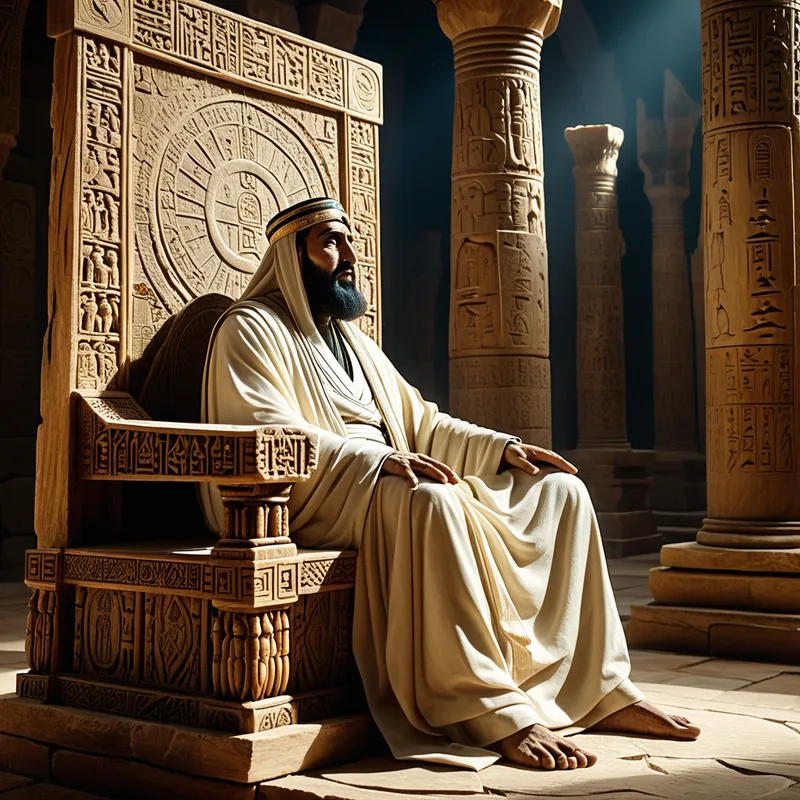
The psychology of mercy is the dismantling of an internal monarchy. We each house a Ruler—an archetypal function that orders, judges, and metes out punishment to keep the inner kingdom in line. Its shadow is the Tyrant, who confuses control for order, and cruelty for justice. The dream of mercy emerges when this Ruler’s law has become too perfect, too rigid. It has sentenced parts of you—the vulnerable Orphan, the passionate Rebel, the failing Hero—to life in solitary confinement for their crimes of need, desire, or weakness.
The shadow work here is profound: you must go down into the dungeons not to pardon these exiles, but to see the Ruler who put them there. Individuation demands you reclaim your sovereignty from this internal autocrat. Mercy is the moment you, as the total Self, look upon this inner Judge and, with unbearable clarity, see its fear. You see that its harsh sentences were never about justice, but about a terrified attempt to manage a world it felt was fundamentally unsafe. This recognition—of the tyrant’s own fragility—is the crack where mercy flows. It is the integration of the Ruler’s strength with the Lover’s compassion, creating a true sovereign who leads not through fear, but through conscious, difficult embrace.
Mythic Resonance
We see this alchemy in the myth of the Buddha under the Bodhi tree. As Mara, the personification of doubt, fear, and temptation, launches his final assault with armies of demons, the Buddha does not fight. He does not condemn. He simply touches the earth, calling it as his witness. In that gesture, he acknowledges Mara, he sees him fully—and in that seeing, he refuses to engage in the battle Mara is trying to provoke. The armies vanish. This is not victory through force, but through a merciful, grounded recognition that dissolves the very framework of conflict. The demon is not slain; he is rendered irrelevant by a consciousness that has expanded beyond the dualities of conqueror and conquered.
Symbolic Nodes
- A key dropped or melting.
- A stern figure weeping or turning away.
- Ice thawing without heat.
- A locked door found already open.
- A weapon transforming into a tool or a stem.
- A judge removing their robes.
- A tight knot loosening of its own accord.
Archetypal Resonance
This theme pulses with the energy of The Ruler Archetype, specifically in the moment of its transmutation from its Shadow aspect. The Shadow Ruler is the internal Tyrant, the control-freak judge whose merciless sentences maintain a brittle, fear-based order. The dream of mercy is the Tyrant's crisis—the somatic echo is the feeling of its gavel stopping mid-strike. The archetype's core energy of establishing order is not destroyed; it is alchemized. The potential here is for the Ruler to evolve from a tyrannical judge into a true sovereign. A sovereign does not rule through harsh punishment, but through the wise, compassionate stewardship of all the diverse territories of the self. Mercy is the sovereign's first act: the conscious choice to disband the court of self-persecution and govern instead through informed, inclusive grace.
The Alchemical Process
The alchemy of mercy requires the most intense heat of all: the heat of unwavering, non-judgmental attention. This is the negredo, the blackening. You must apply the pressure of your conscious awareness directly to the wound of your own self-judgment without flinching, without rushing to fix it or forgive it. You hold the tension between the part of you that feels guilty, ashamed, or lacking, and the part of you that viciously condemns it. In this crucible, a third thing appears: the witness. This witness sees the condemned and the condemner as two parts of a whole system locked in a dance of suffering.
The transmutation occurs when this witness, embodying the total Self, feels compassion for the condemner. It sees the Tyrant’s harshness as a misguided, fearful child trying to protect the kingdom. This compassion dissolves the rigid boundary between "good" and "bad" selves. The energy once used to maintain the prison—the vigilance, the anger, the control—is liberated. It becomes the aqua permanens, the permanent water, that can now flow and nourish the entire psychic landscape. The leaden weight of eternal judgment is transmuted into the gold of conscious responsibility, free from the corrosion of hatred.

The Integration Protocol
Question 1: Where in your life do you feel an unshakable, cold certainty about your own failings? Can you trace the voice of that verdict back to a specific fear it is trying to manage?
Question 2: If your inner Judge were a character, what does it look like? Is it weary? Is it afraid? What might it be protecting you from, in its own distorted way?
Question 3: What becomes possible—what energy is freed—in the moment you suspend the sentence? Not pardon it, but simply call for a recess in the court of your mind?
Action 1 (The Unclenching): For one minute, three times a day, place a hand on your sternum. Do not try to breathe deeply or change anything. Simply feel the subtle, automatic rise and fall. Your only task is to notice, without judgment, if the breath feels permitted or imprisoned.
Action 2 (The Amnesty Ledger): Take a page and draw two columns. In the first, list "The Condemned" (e.g., "my laziness," "my anger"). In the second, "The Sentence" (e.g., "no rest," "isolation"). Now, burn the page. Not as destruction, but as a ritual act of changing the form of this rigid ledger into smoke and ash—materials that cannot hold a fixed record.
Action 3 (Sovereign's Decree): Write a short, formal decree from your future, integrated Self to your current inner kingdom. It must begin with "Let it be known that..." and must contain one clear act of de-escalation (e.g., "...the garrison standing guard at the heart is hereby ordered to stand down," or "...the exile of wonder is officially revoked"). Speak it aloud.
Final Validation
To encounter mercy in dreams is to confront the terrifying architecture of your own self-governance. It is difficult because it asks you to relinquish the familiar, if painful, comfort of being your own worst enemy—a role that gives a strange, perverse sense of control and identity. This is not work for the faint of heart. It requires the courage to face the warden and see the prisoner in their eyes. But in that recognition lies your true sovereignty. You are not meant to live forever in the cellblock of your own design. The dream of mercy is a blueprint for the dissolution of those walls, not by force, but by the profound, quiet authority of a consciousness that has finally outgrown the need to punish itself into being. The key was always yours. The dream asks only if you are ready to stop being the thing that turns it in the lock.