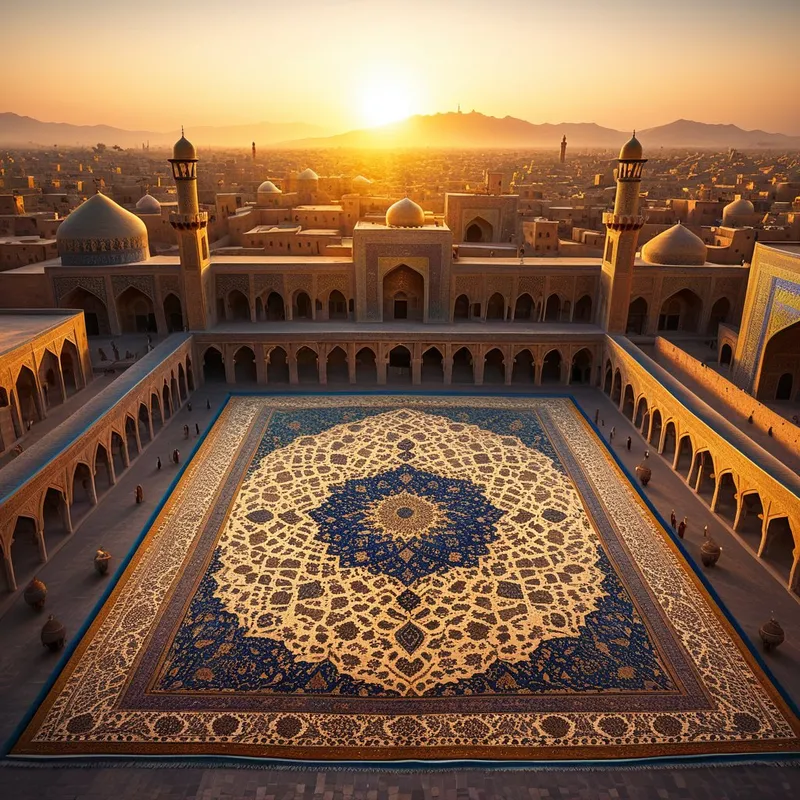
The Architect of the Psyche: Imagination as Alchemical Blueprint
The Somatic Echo
Before it is an image, it is a pressure. Before a story, a vibration. The theme of Imagination announces itself not as a thought, but as a somatic hum—a gathering tension in the chest cavity, a quickening behind the eyes, a feeling of potential energy coiled in the solar plexus like a spring about to release. It is the body’s pre-language, a silent knowing that the internal landscape is preparing to shift its tectonic plates. You feel it as a creative ache, a restlessness that is neither anxiety nor excitement, but the raw material from which both are forged. It is the visceral sense of a door about to open in a wall you didn’t know was there, accompanied by the faint, electric scent of ozone before a storm. This is the echo of the psyche’s most profound faculty: not escapism, but the very mechanism of reality-creation.
The Dreamer's Log (Case Vignette)
In the dream, I am in a vast, silent archive of forgotten books. I find one, bound in worn leather, and open it. The pages are blank, but as my finger traces the paper, intricate clockwork diagrams of impossible cities rise from the fibers in threads of blue light. The book is not a record; it is a loom.
This dream is not about seeking knowledge, but about encountering the instrument that weaves knowledge from the void. The blank pages are the unformed potential of the Self, and the act of tracing is the conscious engagement that catalyzes the imagination’s innate, structural intelligence.

The False Lead
Imagination in dreams is often mistaken for mere fantasy or wish-fulfillment—a mental playground divorced from consequence. This is the False Lead. The true function of imaginative dreaming is not to provide an escape from reality, but to provide the blueprints for a new one. It is not the opposite of the real; it is its progenitor. A dream of flying is not simply a desire for freedom; it is the psyche constructing the somatic and symbolic experience of sovereignty so that it may be integrated into waking life. To dismiss these visions as “just imagination” is to ignore the architect who is actively, nightly, remodeling the house of your being.
Psychological Architecture
To engage with Imagination is to enter the psyche’s workshop. Here, Shadow work is not about battling monsters, but about reclaiming disowned creative power. The part of you that says “I’m not an artist” or “I could never build that” is a sub-system exiled to the shadows, often for fear of failure, ridicule, or the terrifying responsibility of bringing something new into the world. Individuation, in this realm, is the process of becoming the sovereign of this inner workshop. It is to stop seeing yourself as a tenant in a prefabricated psychic structure and to pick up the tools—the symbols, the emotions, the memories—and begin, consciously, to redesign. The dream images are your schematics. The fear of the blank page, the awe at the emerging blueprint, the grief for the old, cramped structures that must be dismantled—this is the labor.
Mythic Resonance
This process echoes in the myth of Hephaestus, the lame god of the forge. Cast out from Olympus, he did not languish; he descended into the volcanic depths and built his own realm of exquisite, intelligent artifice. His lameness is not a weakness but the symbol of a different kind of power—one born not of perfect grace, but of focused, transformative heat and pressure. He works with raw materials (emotions, traumas, desires) and through imagination and craft, forges them into objects of divine function. Similarly, the Dreamtime of Aboriginal Australian cosmology is not a past event but a continuous, imaginative layer of reality—a blueprint world that sings the physical world into being through story and symbol. We each have an inner Hephaestus, and we walk our own Dreamtime, singing our selves into existence every night.
Symbolic Nodes
- Blank Canvases, Empty Rooms, Untouched Land: Unconscious potential awaiting form.
- Labyrinths, Complex Machinery, Blueprints: The intricate, often confusing, process of psychic construction.
- Unfamiliar Tools, Mysterious Instruments: Latent abilities or new psychological approaches coming online.
- Malleable Substances (Clay, Light, Water): The primal, shape-shifting material of the Self.
- Architectural Wonders or Ruins: The current state of your psychic structures—being built or being dissolved.
Archetypal Resonance
The energy of Imagination is the pure, unalloyed current of The Creator Archetype. This is not the shadow artist obsessed with a single, perfect masterpiece, but the core Creator who finds divinity in the act of making itself. Its somatic echo is that building pressure, the urge to give form to the formless. Its alchemical potential lies in its ability to take the leaden weight of lived experience—the grief, the memory, the inertia—and, through the visionary fire of attention, transmute it into the gold of meaning, beauty, and new structure. The Creator in a dream does not ask if something is useful or good; it asks only, “What wants to be made from this?” It is the architect of the soul, forever drafting, building, and sometimes, wisely, demolishing.
The Alchemical Process
The alchemy of Imagination is Sublimation—the transformation of a solid directly into a vapor, bypassing the liquid state. Psychologically, this is the process of taking the solid, often painful or rigid, facts of your life and your identity and, through the intense heat of imaginative engagement, converting them into a liberated, gaseous potential. The pressure is the tension between the world-as-it-is and the world-as-it-could-be. The heat is the focused, non-judgmental attention you bring to your dream imagery and inner urges. You do not melt the old structure slowly (analysis alone); you vaporize it in a flash of insight, allowing its particles to re-coalesce into an entirely new, more elegant form. The grief is for the solid, known shape that is lost. The sovereignty is born from realizing you are not the solid, nor the vapor, but the alembic in which the transformation occurs.
The Integration Protocol
Question 1: Where in my waking life do I feel that same somatic pressure or creative ache that appears in my dreams? What situation or inner conflict is asking to be re-imagined, not just solved?
Question 2: If the central image from my dream of imagination (the clockwork book, the malleable clay, the empty room) were a tool or a blueprint, what is the first, smallest thing I am being invited to build or reshape within myself?
Question 3: What old, internal structure—a belief, a self-concept, a story—must be willingly dissolved into vapor (released from its current form) to make space for the new architecture my imagination is proposing?
Action 1 (Somatic Blueprinting): For five minutes upon waking, before any analysis, lie still and re-inhabit the feeling of the imaginative dream. Let the images go and focus only on the bodily sensation of potential, pressure, or awe. Breathe into that space in your body. This grounds the vision in your nervous system.
Action 2 (Unstructured Transcription): Take the core image from your dream. Set a timer for 10 minutes and write, draw, or voice-record with no goal of making sense. Let the image “speak” or morph on the page. If it was a machine, how does it sound? If it was a space, what is its texture? Follow the impulse without editing. This is creative communion, not interpretation.
Action 3 (Ritual of Elemental Release): Find a small, natural object that represents a rigid structure you are ready to re-imagine (a stone for a hardened belief, a twig for an old habit). Go to a body of moving water—a stream, the sea, even a fountain. Hold the object, acknowledge its old service, and then consciously offer it to the water as raw material for the imagination of the world to reshape. Witness it being carried away.
Final Validation
It is a profound and often terrifying responsibility to recognize yourself as the architect of your inner world. It is easier to live in a pre-fabricated reality, even a painful one. To sit with the blank page, to feel the pressure of the unformed, to dare to trace the first line—this is the courage your dreams are calling forth. The difficulty is real. The disorientation is part of the plan. But within that silent archive of your soul, the blueprints are already glowing. You are not reading them. You are drawing them. With every conscious breath into that creative ache, you are signing your name to the foundation of a world waiting to be born.