The Alchemy of Escape: Dissolving the Internal Prison
The dream of escape arrives not as a thought, but as a somatic echo. It is the body’s memory of a cage it has never seen. You feel it first in the hollow of the throat—a silent, screaming pressure. It thrums in the solar plexus, a trapped-bird flutter against the ribs. The shoulders hunch, anticipating a weight. The calves tense, coiled springs ready to launch you from a bed that has become, for a moment, a slab in a cell you cannot name. This is the pre-verbal truth: something within you has reached its limit. A system is overloaded. A boundary has been breached. The mind will later furnish the images—the locked door, the pursuing shadow, the crumbling bridge—but the body knows the raw data first. It is the pure signal of a self in containment.
The Dreamer's Log
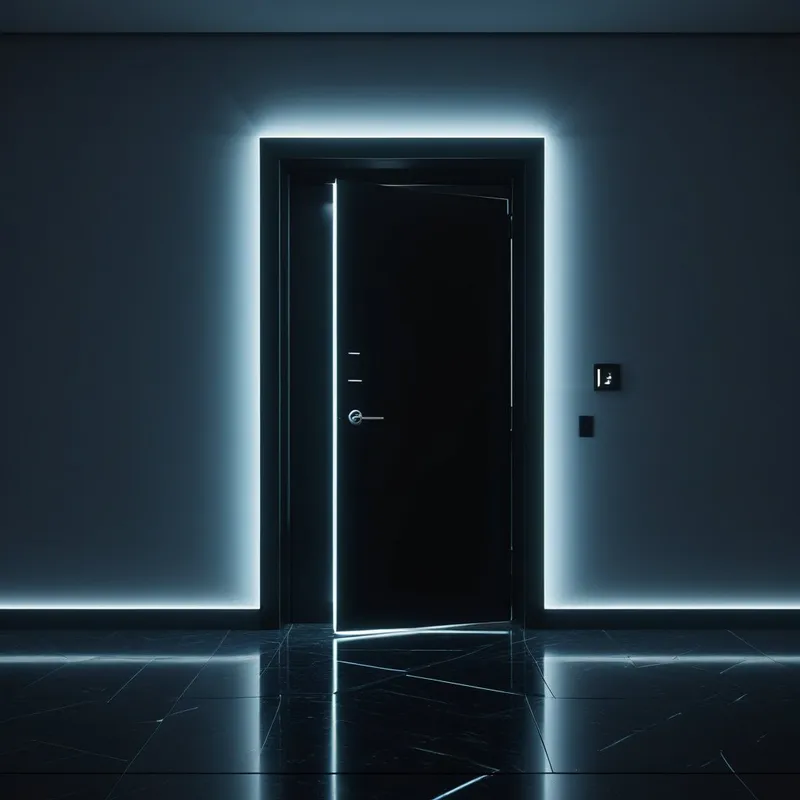
The dream is always the same: I am in my apartment, but it is not mine. The walls are smooth and featureless, a seamless grey. I know, with absolute certainty, that I must leave. There is no threat, no sound, just this imperative. I try the door—it is unlocked, but impossibly heavy. When it finally gives, it opens not to a hallway, but to a blinding, formless white light. I always wake before stepping through.
This is not a dream of running from, but of being called toward a state of being so unfamiliar it registers as sheer, annihilating light. The alchemical interpretation: The psyche is preparing to sacrifice the known, constricted self at the threshold of a potential it cannot yet comprehend.
The False Lead
To interpret the escape dream as mere anxiety or a desire to avoid responsibility is to mistake the symptom for the cure. This is not the childish wish to shirk duty. It is the soul’s profound rebellion against a life lived inauthentically, against identities worn like ill-fitting uniforms, against agreements made by a younger, more frightened version of you. The terror is not of the external pursuit, but of the internal warden—the internalized rules, the frozen grief, the exiled anger that patrols the corridors of your inner world, ensuring you do not stray beyond the permitted confines of “who you are supposed to be.”
Psychological Architecture
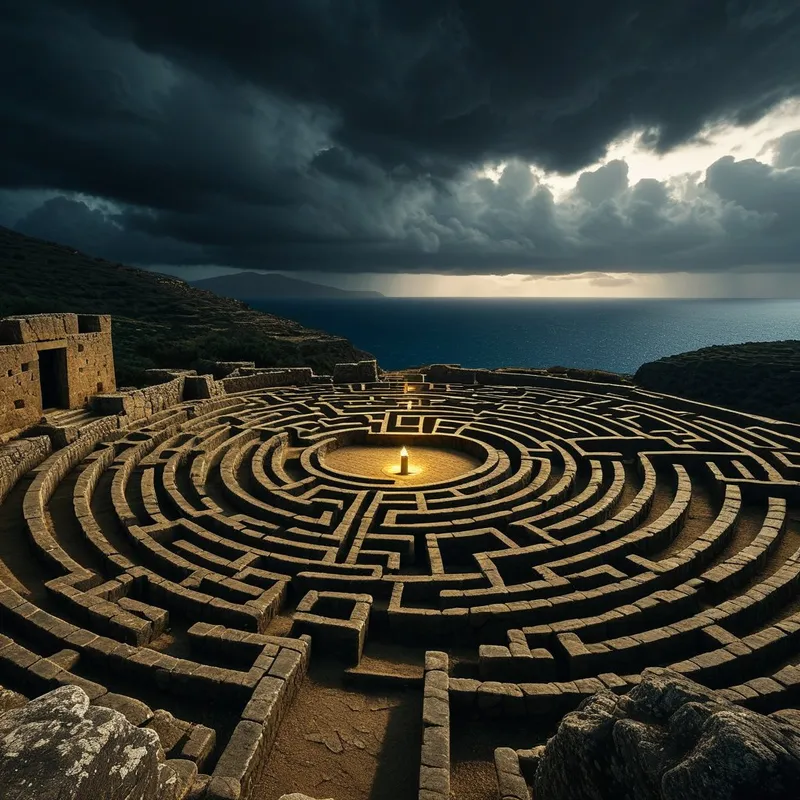
The architecture of an escape dream reveals the blueprint of your internal prison. Each locked door is a forbidden emotion. Each pursuer is an aspect of your own psyche—the Inner Critic, the People-Pleaser, the Perfectionist—tasked with keeping you in line, now grown monstrous in its zeal. The maze is the labyrinth of conditioning, the complex of “shoulds” and “musts” you inherited.
This is the shadow work of escape: to turn and face the warden. Not to fight it, but to recognize it as a protector part of you, a desperate internal family system member that took on a tyrannical role to keep a younger, more vulnerable you safe. Its method was imprisonment, but its original intent was sanctuary. The individuation process here is the slow, painful negotiation with this guard. It is the realization that the self you are trying to escape from is, in fact, a coalition of sub-selves governing a kingdom that no longer exists. Sovereignty is not won by overthrowing them in battle, but by thanking them for their service and informing them that the war is over. The prison dissolves only when you stop seeing yourself as its inmate and recognize yourself as its forgotten architect.
Mythic Resonance
This universal firmware runs deep. Consider the myth of Daedalus and Icarus. We remember Icarus’s fatal flight, but the true escape artist was Daedalus, the genius builder. He constructed the Labyrinth to contain the Minotaur, a beast of shame and hidden desire, only to be imprisoned within his own creation by the king. His escape required not brute force, but a supreme act of creative intelligence—fashioning wings from feathers and wax. The dream of escape is the Daedalus within us, the builder who realizes he is trapped in his own most ingenious structure, and must now devise a way to transcend the very dimensions he engineered.
Symbolic Nodes
- Locked Doors/Windows: Barriers of your own making or internalized prohibition.
- Vehicles that won't start: A sense of agency that is currently off-line or disconnected from will.
- Being Chased: The pressure of disowned parts of the self demanding reintegration.
- Impassable Terrain (Swamps, Thickets): The emotional mire of unresolved grief or tangled loyalties.
- Secret Passages/Hidden Exits: Latent inner resources, forgotten talents, or intuitive knowing.
- Crossing a Threshold into Light/Void: The ultimate alchemical transition, from the known self to the potential self.
Archetypal Resonance
The core energy of the escape dream is most potently embodied by The Rebel Archetype. Not its shadow aspect of chaotic destruction, but its essential, purifying fire. The Rebel’s somatic echo is that exact tension in the calves, the raised fist in the gut, the refusal to be assimilated into a system that demands the soul’s diminishment. Its alchemical potential lies in its sacred no—a negation that is, paradoxically, the first creative act of the true self. By saying "no more" to the internal tyranny, it clears the scorched earth upon which authentic being can be built. The Rebel does not flee blindly; it destroys the prison to liberate the sovereign.
The Alchemical Process
The transmutation of escape is the Dissolution of the Internal Edifice. The raw lead of trapped terror is not heated in a crucible, but subjected to the relentless pressure of conscious attention. You must sit in the cell and feel its contours. You must map the cracks in the mortar. This is the nigredo, the blackening—the despair of realizing the extent of your own confinement.
The heat is applied through radical self-honesty: What life am I actually living? What voice inside me is not allowed to speak? The pressure builds as you stop numbing the discomfort, stop rationalizing the cage. As the old structure—the identity built on compliance, the personality forged in adaptation—begins to soften and destabilize, the terror peaks. This is the critical moment. The alchemical gold is not found by successfully fleeing the dissolving structure, but by having the courage to remain present within the collapse, to witness the false walls melt away, and to discover that what remains standing is not nothingness, but the unshakable, central column of your essential nature. The escape is inward, into a core that was never imprisoned.

The Integration Protocol
Question 1: If the room in your dream is a metaphor for your current psychic structure, what is the one piece of furniture, rule, or decoration that feels most alien to your true nature?
Question 2: Who or what is the "warden" in your dream protecting you from? What old danger is it still vigilantly guarding against, long after the threat has passed?
Question 3: If you were to stop trying to escape and instead fully inhabit that dream-space with compassion, what forgotten resource or hidden door might reveal itself?
Action 1 (Somatic Re-mapping): For one week, when you feel the "escape urge" in waking life—that tension, that restlessness—pause. Place a hand on the part of your body where you feel it most strongly. Breathe into that space for three cycles. Do not try to change it. Simply acknowledge its message: "Something here feels trapped. I am listening."
Action 2 (Exile's Manifesto): Engage in 10 minutes of completely unstructured, stream-of-consciousness writing. Begin with the prompt: "What is not allowed here is..." Let the exiled voice speak. Do not censor, correct, or even read it back. Burn or shred the pages after. The act is in the release, not the record.
Action 3 (Threshold Ritual): Physically demarcate a threshold in your home (a doorway, a space between two objects). Stand on one side and name aloud one internal rule or limitation you are choosing to leave behind. Step across. On the other side, state one quality of freedom you are inviting in (e.g., "spontaneity," "quiet defiance"). Perform this with simple solemnity.
Final Validation
The dream of escape is exhausting because it is the labor of a soul in birth. To feel this urge is not a sign of weakness, but a testament to a profound and resilient life-force within you that refuses to be extinguished, that still knows its own name beneath layers of adaptation. The path is not out, but through—through the fear, through the grief of the identities you must shed, through the terrifying freedom of the blank page that awaits on the other side of the threshold. Your very longing for escape is the first, surest proof that the sovereign self already exists, and it is calling its kingdom home.