The Unseen Architect: Darkness as the Psyche's Primordial Ink
The Somatic Echo
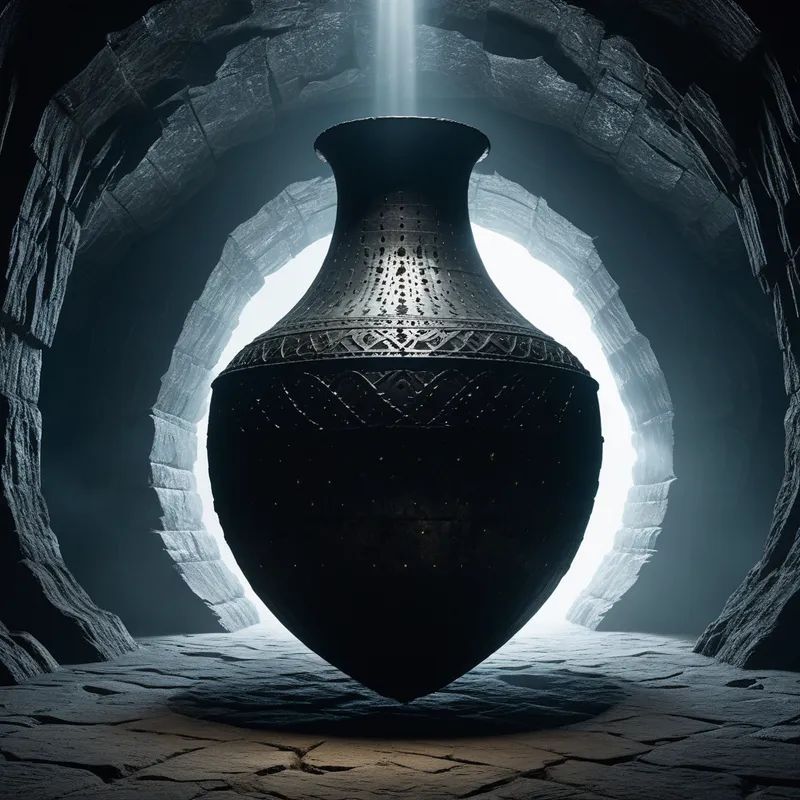
Before it is an image, darkness is a felt sense. It is the body’s memory of the womb and its anticipation of the tomb—a deep, cellular hum. It is not merely the absence of light, but a positive, palpable presence. The breath slows, becomes shallow, as if the air itself has thickened. The skin prickles, not with cold, but with a heightened awareness of the space just beyond its boundary. The stomach hollows, not with hunger, but with the gravity of a vast interior. This is the somatic echo: a primal, pre-verbal knowing that you are in the presence of the Unformed. The mind, scrambling for purchase, will later label it fear, loneliness, or dread. But in the first raw moment, it is simply depth. It is the ground of being announcing itself, not as solid earth, but as infinite, fertile void.
The Dreamer's Log
The dreamer stands on a rain-slicked city street at midnight. The familiar neon signs are all dark. In their hand, their smartphone screen cracks, then shatters, its light dying to reveal only their own faint reflection in the black glass. The surrounding towers are not just unlit; they seem to absorb sound, leaving only the echo of their own heartbeat.
This is not a dream of technology failing, but of the constructed self dissolving. The external interfaces—the signs, the screen—go dark to force a confrontation with the internal source code, the reflection in the void.

The False Lead
To interpret the darkness as merely “bad luck,” depression, or ignorance is to commit a profound error. It is not a problem to be solved with a light switch. This is the False Lead of the ego, which mistakes the territory for a temporary power outage. The darkness in these dreams is not an enemy, but a condition. It is not the collapse of structure, but the revelation of the substrate upon which all personal structure is built. It is the difference between losing your way in a forest and being gently lowered into the rich, black humus from which the forest grows. One is a crisis of navigation; the other is an invitation to decomposition and re-composition.
Psychological Architecture
Here, in this velvet pressure, the work of Shadow begins. Not as a battle with monstrous “parts,” but as a slow, somatic recognition of disowned densities. In the language of internal family systems, these are the exiles who have never seen the light of day—not because they are evil, but because their pain or power was too intense for the conscious system to hold. The darkness is their native habitat. To enter the dream-darkness consciously is to enter the inner parliament when the lights are off, hearing the whispers and felt sighs of those members who speak only in the absence of the blinding spotlight of identity.
This is the core of Individuation: not adding more light to become someone brighter, but developing the capacity to see in the dark. It is to differentiate the self from the persona by feeling your way along the contours of what you have refused to be. The ego, accustomed to ruling by illumination, must relinquish control to a deeper, more intuitive form of knowing—a knowing that operates through resonance, texture, and the subtle currents of psychic gravity. The architecture revealed is not one of walls and rooms, but of gravitational pulls and latent potentials.
Mythic Resonance
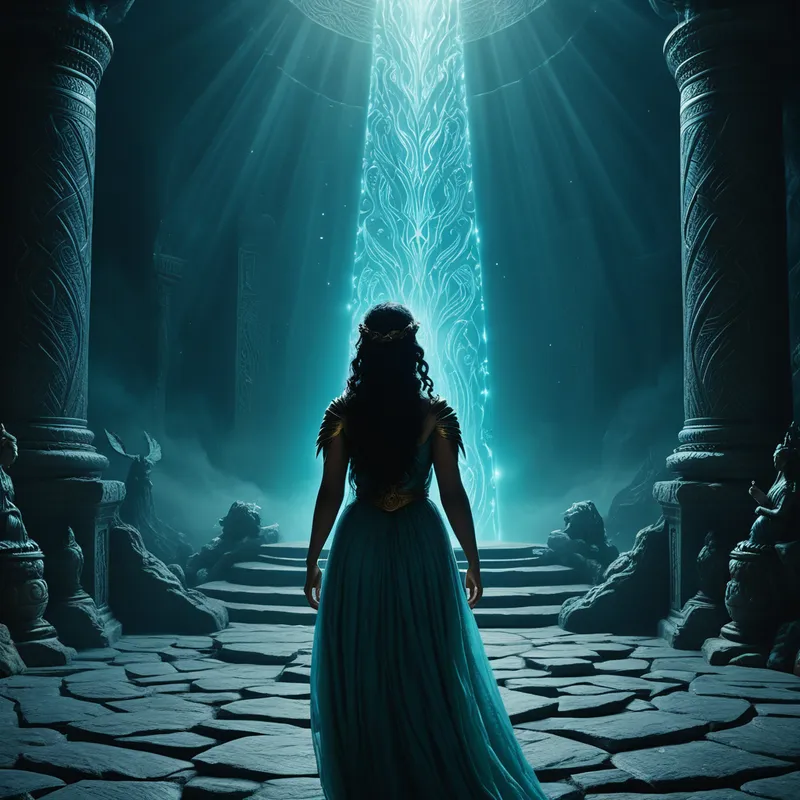
This process echoes in the belly of the whale from the story of Jonah, and in the descent of Inanna into the underworld. Jonah’s “great fish” is not a punishment, but a vessel of darkness that carries him, against his will, to the depth of his own refusal. In the absolute blackness of its gut, his sovereign will is dissolved, and he is remade. Inanna’s journey is more deliberate—a queen shedding her regalia at each of the seven gates, arriving naked and bowed into the realm of her dark sister, Ereshkigal. There, she is hung on a hook, a corpse. This is not death as finale, but as the necessary precondition for renewal. Both myths insist: sovereignty is not won in the sunlit court, but forged in the acknowledgement of the absolute, non-negotiable authority of the dark.
Symbolic Nodes
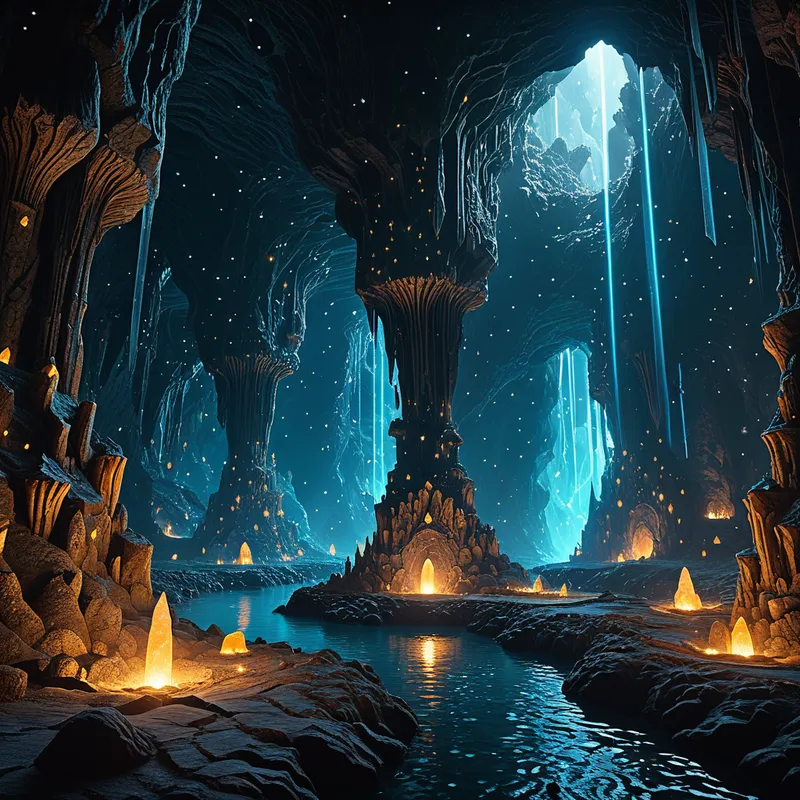
- A Dark Room or Cave: The interior sanctum, the place of incubation.
- A Power Outage / Dead Technology: The collapse of external validation and persona-management systems.
- Blindness or Veiled Eyes: The shift from external sight to internal vision.
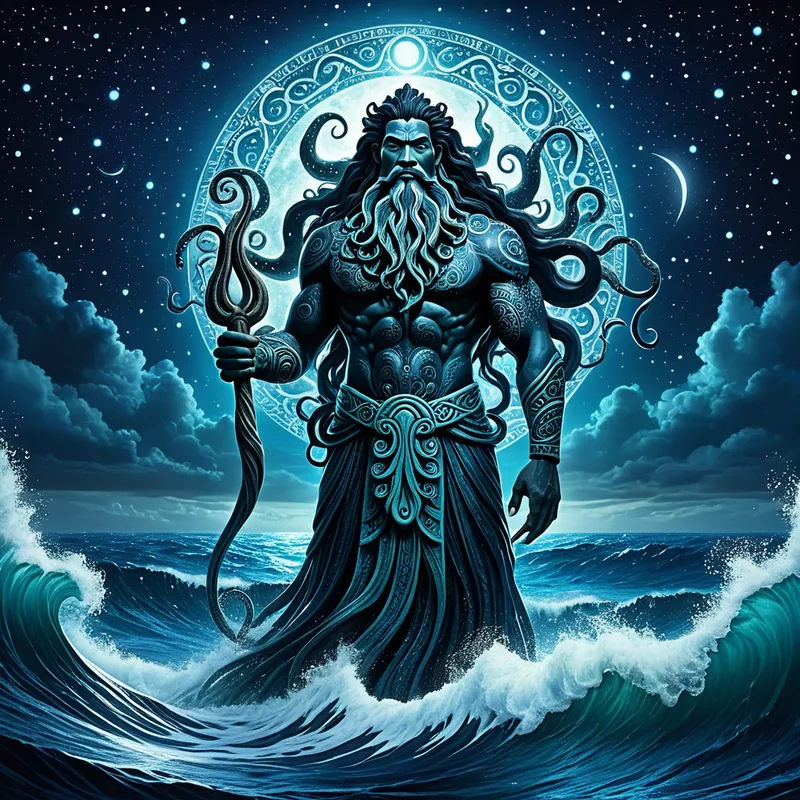
- Deep Space or Oceanic Depths: The vast, uncontained potential of the unconscious.
- Ink, Oil, or Black Paint: The medium of creation, the substance that makes thought visible.
- A Void or Abyss: The ground of being itself, before projection.
Archetypal Resonance
The Magician Archetype is the sovereign of this realm. Not the Shadow Magician who manipulates appearances, but the true Alchemist who works with prima materia—the raw, chaotic, dark substance of potential. The somatic echo of darkness is the Magician’s laboratory, the nigredo or blackening phase where all certainties are dissolved. This archetype does not flee the dark; it understands that vision is born from a dialogue with the unseen. Its core energy is transformation, and its alchemical potential lies precisely in its willingness to endure the dissolution of form (the darkness) to perceive the hidden patterns and connections (the light within the dark) that allow for conscious re-creation. The Magician knows that to bring something new into being, one must first dwell comfortably in the nothingness from which it will emerge.
The Alchemical Process
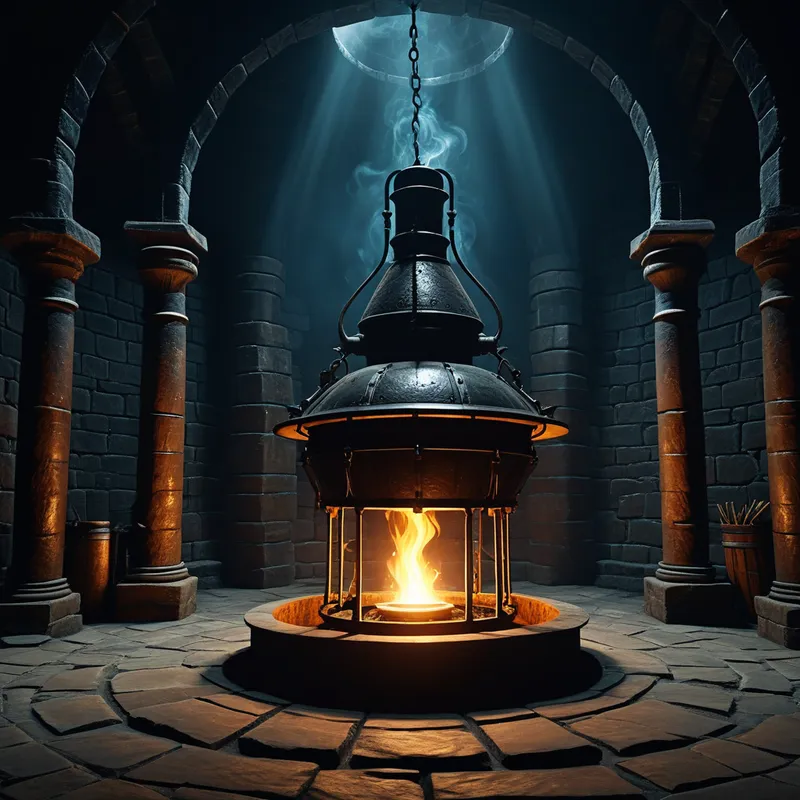
The alchemical transmutation of darkness is called Solutio—dissolution. The intense psychological heat and pressure required is the courage to stop generating light. It is the active, agonizing surrender of the ego’s need to know, to label, to fix. You must let the known world—your identity, your narratives, your solutions—be dissolved in this black solvent. The terror is the feeling of annihilation; the grief is for the loss of the familiar self. The process is not about fighting to see, but about allowing your eyes to adjust. In that adjustment, a paradox emerges: the darkness begins to differentiate. It is not a uniform blanket, but a field of varying densities, currents, and subtle luminescences. What was “nothing” becomes a teeming, structured “something.” The sovereignty gained is night-vision: the ability to navigate the depths of your own being without the crutch of borrowed light, to find direction by the pull of your own psychic gravity.

The Integration Protocol
Question 1: When have I mistaken the absence of external guidance for absolute emptiness, and what might be quietly forming in that perceived void?
Question 2: Which part of me is most terrified of this darkness, and what is it afraid will happen if it stops producing its own light?
Question 3: If this darkness is not a prison but a womb, what is the quality of the silence here, and what might it be preparing to birth?
Action 1 (Somatic Grounding): For five minutes in a dark room, place your hands on your lower abdomen. Breathe into that space, not trying to visualize, but to feel the quality of the darkness inside you. Is it cold or warm? Dense or spacious? Static or swirling? Let the description be purely somatic, not symbolic.
Action 2 (Unstructured Writing): Set a timer for 10 minutes. Write with your non-dominant hand (or with your eyes closed) starting with the sentence: "In the dark, I am..." Do not lift the pen or judge the output. The goal is illegible scribble, childish phrasing, and raw, unedited flow from the depth.
Action 3 (Ritual of Containment): Find a small, opaque container (a box, a jar). Each evening for a week, whisper one fear, one unresolved thought, or one memory that feels "in the dark" into the container and seal it. On the seventh night, take the container to a natural setting (a park, your yard) and open it, not to release the contents, but to acknowledge they are now held by a darkness larger than your own.
Final Validation
To dream of true darkness is to be invited into the most demanding and sacred apprenticeship of the soul. It is not a sign of failure, but a testament to your psyche’s courage to approach the frontier of the unknown. The disorientation is real; the fear is valid. This is the cost of admission to a realm where you are not who you think you are, but so much more. You are being asked to trade the comfortable, familiar light of the porch for the profound, sovereign vision that can only be earned in the boundless night. Here, in the fertile void, you do not find answers. You become the one who no longer needs them.