The Black Phase Myth Meaning & Symbolism
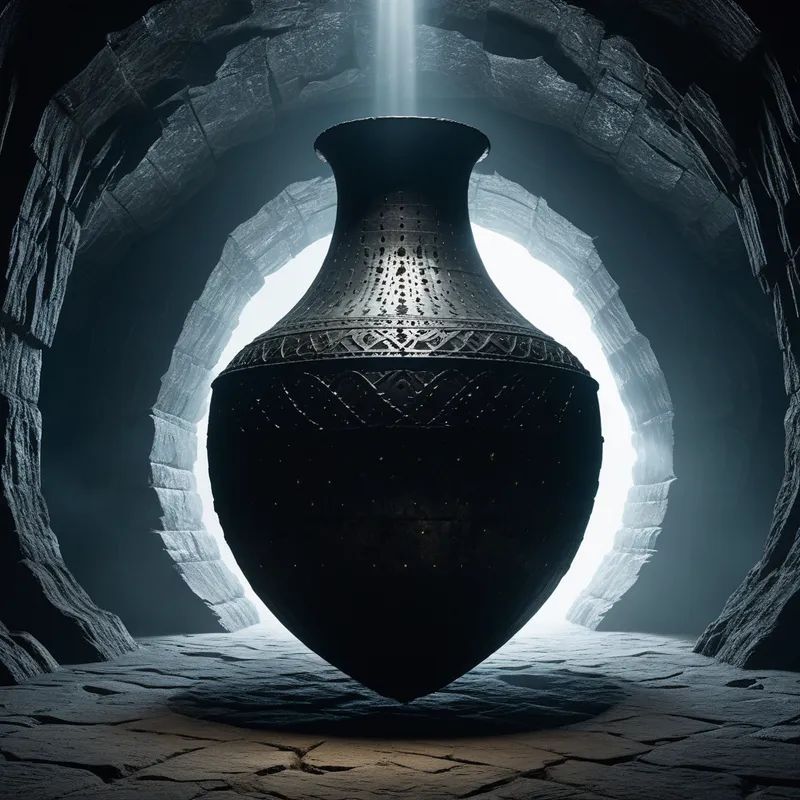
The myth of the alchemical vessel's descent into absolute darkness, where all form dissolves, before the first seed of new light is born from within.
The Tale of The Black Phase
Listen, and hear the tale that is not told in the light, but whispered in the dark. It begins not with a hero, but with a vessel. Not with a quest, but with a waiting.
In the silent heart of the Laboratorium Mundi, the fire had burned for an age. The Artifex had gathered the prima materia—the raw stuff of the world, of the soul—and sealed it within the Hermetic Vessel. This was not a cauldron of war, but a womb of potential. For seasons, the Artifex tended the flame, watching colors shift: the greening of life, the whitening of purification, the yellowing of intellect. Then came the stillness.
The fire did not die, but turned inward. The vibrant hues within the glass faded, muddied, and began to churn into a uniform, impenetrable blackness. This was the Nigredo, the Black Phase. The light of the sun vanished. The order of the stars dissolved. Within the vessel, chaos reigned. All distinct forms—the proud king, the silver queen, the winged spirit—melted into a single, seething mass of shadow. It was a putrefaction, a death, a return to the Prima Materia.
The Artifex sat in the growing gloom. The only sound was the low hum of the furnace and the silent scream of dissolution from within the glass. Doubt, that cold serpent, coiled in their heart. Had they failed? Had they merely created a tomb for precious things? The world outside the laboratorium continued—birds sang, rivers flowed—but inside, there was only the absolute, suffocating black. The work demanded not action, but profound, agonizing patience. The Artifex learned to see in the dark, not with eyes, but with faith.
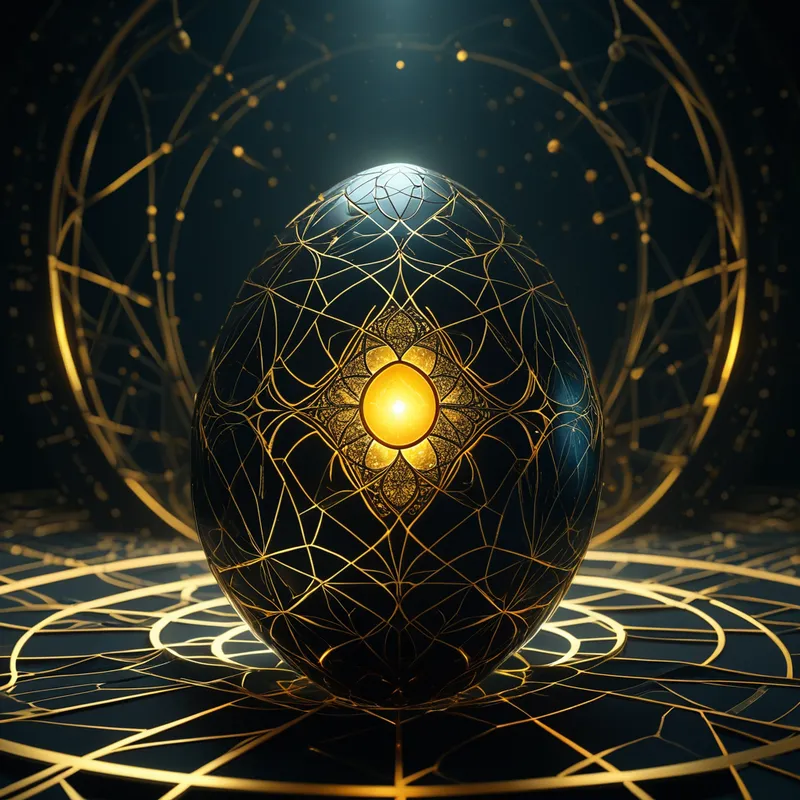
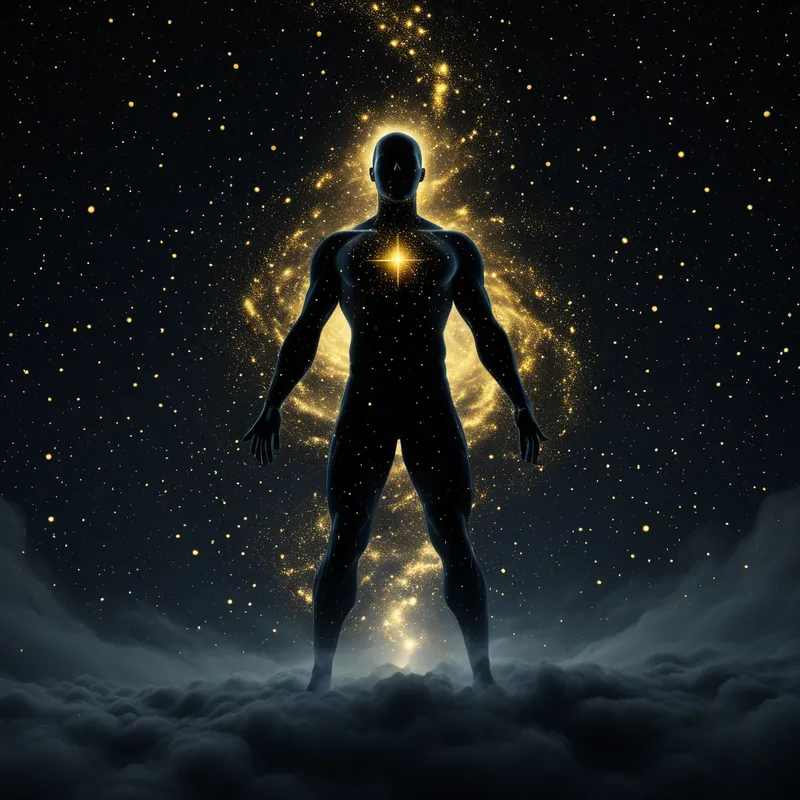
And then, in the deepest hour of that long night, when the black was so complete it felt solid, a miracle occurred. Not from the sky, not from the hands of the Artifex, but from within the blackness itself. A single, minuscule point of light. A star being born in a personal cosmos. It was not the reflected light of the sun, but a light generated from the very process of dissolution. This was the Stella Maris, the Star of the Sea, guiding the vessel through its own inner night. The Black Phase was not an end, but the essential, terrible beginning. The story of the light starts here, in the absolute acceptance of the dark.

Cultural Origins & Context
The myth of The Black Phase is the foundational narrative of the internal alchemical tradition, a corpus of wisdom less concerned with turning lead to gold and more with the transmutation of the human soul. It emerged from the sealed scripts and cryptic illustrations of medieval and Renaissance alchemists across Europe and the Middle East. This was not a myth for the public square, but for the private laboratorium.
It was passed down through encoded texts like the Rosarium Philosophorum and the visions of practitioners who understood their work as a divine, psychological art. The tellers were often solitary figures—monks, physicians, natural philosophers—who saw in the chemical processes a mirror for spiritual crisis and rebirth. Societally, it functioned as a counter-narrative to an age obsessed with purity, light, and order. It sanctified the necessary, messy, and terrifying process of breakdown that precedes any genuine breakthrough, offering a sacred map for navigating the darkest nights of the soul.
Symbolic Architecture
The myth’s power lies in its stark, uncompromising symbolism. The Hermetic Vessel represents the total psyche—the conscious ego and the unconscious depths—sealed in the crucible of a transformative experience. The Artifex is not a distant god, but the observing, suffering consciousness that must endure the process.
The Black Phase is the ego’s winter, where the cultivated identity of a lifetime is returned to the compost of the soul.
The Nigredo symbolizes the confrontation with the Shadow. It is the moment when repressed grief, rage, fear, and forgotten trauma rise to the surface, not as discrete memories, but as an overwhelming atmosphere of despair and confusion. All that was once bright and certain becomes tarnished and doubtful. This is not psychological pathology, but a sacred unmaking. The appearance of the Stella Maris is the crucial symbol: the new consciousness, the integrated Self, cannot be imported. It must be born from the fertile darkness of the psyche’s own substance. The light is endogenous.
The Dreamer's Resonance
When this myth activates in the modern psyche, it manifests in dreams of profound disorientation and somatic unease. The dreamer may find themselves in a house that is familiar yet collapsing into rot, or wandering in a landscape devoid of light or feature. They may dream of losing their name, their face, or seeing loved ones dissolve into shadows. The body in the dream feels heavy, leaden, or conversely, terrifyingly insubstantial.
These are not nightmares of pursuit, but of essence. They signal that a deep psychological process of deconstruction is underway. The conscious personality is being called to release its rigid structures. The somatic feeling is one of grinding pressure and profound fatigue, as the psychic immune system fights the necessary infection of shadow material. The dream is the Hermetic Vessel; the dreamer is both the dissolving contents and the watching Artifex. The work is happening in the darkroom of the unconscious, developing a new image of the self.
Alchemical Translation
For the modern individual, the myth of The Black Phase models the non-negotiable first step of individuation: the descent. Our culture champions the ascent—achievement, positivity, constant growth. This myth sanctifies the opposite movement. It says that before you can become who you are, you must cease to be who you are not. This is the alchemical solve (dissolve) that must precede the coagula (recombine).
To rush from the blackness is to abort the birth of one’s own star. The miracle is in the waiting.
The practical translation is a psychology of radical acceptance. When one enters a life Nigredo—a depression, a crushing loss, the collapse of a lifelong identity—the myth instructs us not to frantically seek the old light, but to tend the vessel. To create the sealed, sacred space (through therapy, solitude, art, ritual) where the dissolution can occur without interference. It teaches that the agent of transformation is not willpower, but a kind of faithful witnessing. The ego must learn to sit in its own ruin and trust that the psyche, in its infinite wisdom, is not destroying itself, but returning to its own primordial ore to forge something more authentic. The first light of the Stella Maris is the dawning of a consciousness that has metabolized its own darkness, a light that can never be extinguished because it was born from within the night itself.
Associated Symbols
Explore related symbols from the CaleaDream lexicon: