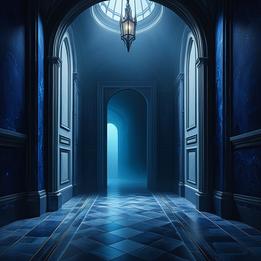
Vestibule
A transitional architectural space between outside and inside, representing thresholds, preparation, and liminal states.
Vestibule Dream Meaning
A transitional architectural space between outside and inside, representing thresholds, preparation, and liminal states.
Interpretive Themes
Mythological Resonance
Janus
RomanThe two-faced god of beginnings, gates, transitions, and doorways, literally presiding over the vestibule (ianua) of the home and the state.
The Labyrinth Entrance
GreekThe threshold to Daedalus's maze—a point of no return that represents the commitment to a transformative, inward journey.
Cultural Lenses
Jungian Perspective
View Context →Represents the threshold between consciousness and the unconscious, where ego meets shadow. A space for psychological preparation before encountering archetypal material from the collective unconscious.
Freudian Perspective
View Context →Symbolizes transitional psychosexual stages, particularly latency. May represent repressed desires waiting to enter consciousness, or defense mechanisms creating buffer zones against anxiety.
Gestalt Perspective
View Context →Represents the boundary between self and environment in the here-and-now. The dreamer's experience in the vestibule reveals how they manage transitions and contact with the external world.
Cognitive Perspective
View Context →Reflects mental processing of transitions, decision-making thresholds, or schema activation. The brain's way of simulating preparation phases before significant life changes or new experiences.
Evolutionary Perspective
View Context →Rooted in survival need to assess safety before entering new spaces. Represents ancient adaptive behavior of cautious entry into caves or shelters, balancing exploration with risk assessment.
Global/Universal Perspective
View Context →Cross-cultural symbol of thresholds found in temple entrances, wedding ceremonies, and initiation rites. Universally represents the space between profane and sacred, ordinary and significant.
East Asian Perspective
View Context →In traditional Chinese architecture, the 'yingbi' screen wall in entryways blocks evil spirits. Represents Confucian values of proper preparation and Feng Shui principles of energy flow management.
South Asian Perspective
View Context →In Hindu temples, the 'antarala' (vestibule) separates the worshipper from the sanctum. Symbolizes spiritual preparation, purification before encountering the divine, and the transition from mundane to sacred.
Middle Eastern Perspective
View Context →In Islamic architecture, the 'iwan' entrance vault serves as transitional space. Represents the journey from worldly concerns to spiritual focus, and the hospitality tradition of receiving guests properly.
European Perspective
View Context →In medieval castles, the vestibule was defensive space. Symbolizes social transition between classes, Gothic spiritual liminality, and Renaissance humanist values of proper introduction and ceremony.
African Perspective
View Context →In many traditional compounds, the entry space hosts initial greetings and assessments. Reprites community values of proper reception, ancestral connection points, and transitional rituals between life stages.
Modern Western Perspective
View Context →Often reduced to functional entryway but symbolizes career transitions, digital portal experiences, or psychological preparation phases. Reflects contemporary anxiety about rapid change and boundary management.
Historical Authorities
Want a deeper analysis?
Get a personalized interpretation of your entire dream including this symbol.
Interpret My DreamThe Oracle's Prediction
Combine multiple symbolsAn imminent decision or offer will present a significant crossroad.
Timeframe
Immediate (Next 48h)
Intensity
Deep
A relationship is entering a new phase requiring redefined boundaries or commitments.
Timeframe
Seasonal (~3 Months)
Intensity
Deep
Common Appearances & Contexts
| Context | Emotion | Interpretation |
|---|---|---|
| Context Entering vestibule | Emotion Anticipation | Interpretation Approaching new phase. |
| Context Leaving vestibule | Emotion Relief | Interpretation Transition completed. |
| Context Stuck in vestibule | Emotion Anxiety | Interpretation Indecision or blockage. |
| Context Dark vestibule | Emotion Fear | Interpretation Unknown ahead. |
| Context Bright vestibule | Emotion Hope | Interpretation Positive transition coming. |
| Context Crowded vestibule | Emotion Overwhelm | Interpretation Too many options. |
| Context Empty vestibule | Emotion Loneliness | Interpretation Isolation in transition. |
| Context Locked inner door | Emotion Frustration | Interpretation Access denied. |
| Context Open inner door | Emotion Excitement | Interpretation Ready to enter. |
| Context Decorating vestibule | Emotion Creativity | Interpretation Preparing presentation. |
| Context Cleaning vestibule | Emotion Purpose | Interpretation Clearing obstacles. |
| Context Meeting in vestibule | Emotion Curiosity | Interpretation Initial encounter. |
Interpret Your Full Dream
Beyond this symbol, every dream carries a unique story. Share your dream for a personalized AI-powered interpretation.