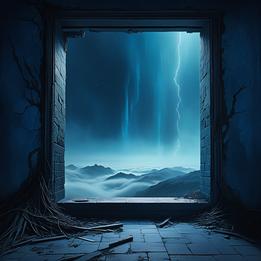
Sill
A threshold between interior and exterior worlds, representing boundaries, transitions, and the interface between safety and exposure.
Sill Dream Meaning
A threshold between interior and exterior worlds, representing boundaries, transitions, and the interface between safety and exposure.
Interpretive Themes
Mythological Resonance
Janus
RomanTwo-faced god of doorways, beginnings, and transitions, looking simultaneously to past and future.
Kamidana
JapaneseHousehold Shinto altar placed at boundary between human and divine realms.
Cultural Lenses
Jungian Perspective
View Context →Represents the liminal space between conscious and unconscious. Crossing signifies integration of shadow aspects. Historically seen in initiation rituals; modernly appears in therapy transitions.
Freudian Perspective
View Context →Symbolizes sexual thresholds and penetration anxieties. Historically linked to vaginal symbolism; modernly represents entry into forbidden or desired psychological spaces.
Gestalt Perspective
View Context →Represents the boundary between self and environment. Historically seen in phenomenological philosophy; modernly appears in awareness of personal space and environmental interaction.
Cognitive Perspective
View Context →Represents schema for transitions and decision points. Historically linked to wayfinding cognition; modernly appears in mental models for life changes and risk assessment.
Evolutionary Perspective
View Context →Represents adaptive advantage of defined shelter boundaries. Historically crucial for survival against predators; modernly manifests as psychological need for clear personal boundaries.
East Asian Perspective
View Context →In traditional architecture, the raised threshold (kamoi) protects from evil spirits. Modernly represents respect for boundaries in social hierarchies and spiritual protection.
Middle Eastern Perspective
View Context →Historically, door sills were anointed with blood for protection. Modernly represents hospitality thresholds where guests are welcomed but boundaries maintained.
European Perspective
View Context →Medieval castle sills marked defensive boundaries. Modernly represents psychological thresholds in Gothic literature and existential philosophy about being 'on the edge'.
African Perspective
View Context →In many traditions, thresholds are spiritually charged spaces for ancestral communication. Modernly represents community boundaries and rites of passage markers.
Latin American Perspective
View Context →Historically, colonial architecture featured elaborate door sills as status symbols. Modernly represents boundaries between public and private life in dense urban settings.
South Asian Perspective
View Context →In Hindu tradition, thresholds (dehri) are decorated with rangoli for protection. Modernly represents spiritual transitions and the boundary between mundane and sacred.
Modern Western Perspective
View Context →Represents work-life balance boundaries in digital age. Historically industrial-era factory thresholds; modernly appears in psychological concepts of personal space and digital privacy.
Historical Authorities
Want a deeper analysis?
Get a personalized interpretation of your entire dream including this symbol.
Interpret My DreamThe Oracle's Prediction
Combine multiple symbolsA significant new connection will enter your life through a shared threshold experience.
Timeframe
Seasonal (~3 Months)
Intensity
Deep
Common Appearances & Contexts
| Context | Emotion | Interpretation |
|---|---|---|
| Context Sitting on sill | Emotion Contemplative | Interpretation Decision-making at threshold. |
| Context Crossing sill | Emotion Anxious | Interpretation Fear of transition. |
| Context Broken sill | Emotion Vulnerable | Interpretation Security compromised. |
| Context Cleaning sill | Emotion Purposeful | Interpretation Maintaining boundaries. |
| Context Windowless sill | Emotion Confused | Interpretation Boundary without view. |
| Context Sill as seat | Emotion Observant | Interpretation Watching from edge. |
| Context Sill too high | Emotion Frustrated | Interpretation Barrier to entry. |
| Context Sill too low | Emotion Exposed | Interpretation Inadequate protection. |
| Context Multiple sills | Emotion Overwhelmed | Interpretation Many transitions ahead. |
| Context Sill crumbling | Emotion Alarmed | Interpretation Foundations weakening. |
| Context Sill decorated | Emotion Proud | Interpretation Beautifying boundaries. |
| Context Sill as altar | Emotion Reverent | Interpretation Sacred threshold space. |
Interpret Your Full Dream
Beyond this symbol, every dream carries a unique story. Share your dream for a personalized AI-powered interpretation.