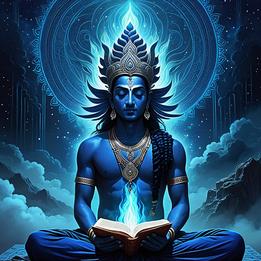
Vedas
Ancient Hindu scriptures representing divine knowledge, cosmic order, and ultimate spiritual truth.
Vedas Dream Meaning
Ancient Hindu scriptures representing divine knowledge, cosmic order, and ultimate spiritual truth.
Interpretive Themes
Mythological Resonance
Vāc (Goddess of Speech)
HinduThe divine personification of sacred speech who revealed the Vedas to the ancient rishis (seers), representing the creative power of the uttered word that structures reality.
The Rishis
HinduThe seven primordial seers who 'heard' the Vedas in deep meditation, serving as conduits for divine revelation rather than authors, representing direct transmission of cosmic truth.
Cultural Lenses
South Asian Perspective
View Context →In Hinduism, the Vedas are śruti (revealed texts) containing eternal truths about dharma, rituals, and cosmology. They remain central to religious practice, philosophy, and cultural identity, studied through oral tradition and commentary.
Jungian Perspective
View Context →Represents the collective unconscious's archetype of sacred wisdom or the Self. Symbolizes integration of profound, universal knowledge from the psyche's deepest layers into conscious awareness.
Freudian Perspective
View Context →May symbolize superego authority or paternal religious injunctions. Could represent repressed desires for absolute truth or conflict between instinctual drives and moral/spiritual ideals.
Gestalt Perspective
View Context →Represents the dreamer's own inner wisdom or 'script' for living. The symbol invites exploration of what 'ultimate truth' means personally and how one relates to authority or tradition.
Cognitive Perspective
View Context →May reflect schema about ancient wisdom, processing memories of religious education, or problem-solving through metaphorical 'sacred texts' representing reliable information sources.
Evolutionary Perspective
View Context →Could tap into adaptive mechanisms for seeking authoritative knowledge, social cohesion through shared sacred narratives, or cognitive biases toward revelatory explanations for complex phenomena.
Modern Western Perspective
View Context →Often viewed through academic or comparative religion lenses as historical texts. In spirituality circles, may symbolize esoteric wisdom, mindfulness roots, or alternative philosophical systems.
Global/Universal Perspective
View Context →Represents humanity's quest for ultimate truth and meaning. As one of world's oldest religious texts, symbolizes the enduring human need for sacred narratives that explain existence.
East Asian Perspective
View Context →May be associated with Buddhist sutras or Confucian classics as comparative wisdom traditions. In modern context, sometimes referenced in mindfulness or yoga practices originating from Vedic roots.
Middle Eastern Perspective
View Context →Viewed as foundational text of Hinduism, sometimes compared to Abrahamic scriptures. In academic contexts, studied for Indo-European linguistic connections and ancient civilization insights.
European Perspective
View Context →Historically studied by colonial scholars and philologists. Today, approached through Indology, comparative mythology, or as source for New Age and alternative spirituality movements.
African Perspective
View Context →May be seen as parallel to African oral wisdom traditions or Ifá corpus. In diaspora contexts, sometimes referenced in discussions of Eastern spirituality's influence or comparative theology.
Historical Authorities
Want a deeper analysis?
Get a personalized interpretation of your entire dream including this symbol.
Interpret My DreamThe Oracle's Prediction
Combine multiple symbolsA revelation or profound understanding that resolves a long-standing philosophical or existential question.
Timeframe
Seasonal (~3 Months)
Intensity
Deep
Common Appearances & Contexts
| Context | Emotion | Interpretation |
|---|---|---|
| Context Reading Vedas | Emotion Curiosity | Interpretation Seeking profound knowledge. |
| Context Hearing chants | Emotion Peace | Interpretation Spiritual harmony present. |
| Context Ancient temple | Emotion Awe | Interpretation Connecting with sacredness. |
| Context Burning scriptures | Emotion Fear | Interpretation Loss of wisdom. |
| Context Teacher explaining | Emotion Respect | Interpretation Accepting guidance willingly. |
| Context Finding hidden text | Emotion Wonder | Interpretation Discovering personal truth. |
| Context Forgotten language | Emotion Frustration | Interpretation Inaccessible knowledge barrier. |
| Context Light from pages | Emotion Hope | Interpretation Illumination through wisdom. |
| Context Debating meanings | Emotion Confusion | Interpretation Multiple interpretations conflict. |
| Context Protecting scriptures | Emotion Duty | Interpretation Preserving sacred tradition. |
| Context Modern translation | Emotion Clarity | Interpretation Ancient wisdom applicable. |
| Context Empty pedestal | Emotion Loss | Interpretation Missing spiritual foundation. |
Interpret Your Full Dream
Beyond this symbol, every dream carries a unique story. Share your dream for a personalized AI-powered interpretation.