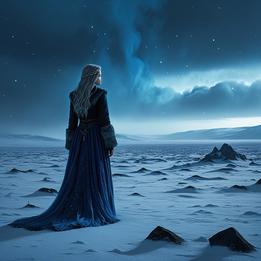
Tundra
A vast, frozen landscape symbolizing isolation, survival, and spiritual emptiness or purity.
Tundra Dream Meaning
A vast, frozen landscape symbolizing isolation, survival, and spiritual emptiness or purity.
Interpretive Themes
Mythological Resonance
Sedna
InuitSea goddess who rules the frozen underworld ocean, controlling marine animals from her isolated icy realm.
Niflheim
NorseThe primordial world of ice and mist, one of the two realms whose meeting created life in the void.
Cultural Lenses
Jungian Perspective
View Context →Represents the cold, unexplored aspects of the collective unconscious or the shadow self—a barren psychic landscape where latent potentials await discovery through confrontation with emptiness.
Freudian Perspective
View Context →Symbolizes emotional frigidity, sexual repression, or a return to a womb-like state of non-being; the barrenness may reflect fear of infertility or unfulfilled desires.
Gestalt Perspective
View Context →The tundra is a projection of the dreamer's felt sense of emptiness or isolation; each element (snow, wind, light) represents an aspect of the self needing integration.
Cognitive Perspective
View Context →A mental schema for processing feelings of loneliness or vast challenges; the brain uses this stark imagery to organize thoughts about survival, scarcity, or emotional distance.
Evolutionary Perspective
View Context →Triggers ancient survival fears related to exposure, resource scarcity, and isolation; the dream may rehearse adaptive responses to extreme environments or social separation.
North American Perspective
View Context →In Inuit and other Arctic cultures, the tundra is both a harsh provider and a spiritual testing ground; modern views often tie it to indigenous resilience and environmental fragility.
East Asian Perspective
View Context →In Daoist and Buddhist contexts, it can symbolize the void (sunyata) or wu wei—a state of effortless action amidst emptiness, representing spiritual purification and detachment.
European Perspective
View Context →Historically linked to Norse myths of frozen wastelands (Niflheim) as realms of death; romantically, it evokes sublime terror and existential reflection on human smallness.
African Perspective
View Context →While not native, in diaspora dreams it may symbolize displacement, memory loss, or emotional barrenness from historical trauma, contrasted with ancestral warmth.
Middle Eastern Perspective
View Context →Evokes desert parallels—testing grounds for prophets, symbolizing divine absence or presence in austerity; modern associations include geopolitical isolation or resource wars.
Modern Western Perspective
View Context →Often a metaphor for emotional coldness, social alienation, or climate anxiety; in pop culture, it represents ultimate survival challenges or post-apocalyptic settings.
Global/Universal Perspective
View Context →A cross-cultural symbol of extreme environments, testing human limits; universally evokes themes of survival, solitude, purity, and the confrontation with vast, indifferent nature.
Historical Authorities
Want a deeper analysis?
Get a personalized interpretation of your entire dream including this symbol.
Interpret My DreamThe Oracle's Prediction
Combine multiple symbolsA period of emotional or creative barrenness will reveal unexpected inner resources.
Timeframe
Seasonal (~3 Months)
Intensity
Deep
Pay attention to emotional coldness or numbness as signal for needed self-care.
Timeframe
Immediate (Next 48h)
Intensity
Deep
Common Appearances & Contexts
| Context | Emotion | Interpretation |
|---|---|---|
| Context Crossing alone | Emotion Determination | Interpretation Personal journey of endurance. |
| Context Lost in tundra | Emotion Panic | Interpretation Feeling directionless in life. |
| Context Building shelter | Emotion Hope | Interpretation Creating emotional safety. |
| Context Seeing aurora | Emotion Wonder | Interpretation Spiritual revelation possible. |
| Context Frozen in place | Emotion Fear | Interpretation Emotional paralysis indicated. |
| Context Finding tracks | Emotion Relief | Interpretation Seeking guidance or connection. |
| Context Meltwater appearing | Emotion Optimism | Interpretation Emotional thaw beginning. |
| Context Endless white horizon | Emotion Despair | Interpretation Future appears blank. |
| Context Sudden blizzard | Emotion Overwhelm | Interpretation Emotional crisis unfolding. |
| Context Discovering life | Emotion Joy | Interpretation Finding hidden resilience. |
| Context Tundra shrinking | Emotion Anxiety | Interpretation Fear of change. |
| Context Standing still | Emotion Peace | Interpretation Acceptance of stillness. |
Interpret Your Full Dream
Beyond this symbol, every dream carries a unique story. Share your dream for a personalized AI-powered interpretation.