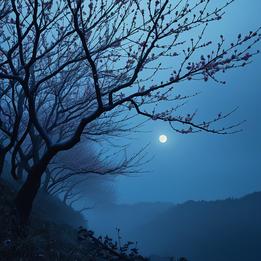
Plum Blossom
A symbol of resilience, purity, and early renewal, blooming in harsh winter conditions to herald spring's arrival.
Plum Blossom Dream Meaning
A symbol of resilience, purity, and early renewal, blooming in harsh winter conditions to herald spring's arrival.
Interpretive Themes
Mythological Resonance
The Four Gentlemen
ChineseThe plum blossom is one of the 'Four Gentlemen' in Chinese art, representing winter and the virtue of perseverance and inner beauty under duress.
Ume (Plum Blossom)
JapaneseCelebrated in poetry and art as a harbinger of spring, symbolizing elegance, purity, and the transient beauty of life, often contrasted with the more flamboyant cherry blossom.
Cultural Lenses
Jungian Perspective
View Context →An archetype of the Self's individuation, symbolizing the psyche's ability to flourish in adversity, integrating opposites like winter/cold and spring/warmth into wholeness.
Freudian Perspective
View Context →May represent latent sexual energy or repressed desires (blossoming), with winter symbolizing societal repression and the flower suggesting a breakthrough of libidinal forces.
Gestalt Perspective
View Context →Seen as a projection of the dreamer's resilience; the plum blossom is an aspect of the self that persists or blooms despite external 'cold' or challenges in life.
Cognitive Perspective
View Context →A mental schema for 'resilience' or 'hope,' activated in dreams to process memories of overcoming difficulties or to prepare for future challenges.
Evolutionary Perspective
View Context →Taps into adaptive mechanisms for survival; symbolizes early resource signaling (spring) and group cohesion through shared symbols of endurance in harsh environments.
East Asian Perspective
View Context →In China, Japan, and Korea, it historically signifies perseverance, moral integrity, and beauty; used in art and poetry, and modernly in festivals and as a national symbol.
European Perspective
View Context →Less common historically, but in heraldry and literature, it can denote hope and renewal; modernly, appreciated in gardens for its early bloom and aesthetic value.
Modern Western Perspective
View Context →Often adopted in wellness and mindfulness contexts as a metaphor for personal growth and resilience, popular in social media and self-help discourses.
Global/Universal Perspective
View Context →Widely recognized as a symbol of hope and renewal due to its seasonal timing; appears in global art and ecology discussions about climate and resilience.
South Asian Perspective
View Context →In some traditions, associated with spiritual purity and the transient nature of life, similar to other blossoms; modernly, valued in gardens and cultural exchanges.
Middle Eastern Perspective
View Context →Historically, in Persian poetry, it can symbolize fleeting beauty and love; modernly, appreciated in horticulture and as a cross-cultural symbol of spring.
African Perspective
View Context →Not native, but in diasporic or modern contexts, it may symbolize adaptability and beauty in adversity, reflecting themes of resilience in local narratives.
Historical Authorities
Want a deeper analysis?
Get a personalized interpretation of your entire dream including this symbol.
Interpret My DreamThe Oracle's Prediction
Combine multiple symbolsRecovery from a period of difficulty or illness, leading to renewed vitality.
Timeframe
Seasonal (~3 Months)
Intensity
Deep
Common Appearances & Contexts
| Context | Emotion | Interpretation |
|---|---|---|
| Context Seeing plum blossoms in snow | Emotion awe | Interpretation Finding hope or beauty in a challenging situation. |
| Context Plucking a plum blossom | Emotion joy | Interpretation Embracing a new opportunity or personal growth. |
| Context Wilted plum blossoms | Emotion sadness | Interpretation Feeling loss or the end of a resilient phase. |
| Context A field of plum blossoms | Emotion wonder | Interpretation Experiencing widespread renewal or collective hope. |
| Context Gifting plum blossoms | Emotion love | Interpretation Offering support or encouragement to someone. |
| Context Plum blossoms in a storm | Emotion fear | Interpretation Anxiety about maintaining resilience under pressure. |
| Context Painting plum blossoms | Emotion calm | Interpretation Reflecting on personal strength or creativity. |
| Context Plum blossoms at night | Emotion mystery | Interpretation Unseen resilience or hidden aspects of renewal. |
| Context Plum blossoms in a vase | Emotion nostalgia | Interpretation Remembering past endurance or simpler times. |
| Context Plum blossoms with bees | Emotion contentment | Interpretation Productivity and harmony following struggle. |
| Context Plum blossoms falling | Emotion melancholy | Interpretation Accepting the end of a resilient effort. |
| Context Plum blossoms in a dream within a dream | Emotion confusion | Interpretation Uncertainty about the depth of one's resilience. |
Interpret Your Full Dream
Beyond this symbol, every dream carries a unique story. Share your dream for a personalized AI-powered interpretation.