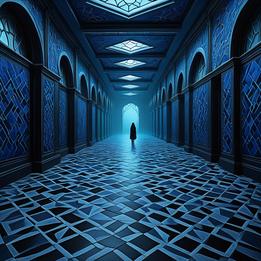
Tessellated Floor
A tessellated floor symbolizes complexity, order within chaos, and interconnectedness in the fabric of one's life.
Tessellated Floor Dream Meaning
A tessellated floor symbolizes complexity, order within chaos, and interconnectedness in the fabric of one's life.
Interpretive Themes
Interconnectedness
highThis theme often reflects the importance of relationships and community.
Cosmic Order
highTessellated patterns often arise from situations where order is created from perceived chaos.
Complexity
mediumTessellations symbolize the complexity of thought and perception.
Adaptability
mediumTessellation often inspires creativity in art and architecture.
Balance
lowTessellated designs often exhibit a balance of shapes, reflecting harmony.
Mythological Resonance
Daedalus
GreekThe master craftsman who designed the labyrinth—a perfect, intricate pattern meant to contain the Minotaur, representing both brilliant creation and imprisoning complexity.
Geometric Tilework
IslamicIn Islamic architecture, infinite geometric patterns (girih) symbolize the underlying divine order and unity of creation, where every piece reflects the whole.
Cultural Lenses
Middle Eastern Perspective
View Context →Tessellated patterns are prominent in Islamic art, symbolizing eternity and the infinite nature of creation. Used in mosques and homes to convey beauty and spirituality. [Islamic] Provides a sense of connection to the divine through intricate designs.
European Perspective
View Context →Celtic knots and patterns often symbolize the interconnectedness of life and nature. Used in jewelry and artwork to convey cultural heritage. [Celtic] Embodies deep-rooted traditions and storytelling.
Latin American Perspective
View Context →Tessellated patterns were utilized in pyramids and ceremonial sites to represent cycles and connectedness. Often part of rituals signifying life cycles. [Mesoamerican] Reflects the duality of life and death in Mesoamerican beliefs.
African Perspective
View Context →Tessellated motifs appear in textiles and art, representing social structures and community. Utilized in communal gatherings and rituals to signify togetherness. Symbolizes the liberation and identity of African communities.
Historical Authorities
Want a deeper analysis?
Get a personalized interpretation of your entire dream including this symbol.
Interpret My DreamThe Oracle's Prediction
Combine multiple symbolsA complex project will reveal unexpected connections that lead to breakthrough success.
Timeframe
Seasonal (~3 Months)
Intensity
Deep
You will discover how seemingly unrelated life experiences are part of a meaningful pattern.
Timeframe
Lunation (~29 Days)
Intensity
Deep
Common Appearances & Contexts
| Context | Emotion | Interpretation |
|---|---|---|
| Context Walking on a tessellated floor | Emotion Awe | Interpretation Experiencing beauty in the complexity of life's design. |
| Context Creating a tessellated pattern | Emotion Curiosity | Interpretation Exploring one's creativity and the desire to shape one's world. |
| Context Observing cracks in the tessellated floor | Emotion Worry | Interpretation Fears of instability and the breakdown of order in life. |
| Context Difficulty walking on a tessellated floor | Emotion Frustration | Interpretation Feeling overwhelmed by life's complexities and challenges. |
| Context Seeing a tessellated floor in a grand building | Emotion Admiration | Interpretation Recognizing the beauty of structure and purpose in a community. |
| Context Hiding under a tessellated floor | Emotion Fear | Interpretation Concealing oneself in the complexities of life. |
| Context Arranging pieces of a tessellated floor | Emotion Joy | Interpretation Finding satisfaction in creating one's own path. |
| Context Navigating a labyrinth created by tessellated patterns | Emotion Confusion | Interpretation Feeling lost in the complexities of one's relationships or decisions. |
| Context Seeing a child play on a tessellated floor | Emotion Nostalgia | Interpretation Recalling childhood creativity and freedom. |
| Context Painting a tessellated pattern | Emotion Creative excitement | Interpretation A sense of liberation in expressing individuality. |
| Context Contemplating a tessellated artwork | Emotion Reflection | Interpretation Introspection about one's life and connections. |
| Context Stumbling on uneven tessellated tiles | Emotion Surprise | Interpretation Encountering unexpected challenges in life. |
| Context Lying down on a tessellated floor | Emotion Peace | Interpretation Finding comfort and solace in one's environment. |
Interpret Your Full Dream
Beyond this symbol, every dream carries a unique story. Share your dream for a personalized AI-powered interpretation.