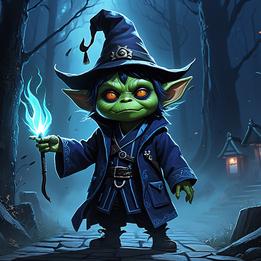
Dokkaebi Goblin
A Korean trickster spirit associated with mischief, supernatural power, and moral lessons, often depicted with a club and magical hat.
Dokkaebi Goblin Dream Meaning
A Korean trickster spirit associated with mischief, supernatural power, and moral lessons, often depicted with a club and magical hat.
Interpretive Themes
Mythological Resonance
Loki
NorseThe shape-shifting god of mischief whose tricks often catalyze necessary change, yet court disaster.
Coyote
Native American (various)The trickster creator and fool who breaks rules, teaches lessons through failure, and embodies chaotic creativity.
Cultural Lenses
Jungian Perspective
View Context →Represents the trickster archetype—disruptive energy that challenges ego consciousness, promotes individuation through chaos, and embodies the shadow's creative potential.
Freudian Perspective
View Context →Symbolizes repressed id impulses—unchecked desires for mischief, power, and transgression breaking through superego constraints in disguised, supernatural form.
Gestalt Perspective
View Context →Projects disowned aspects of self—playfulness, rule-breaking, or magical thinking—onto this figure to examine integration of these qualities.
Cognitive Perspective
View Context →Manifests as mental schema for unpredictable events—brain's way of personifying randomness, moral ambiguity, or cognitive dissonance in narrative form.
Evolutionary Perspective
View Context →Serves as adaptive warning system—personifies environmental unpredictability, social deception risks, and need for vigilance against trickery in ancestral contexts.
East Asian Perspective
View Context →Korean folkloric trickster spirits historically seen as nature deities causing mischief but also dispensing justice; modernly symbolize cultural identity in media.
European Perspective
View Context →Parallels goblin/imp folklore—supernatural tricksters testing human morals, often as cautionary tales about greed, honesty, or respect for traditions.
Modern Western Perspective
View Context →Viewed through fantasy genre lens—entertaining anti-heroes representing rebellion against conformity, often sanitized of traditional moral lessons.
Global/Universal Perspective
View Context →Fits cross-cultural trickster pattern—supernatural beings that disrupt order, teach through chaos, and embody humanity's ambivalence toward rules and freedom.
South Asian Perspective
View Context →Resembles yaksha/pisacha spirits—ambiguous supernatural beings testing karma through tricks, historically linked to natural places and moral teachings.
African Perspective
View Context →Analogous to Anansi/Eshu trickster figures—divine messengers causing beneficial chaos, teaching wisdom through humor, and mediating between worlds.
North American Perspective
View Context →Similar to coyote/raven tricksters in Indigenous traditions—culture heroes using mischief to create change, teach lessons, and maintain cosmic balance.
Historical Authorities
Want a deeper analysis?
Get a personalized interpretation of your entire dream including this symbol.
Interpret My DreamThe Oracle's Prediction
Combine multiple symbolsAn unexpected opportunity will arise from a seeming mistake or disruption.
Timeframe
Seasonal (~3 Months)
Intensity
Deep
Common Appearances & Contexts
| Context | Emotion | Interpretation |
|---|---|---|
| Context Being tricked by Dokkaebi | Emotion Frustration | Interpretation May reflect feeling manipulated or out of control in waking life. |
| Context Receiving a gift from Dokkaebi | Emotion Surprise | Interpretation Could symbolize unexpected opportunities or hidden blessings. |
| Context Fighting Dokkaebi | Emotion Determination | Interpretation Suggests internal struggle with chaotic impulses. |
| Context Dokkaebi causing harmless mischief | Emotion Amusement | Interpretation Might indicate need for more playfulness or humor. |
| Context Dokkaebi punishing someone | Emotion Satisfaction | Interpretation Could represent desire for justice or karmic retribution. |
| Context Dokkaebi offering a deal | Emotion Suspicion | Interpretation May warn against compromising ethics for gain. |
| Context Dokkaebi disappearing suddenly | Emotion Confusion | Interpretation Suggests fleeting opportunities or unstable situations. |
| Context Dokkaebi in modern setting | Emotion Disorientation | Interpretation Indicates traditional values clashing with contemporary life. |
| Context Dokkaebi transforming objects | Emotion Wonder | Interpretation Symbolizes potential for radical change or creativity. |
| Context Dokkaebi as companion | Emotion Comfort | Interpretation May represent acceptance of one's mischievous side. |
| Context Dokkaebi demanding respect | Emotion Fear | Interpretation Could reflect anxiety about supernatural or unknown forces. |
| Context Dokkaebi revealing truth | Emotion Clarity | Interpretation Suggests hidden aspects coming to light. |
Interpret Your Full Dream
Beyond this symbol, every dream carries a unique story. Share your dream for a personalized AI-powered interpretation.