Patterns & Nature

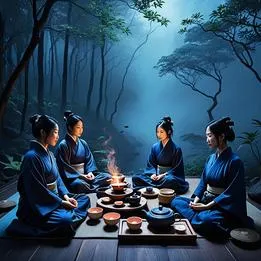
Tea Ceremony Dream Meaning

A ritualized practice of preparing and serving tea, symbolizing mindfulness, connection, and harmony with nature and others.

Common Appearances & Contexts

Context Emotion Interpretation
Participating in a tea ceremony peaceful Seeking inner calm or spiritual connection.
Observing a tea ceremony curious Desire to learn or understand new perspectives.
Hosting a tea ceremony proud Taking on a role of guidance or nurturing.
A disrupted or chaotic tea ceremony anxious Fear of losing control or harmony in life.
Teaching a tea ceremony confident Sharing wisdom or establishing authority.
A solitary tea ceremony contemplative Introspection and self-care are needed.
A tea ceremony in nature awed Feeling connected to the natural world.
A rushed or incomplete tea ceremony frustrated Pressure or impatience disrupting peace.
A tea ceremony with strangers hopeful Openness to new relationships or experiences.
A tea ceremony using unusual tools confused Adapting traditions to personal circumstances.
A tea ceremony in a dream within a dream disoriented Deep subconscious processing of ritual.
A tea ceremony that never ends trapped Feeling stuck in routines or obligations.

Interpretive Themes

Cultural Lenses

Jungian Perspective

View Context →

Symbolizes the individuation process—integrating conscious and unconscious through ritual. The ceremony represents a sacred space for self-discovery and archetypal connection to the Self.

Freudian Perspective

View Context →

May represent latent desires for oral satisfaction, maternal care, or social conformity. The ritualistic actions could symbolize repressed wishes for order and sensual pleasure.

Gestalt Perspective

View Context →

Each element (tea, bowl, gesture) represents a part of the self. The dreamer projects aspects of their personality onto the ceremony, exploring integration and wholeness.

Cognitive Perspective

View Context →

Reflects schemas related to mindfulness, routine, or social scripts. The brain processes memories of rituals to manage stress or simulate social bonding.

Evolutionary Perspective

View Context →

Taps into innate drives for social cohesion and ritualized behavior that promote group survival. Symbolizes shared practices that reduce conflict and build trust.

East Asian Perspective

View Context →

Deeply rooted in philosophies like Zen Buddhism and Taoism, emphasizing harmony (wa), respect (kei), purity (sei), and tranquility (jaku). Historically a spiritual and artistic practice, now a cultural heritage.

South Asian Perspective

View Context →

Influenced by chai culture and Ayurveda, tea rituals symbolize hospitality (atithi devo bhava) and holistic wellness. Modern contexts blend tradition with social gathering and health consciousness.

Middle Eastern Perspective

View Context →

Evokes traditions of coffee or tea hospitality (ghahwa/chai) as symbols of generosity and social bonding. Rituals often mark negotiation, reconciliation, or community cohesion.

European Perspective

View Context →

Associated with afternoon tea rituals from Victorian England, symbolizing civility, class, and social etiquette. Modernly, it represents leisure, nostalgia, or refined social interaction.

African Perspective

View Context →

Reflects communal tea or coffee ceremonies (e.g., Ethiopian coffee ceremony) emphasizing community, storytelling, and ancestral connection. Rituals reinforce social bonds and cultural identity.

North American Perspective

View Context →

Often viewed through multicultural lens or wellness trends, symbolizing mindfulness, self-care, or exoticism. May represent a search for authenticity in fast-paced modern life.

Latin American Perspective

View Context →

Tied to mate or herbal tea rituals (e.g., yerba mate) symbolizing friendship, sharing, and medicinal wisdom. Practices emphasize communal connection and natural healing.

AI-Powered

Interpret Your Full Dream

Beyond this symbol, every dream carries a unique story. Share your dream for a personalized AI-powered interpretation.