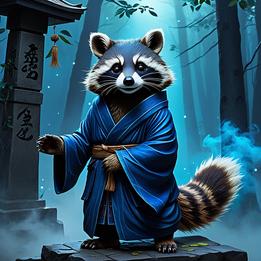
Tanuki Raccoon
A shape-shifting trickster spirit from Japanese folklore, representing transformation, prosperity, and playful deception.
Tanuki Raccoon Dream Meaning
A shape-shifting trickster spirit from Japanese folklore, representing transformation, prosperity, and playful deception.
Interpretive Themes
Mythological Resonance
Bunbuku Chagama
JapaneseA Tanuki transformed into a teapot that brewed endless tea, bringing fortune to its owner through magical service.
Coyote (Native American)
GlobalLike the Tanuki, Coyote is a trickster who shapes reality through cunning and humor, teaching through chaotic wisdom.
Cultural Lenses
East Asian Perspective
View Context →Japanese folklore: shape-shifting yōkai known for mischief and bringing prosperity. Often depicted with large testicles symbolizing financial luck. Modernly appears in media as playful, magical creatures.
Jungian Perspective
View Context →Represents the Trickster archetype—disrupting order to facilitate growth. Symbolizes the shadow's playful aspect and the transformative power of the unconscious mind in individuation.
Freudian Perspective
View Context →May symbolize repressed desires for freedom and pleasure. The shape-shifting could represent sexual fluidity or hidden wishes. The playful deception might indicate defense mechanisms.
Gestalt Perspective
View Context →The dreamer projecting their own playful, deceptive, or transformative qualities. Each aspect (shape-shifting, mischief, prosperity) represents parts of the self needing integration.
Cognitive Perspective
View Context →Brain processing concepts of adaptability and social navigation. The symbol may help problem-solve through metaphorical thinking about change, deception, or resource acquisition.
Evolutionary Perspective
View Context →Represents adaptive strategies for survival: deception for advantage, social manipulation, and resource acquisition. Playfulness may relate to social bonding and learning.
Modern Western Perspective
View Context →Often seen through anime and gaming lens as cute, magical creatures. Represents escapism, fantasy, and interest in Eastern spirituality mixed with pop culture consumption.
Global/Universal Perspective
View Context →Fits universal trickster archetype found worldwide (like Coyote, Loki). Represents human fascination with boundary-crossing, transformation, and the tension between order and chaos.
European Perspective
View Context →Similar to fairy folk and shape-shifters in Celtic/Germanic lore. Modernly viewed as exotic Eastern folklore, sometimes associated with neo-pagan interest in trickster deities.
North American Perspective
View Context →Often confused with actual raccoons as trickster animals. In New Age contexts, represents spiritual transformation and shamanic journeying, blending indigenous and Eastern concepts.
South Asian Perspective
View Context →Parallels to monkey gods like Hanuman in playfulness. In modern context, seen through anime influence as magical beings, sometimes associated with Buddhist/Hindu concepts of illusion (maya).
Oceanian Perspective
View Context →Resonates with shape-shifting beings in Pacific myths. Modernly encountered through Japanese cultural exports, interpreted through local lens of ancestor spirits and animal guides.
Historical Authorities
Want a deeper analysis?
Get a personalized interpretation of your entire dream including this symbol.
Interpret My DreamThe Oracle's Prediction
Combine multiple symbolsAn unexpected opportunity for financial gain through creative means.
Timeframe
Lunation (~29 Days)
Intensity
Deep
A revelation about personal identity or hidden talents through unconventional experiences.
Timeframe
Seasonal (~3 Months)
Intensity
Deep
Common Appearances & Contexts
| Context | Emotion | Interpretation |
|---|---|---|
| Context changing shape | Emotion curious | Interpretation Personal transformation underway. |
| Context playing pranks | Emotion amused | Interpretation Need for lightheartedness. |
| Context holding money | Emotion hopeful | Interpretation Financial opportunities approaching. |
| Context hiding in shadows | Emotion cautious | Interpretation Concealing true intentions. |
| Context leading others | Emotion confident | Interpretation Natural leadership emerging. |
| Context being chased | Emotion anxious | Interpretation Consequences of deception. |
| Context statue coming alive | Emotion awestruck | Interpretation Latent potential awakening. |
| Context sharing food | Emotion generous | Interpretation Abundance to be shared. |
| Context losing disguise | Emotion vulnerable | Interpretation True self revealed. |
| Context dancing joyfully | Emotion joyful | Interpretation Celebrating life's pleasures. |
| Context outsmarting opponent | Emotion proud | Interpretation Intellectual victory achieved. |
| Context sleeping peacefully | Emotion content | Interpretation Inner peace found. |
Interpret Your Full Dream
Beyond this symbol, every dream carries a unique story. Share your dream for a personalized AI-powered interpretation.