Spring
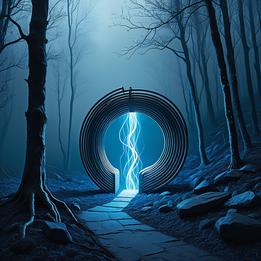
A coiled metal device that stores and releases energy, representing tension, resilience, and cyclical motion in dreams.
Spring Dream Meaning
A coiled metal device that stores and releases energy, representing tension, resilience, and cyclical motion in dreams.
Interpretive Themes
Mythological Resonance
The Caduceus
GreekHermes' staff with two serpents coiled in balanced tension, representing the spring-like energy of healing and transformation.
Kundalini
HinduThe coiled serpent energy at the base of the spine that springs upward through spiritual awakening.
Cultural Lenses
Jungian Perspective
View Context →Represents the tension between conscious and unconscious forces, with the coiled form symbolizing latent psychic energy in the collective unconscious awaiting integration into consciousness.
Freudian Perspective
View Context →Symbolizes repressed sexual energy or tension, with compression representing suppression and release representing the return of repressed desires through symbolic displacement in dreamwork.
Gestalt Perspective
View Context →Represents the dreamer's own tension-release patterns in life, with the spring's behavior mirroring how the individual handles pressure, resilience, and emotional expression in waking reality.
Cognitive Perspective
View Context →Functions as a mental metaphor for processing stress or change, with the spring mechanism representing cognitive schemas for managing tension and adapting to environmental pressures through mental models.
Evolutionary Perspective
View Context →Taps into ancestral recognition of tension-release mechanisms in nature (like bowstrings or animal muscles), representing adaptive responses to environmental pressures and survival strategies.
East Asian Perspective
View Context →In Chinese tradition, represents the balance of yin (compression) and yang (release), with clock springs symbolizing cosmic cycles and mechanical springs representing industrial progress in modern contexts.
European Perspective
View Context →Historically associated with precision timekeeping and industrial revolution innovation, now represents mechanical reliability, stored potential, and the tension between tradition and progress in Western thought.
African Perspective
View Context →In some traditions, represents ancestral energy stored in ritual objects, with coiled forms appearing in metalwork symbolizing life force, resilience, and the tension between community and individual needs.
Middle Eastern Perspective
View Context →Historically appears in ancient water clocks and automata, representing divine order and mechanical precision, with modern interpretations focusing on energy conservation and technological adaptation.
Modern Western Perspective
View Context →Symbolizes psychological resilience, stress management, and the concept of 'bouncing back' in self-help contexts, while also representing technological innovation and mechanical efficiency in industrial design.
Global/Universal Perspective
View Context →Cross-culturally recognized as a symbol of stored energy, resilience, and cyclical motion, appearing in various technologies and representing fundamental physical principles of tension and release.
South Asian Perspective
View Context →In Indian tradition, represents the coiled kundalini energy at the base of the spine, with compression symbolizing spiritual potential and release representing enlightenment through proper energy channeling.
Historical Authorities
Want a deeper analysis?
Get a personalized interpretation of your entire dream including this symbol.
Interpret My DreamThe Oracle's Prediction
Combine multiple symbolsLong-held tension will transform into sudden insight or awakening.
Timeframe
Seasonal (~3 Months)
Intensity
Deep
A period of compression will lead to renewed vitality.
Timeframe
Lunation (~29 Days)
Intensity
Deep
Common Appearances & Contexts
| Context | Emotion | Interpretation |
|---|---|---|
| Context Compressing spring | Emotion Anxious | Interpretation Building pressure. |
| Context Spring releasing | Emotion Relieved | Interpretation Energy discharge. |
| Context Broken spring | Emotion Defeated | Interpretation Lost resilience. |
| Context Spring bouncing | Emotion Playful | Interpretation Joyful energy. |
| Context Hidden spring | Emotion Curious | Interpretation Unexplored potential. |
| Context Many springs | Emotion Overwhelmed | Interpretation Multiple tensions. |
| Context Spring in clock | Emotion Patient | Interpretation Timed release. |
| Context Spring snapping | Emotion Shocked | Interpretation Sudden release. |
| Context Spring in toy | Emotion Nostalgic | Interpretation Childhood energy. |
| Context Spring coiling | Emotion Focused | Interpretation Energy accumulation. |
| Context Spring uncoiling | Emotion Liberated | Interpretation Freedom gained. |
| Context Spring in trap | Emotion Trapped | Interpretation Controlled energy. |
Interpret Your Full Dream
Beyond this symbol, every dream carries a unique story. Share your dream for a personalized AI-powered interpretation.