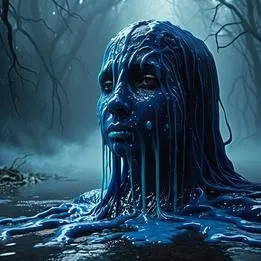
Slime
The Oracle's Essence
Slime represents primal, unformed potential and the dissolution of boundaries between self and environment, often signifying transformation or contamination.
Interpretive Themes
Modern Visibility
In contemporary culture, slime is associated with viral internet trends, children's sensory play, and environmental metaphors for pollution or decay.
Cultural Lenses
Jungian
Learn More →Represents the collective unconscious's primal, undifferentiated state - the prima materia from which consciousness emerges. Symbolizes the shadow's amorphous nature and the need to integrate primitive aspects of self.
Freudian
Learn More →Often represents repressed sexual or anal stage material - the messy, uncontrolled aspects of bodily functions and infantile pleasure. Can symbolize fear of contamination or loss of bodily control.
Gestalt
Learn More →Represents unfinished business or unresolved emotions taking amorphous form. The dreamer's relationship to the slime reveals their approach to messy, undefined situations in waking life.
Cognitive
Learn More →Manifests as the brain's attempt to process ambiguous, poorly defined situations or emotions. Represents cognitive schemas struggling to categorize experiences that defy clear boundaries.
Evolutionary
Learn More →Triggers ancient disgust responses to potential contamination or decay. May represent primal fears of parasites, rot, or boundary violations that threatened ancestral survival.
East Asian
Learn More →In Taoist tradition, represents the undifferentiated Tao before yin-yang separation. In modern contexts, often appears in anime/manga as transformative substances with both creative and destructive potential.
South Asian
Learn More →In Hindu cosmology, represents prakriti (primordial nature) before manifestation. In Ayurveda, associated with kapha dosha's mucous qualities and the need for purification from accumulated toxins.
Middle Eastern
Learn More →In Islamic tradition, can represent the primordial clay from which humans were formed. In modern contexts, often appears in dreams about oil spills or environmental degradation concerns.
European
Learn More →In alchemical tradition, represents the nigredo stage - the black, putrefying matter that precedes transformation. In folklore, appears as swamp creatures or primordial ooze from creation myths.
African
Learn More →In many creation myths, represents the primordial mud or clay from which life emerged. In contemporary dreams, often relates to land disputes, soil fertility, or environmental concerns.
North American
Learn More →In Indigenous traditions, often represents Turtle Island's creation from primordial mud. In modern context, frequently appears in dreams about environmental pollution, industrial waste, or climate anxiety.
Latin American
Learn More →In Mesoamerican creation myths, represents the primordial waters before land formation. In contemporary dreams, often relates to political corruption, social decay, or environmental degradation concerns.
Contextual Nuances
Touching slime
Boundary violation fear.
Creating slime
Creative potential exploration.
Being consumed
Ego dissolution anxiety.
Slime spreading
Loss of control.
Cleaning slime
Unresolved emotional mess.
Questions for Reflection
- "What aspects of your life feel undefined or in flux?"
- "Where are you resisting necessary but messy transformations?"
- "What boundaries need reinforcement or dissolution?"
- "What creative potential are you afraid to touch?"
- "How do you handle situations that defy clear categorization?"
✧ Community Dreams
Related Weavings
The Portal is Always Open
Every dream is a personalized dispatch from the deep. Don't let yours fade into static.
Interpret Full Dream