Patterns & Nature

Silk Fan Dream Meaning

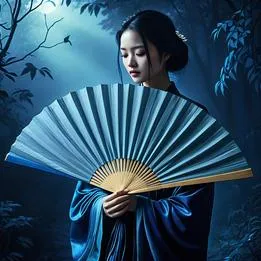
A silk fan in dreams often represents delicate control, hidden communication, and the interplay between revealing and concealing emotions or truths.

Common Appearances & Contexts

Context Emotion Interpretation
Receiving a fan Joy Acceptance of subtlety.
Breaking a fan Anger Loss of social control.
Fanning flames Passion Intensifying hidden desires.
Hiding behind fan Fear Avoiding exposure.
Gifting a fan Affection Offering intimacy carefully.
Dancing with fan Freedom Expressive liberation.
Ancient fan ritual Awe Connecting to tradition.
Fan in storm Anxiety Fragility in chaos.
Painting a fan Creativity Crafting personal narrative.
Fan as weapon Defiance Subtle resistance.
Lost fan Longing Missing subtle connections.
Fan cooling heat Relief Soothing inner turmoil.

Interpretive Themes

Cultural Lenses

Jungian Perspective

View Context →

An archetype of the persona—the mask used in social interactions. Represents the delicate balance between revealing the true self and conforming to societal expectations, often linked to anima (feminine aspects).

Freudian Perspective

View Context →

Symbolizes repressed sexual desires and flirtation, with the fan's opening and closing representing arousal and inhibition. May relate to phallic or yonic imagery in its form and motion.

Gestalt Perspective

View Context →

Represents parts of the self that are both hidden and expressed. The dreamer might explore what they are fanning (e.g., emotions) or hiding, focusing on the fan's function in the dream narrative.

Cognitive Perspective

View Context →

Reflects mental processes of filtering information or regulating social cues. The fan may symbolize cognitive tools for managing attention, memory of past elegance, or problem-solving in communication.

Evolutionary Perspective

View Context →

Taps into adaptive behaviors for social bonding and mate selection, using ornamentation (like fan decoration) for display. May relate to ancestral rituals for cooling or signaling in group dynamics.

East Asian Perspective

View Context →

In Chinese and Japanese traditions, silk fans signify status, artistry, and ritual—used in tea ceremonies, dance, and as diplomatic gifts. They convey poetry, painting, and subtle romantic codes, embodying Confucian grace.

European Perspective

View Context →

Historically, fans in 17th-19th century courts were tools of covert communication among aristocracy, with specific gestures conveying messages. Today, they evoke vintage elegance and theatricality.

Latin American Perspective

View Context →

Associated with folk dances like flamenco, where fans emphasize rhythm and passion. Symbolizes cultural pride, festivity, and the blending of indigenous and colonial artistic traditions.

African Perspective

View Context →

In some cultures, fans are used in spiritual ceremonies to waft incense or blessings, representing connection to ancestors. They denote authority, with chiefs or healers using ornate fans.

Middle Eastern Perspective

View Context →

Linked to hospitality and cooling in hot climates, often decorated with Islamic geometric patterns. Symbolizes refuge, poetry gatherings (majlis), and the art of storytelling.

Modern Western Perspective

View Context →

Seen as a fashion accessory or collectible art, often ironic or retro. Represents nostalgia, aesthetic appreciation, or a statement against fast-paced digital communication.

Global/Universal Perspective

View Context →

A cross-cultural symbol of breeze, relief, and ceremony. Universally, it connects to human needs for comfort, artistry, and non-verbal expression across diverse rituals and climates.

AI-Powered

Interpret Your Full Dream

Beyond this symbol, every dream carries a unique story. Share your dream for a personalized AI-powered interpretation.