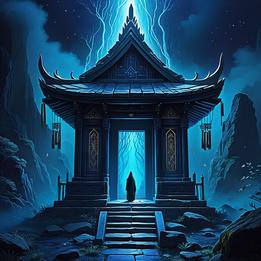
Shrine
A sacred structure for worship, offering, or remembrance, representing connection to the divine, ancestors, or spiritual forces.
Shrine Dream Meaning
A sacred structure for worship, offering, or remembrance, representing connection to the divine, ancestors, or spiritual forces.
Interpretive Themes
Cultural Lenses
Global/Universal Perspective
View Context →Universal human need for sacred spaces connecting to transcendent forces, ancestors, or personal values, appearing across all civilizations as focal points for ritual and meaning-making.
Jungian Perspective
View Context →Manifestation of the Self archetype, representing the psyche's center where conscious and unconscious meet; a mandala symbol of wholeness and individuation process.
Freudian Perspective
View Context →Symbol of superego formation and parental internalization; may represent repressed desires transformed into acceptable ritual forms through sublimation of instinctual drives.
Gestalt Perspective
View Context →Projection of unfinished business with authority figures or spiritual matters; the shrine represents what needs completion in relationships with parents, tradition, or personal values.
Cognitive Perspective
View Context →Mental schema for processing grief, gratitude, or existential questions; a cognitive tool for organizing spiritual experiences and creating meaning frameworks.
Evolutionary Perspective
View Context →Adaptive mechanism for group cohesion and anxiety reduction; sacred spaces evolved to reinforce social bonds, transmit cultural knowledge, and manage existential fears.
East Asian Perspective
View Context →In Shinto and Buddhist traditions, shrines house kami or honor ancestors, serving as liminal spaces between human and spirit worlds, with purification rituals maintaining cosmic harmony.
South Asian Perspective
View Context →Hindu and Buddhist shrines as focal points for darshan (sacred seeing) and puja (worship), where deity presence becomes accessible through ritual and devotional practices.
Middle Eastern Perspective
View Context →In Islamic, Jewish, and pre-Islamic traditions, shrines mark prophetic sites or saint tombs, becoming pilgrimage destinations for barakah (blessing) and communal identity reinforcement.
European Perspective
View Context →Christian shrines housing relics or Marian apparition sites blend pre-Christian sacred geography with saint veneration, creating pilgrimage networks that define regional spiritual identities.
African Perspective
View Context →Ancestral shrines as living connections to lineage spirits, where libations and offerings maintain family continuity and community balance between visible and invisible worlds.
North American Perspective
View Context →Indigenous medicine wheels and sweat lodges as sacred spaces for healing and vision quests, alongside contemporary memorial shrines processing collective trauma or celebration.
Want a deeper analysis?
Get a personalized interpretation of your entire dream including this symbol.
Interpret My DreamCommon Appearances & Contexts
| Context | Emotion | Interpretation |
|---|---|---|
| Context Visiting abandoned shrine | Emotion melancholy | Interpretation Lost spiritual connection |
| Context Building personal shrine | Emotion hopeful | Interpretation Creating sacred space |
| Context Shrine desecration | Emotion horrified | Interpretation Violated sacred values |
| Context Crowded shrine festival | Emotion joyful | Interpretation Communal celebration |
| Context Finding hidden shrine | Emotion awestruck | Interpretation Discovering inner truth |
| Context Shrine in nature | Emotion peaceful | Interpretation Natural spirituality |
| Context Shrine offering ritual | Emotion reverent | Interpretation Sacred exchange |
| Context Urban shrine discovery | Emotion surprised | Interpretation Sacred in mundane |
| Context Family shrine maintenance | Emotion content | Interpretation Continuing tradition |
| Context Shrine pilgrimage journey | Emotion determined | Interpretation Spiritual quest |
| Context Digital shrine creation | Emotion nostalgic | Interpretation Modern memorialization |
| Context Shrine restoration work | Emotion proud | Interpretation Healing sacred space |
Interpret Your Full Dream
Beyond this symbol, every dream carries a unique story. Share your dream for a personalized AI-powered interpretation.