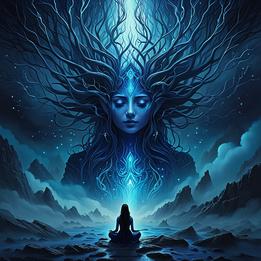
Trance
A state of altered consciousness, often involving deep focus, dissociation, or spiritual connection, where normal awareness is suspended.
Trance Dream Meaning
A state of altered consciousness, often involving deep focus, dissociation, or spiritual connection, where normal awareness is suspended.
Interpretive Themes
Cultural Lenses
Jungian Perspective
View Context →Access to the collective unconscious; a state where archetypes emerge, facilitating individuation through integration of shadow or anima/animus aspects, often in therapeutic or visionary contexts.
Freudian Perspective
View Context →Regression to primary process thinking; expression of repressed desires or childhood traumas, where the ego's defenses are lowered, revealing unconscious conflicts in symbolic form.
Gestalt Perspective
View Context →Heightened awareness of the here-and-now; a holistic state where figure-ground dynamics shift, allowing for integration of fragmented parts of the self into a unified experience.
Cognitive Perspective
View Context →Altered attentional processes; a state where executive functions are subdued, leading to enhanced creativity or memory recall, but potentially causing distortions in perception and reasoning.
Evolutionary Perspective
View Context →Adaptive mechanism for social bonding or threat response; trance states may have evolved to promote group cohesion through rituals or dissociate during extreme stress to enhance survival.
Global/Universal Perspective
View Context →Cross-cultural phenomenon in shamanism, meditation, and healing; historically used for divination, spirit communication, or community rituals, now seen in globalized practices like yoga or rave culture.
East Asian Perspective
View Context →Daoist or Buddhist meditation states (e.g., samadhi); aimed at achieving emptiness or enlightenment, with historical roots in qigong and modern applications in mindfulness and martial arts.
South Asian Perspective
View Context →Yogic trance (dhyana) in Hinduism; a path to moksha through deep concentration, historically in tantra and modern yoga, often involving mantras or breath control for spiritual liberation.
Middle Eastern Perspective
View Context →Sufi whirling or dhikr rituals; ecstatic states to unite with the divine, historically in mystical Islam, with modern practices emphasizing inner peace and transcendence beyond dogma.
European Perspective
View Context →Historical folk trances in witchcraft or paganism; used for prophecy or healing, now reinterpreted in neo-pagan movements or psychological frameworks, blending ancient and modern spirituality.
African Perspective
View Context →Spirit possession in Vodun or Bantu rituals; trance as communion with ancestors or deities, historically for healing or justice, with contemporary expressions in diaspora religions and music.
North American Perspective
View Context →Indigenous vision quests or peyote ceremonies; trance for guidance or healing, historically central to tribal identity, now adapted in pan-Indian movements or therapeutic settings for cultural revival.
Want a deeper analysis?
Get a personalized interpretation of your entire dream including this symbol.
Interpret My DreamCommon Appearances & Contexts
| Context | Emotion | Interpretation |
|---|---|---|
| Context Ritual ceremony | Emotion Awe | Interpretation Spiritual awakening. |
| Context Medical setting | Emotion Anxious | Interpretation Fear of helplessness. |
| Context Music festival | Emotion Euphoric | Interpretation Collective ecstasy. |
| Context Meditation session | Emotion Peaceful | Interpretation Inner stillness. |
| Context Traumatic memory | Emotion Terrified | Interpretation Psychological escape. |
| Context Creative work | Emotion Focused | Interpretation Productive flow. |
| Context Hypnosis therapy | Emotion Trusting | Interpretation Healing submission. |
| Context Sleep paralysis | Emotion Panicked | Interpretation Trapped awareness. |
| Context Shamanic journey | Emotion Curious | Interpretation Exploration beyond. |
| Context Drug influence | Emotion Disoriented | Interpretation Altered perception. |
| Context Near-death experience | Emotion Transcendent | Interpretation Beyond body. |
| Context Daydreaming deeply | Emotion Detached | Interpretation Mental escape. |
Interpret Your Full Dream
Beyond this symbol, every dream carries a unique story. Share your dream for a personalized AI-powered interpretation.