Shapeshift
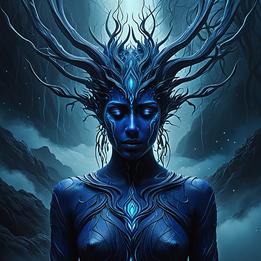
The act of transforming physical form, representing adaptability, identity fluidity, and profound personal or spiritual metamorphosis.
Shapeshift Dream Meaning
The act of transforming physical form, representing adaptability, identity fluidity, and profound personal or spiritual metamorphosis.
Interpretive Themes
Identity Fluidity
highCore to the symbol's meaning.
Adaptation & Survival
highLinked to primal and modern pressures.
Concealment & Revelation
mediumCan indicate deception or authenticity.
Spiritual Metamorphosis
mediumOften a positive, transformative journey.
Loss of Control
lowAssociated with fear and disorientation.
Cultural Lenses
Jungian Perspective
View Context →Represents the transformative process of individuation, where the Self integrates unconscious archetypes (like the Shadow or Anima/Animus) to achieve wholeness. The shapeshifter is a powerful archetype itself.
Freudian Perspective
View Context →May symbolize repressed desires or fears manifesting through bodily transformation, often linked to psychosexual development, castration anxiety, or the fluidity of libidinal energy.
Gestalt Perspective
View Context →The dreamer is every form assumed. It asks: 'What part of myself is this animal/person/object?' Exploring the felt sense of each form reveals disowned or emerging aspects of the self.
Cognitive Perspective
View Context →A mental simulation of navigating complex social scenarios or problem-solving. The brain rehearses adaptability, role-switching, and the cognitive load of managing multiple identities or perspectives.
Evolutionary Perspective
View Context →A cognitive remnant of predator-prey dynamics, where imagining transformation enhances survival. It rehearses camouflage, threat assessment, and social mimicry crucial for ancestral group living.
North American Perspective
View Context →In many Indigenous traditions, shapeshifting is a sacred ability of shamans and trickster figures (like Coyote), representing connection to the spirit world, teaching lessons, or maintaining ecological balance.
European Perspective
View Context →Historically feared as witchcraft (werewolves) or fairy glamour, symbolizing deception and evil. Modernly, it reflects Gothic and fantasy themes of hidden monstrosity or liberated identity.
East Asian Perspective
View Context →In folklore, foxes (kitsune/huli jing) or dragons shapeshift, often testing human virtue. It symbolizes spiritual cultivation, the illusion of reality (Maya), and the mutable nature of fortune and status.
African Perspective
View Context →A common attribute of deities, ancestors, and witches. It signifies spiritual power, the fluid boundary between human and natural worlds, and the capacity for both protection and mystical harm.
Modern Western Perspective
View Context →Symbolizes gender fluidity, career changes, online anonymity, and the psychological concept of 'code-switching.' It reflects the pressure and freedom of constructing a multifaceted identity.
Global/Universal Perspective
View Context →A near-universal mythic motif representing the fundamental human experiences of change, the desire to transcend limitations, and the anxiety or wonder about the true, stable nature of the self.
Middle Eastern Perspective
View Context →Appears in ancient texts (e.g., jinn) and folklore as a test or punishment. It explores themes of destiny versus free will, the deception of appearances, and supernatural intervention in human affairs.
Want a deeper analysis?
Get a personalized interpretation of your entire dream including this symbol.
Interpret My DreamCommon Appearances & Contexts
| Context | Emotion | Interpretation |
|---|---|---|
| Context Into an animal | Emotion Liberation | Interpretation Reconnecting with instincts. |
| Context Into another person | Emotion Confusion | Interpretation Identity theft or envy. |
| Context Against your will | Emotion Terror | Interpretation Loss of self-control. |
| Context To escape danger | Emotion Relief | Interpretation Adaptive survival mechanism. |
| Context In a mirror | Emotion Shock | Interpretation Confronting changed self. |
| Context During a speech | Emotion Panic | Interpretation Fear of exposure. |
| Context To gain power | Emotion Triumph | Interpretation Mastering new abilities. |
| Context In a crowd | Emotion Anonymity | Interpretation Blending in or hiding. |
| Context Cycle of forms | Emotion Awe | Interpretation Limitless potential. |
| Context Into a child | Emotion Nostalgia | Interpretation Regression or innocence. |
| Context Partial transformation | Emotion Frustration | Interpretation Incomplete change process. |
| Context Guiding others | Emotion Empowerment | Interpretation Teaching adaptability. |
Interpret Your Full Dream
Beyond this symbol, every dream carries a unique story. Share your dream for a personalized AI-powered interpretation.