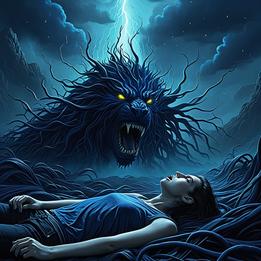
Seizure
A sudden, uncontrolled physical or emotional disruption, often symbolizing loss of control, overwhelming forces, or a system malfunction.
Seizure Dream Meaning
A sudden, uncontrolled physical or emotional disruption, often symbolizing loss of control, overwhelming forces, or a system malfunction.
Interpretive Themes
Mythological Resonance
Dionysus
GreekGod whose followers experienced divine madness and ecstatic seizures, losing individual control to become vessels of the god.
Saul/Paul on Damascus Road
BiblicalStruck blind by divine light in a seizure-like experience that transformed persecutor into apostle.
Cultural Lenses
Jungian Perspective
View Context →Possession by a complex or archetypal force (shadow, anima/animus). The seizure represents the psyche's autonomous, overwhelming reaction when conscious control is insufficient, forcing confrontation with unconscious content.
Freudian Perspective
View Context →A somatic expression of repressed instinctual energy (often sexual or aggressive) breaking through ego defenses. The convulsions symbolize the violent release of id impulses that the superego has condemned.
Gestalt Perspective
View Context →The dreamer IS the seizure. It represents a disowned part of the self—perhaps rage, passion, or vulnerability—that is violently demanding recognition and integration into the whole personality.
Cognitive Perspective
View Context →A metaphor for cognitive overload or system crash. The brain is simulating a failure of processing, representing overwhelming stress, trauma recall, or an inability to cope with current life information.
Evolutionary Perspective
View Context →Simulating a extreme threat response or predator attack where freezing/fleeing fails. The involuntary movements may represent a last-ditch neurological alarm or a misfire of ancient survival circuits under modern stress.
Global/Universal Perspective
View Context →Historically seen as divine possession, demonic attack, or spiritual purge. Modernly, a near-universal symbol for catastrophic loss of bodily autonomy and the terror of one's own biology betraying the self.
East Asian Perspective
View Context →May be interpreted as a severe imbalance of Qi (vital energy) or Yin-Yang, causing chaotic internal winds. In some traditions, it could signal spirit interference or a ancestral warning manifesting physically.
South Asian Perspective
View Context →Could be viewed through Ayurvedic lens as a Vata dosha (air/space) disturbance causing nervous system chaos. In Hindu context, might relate to Kundalini energy rising violently without proper preparation.
Middle Eastern Perspective
View Context →Historically linked to jinn possession or divine messages (as in some prophetic traditions). Modern interpretations may blend medical understanding with spiritual concerns about vulnerability to unseen forces.
European Perspective
View Context →Historically associated with witchcraft, divine punishment, or holy ecstasy (e.g., St. Vitus' Dance). In modern secular view, primarily a medical metaphor for psychological disintegration or societal collapse.
African Perspective
View Context →Often interpreted within spirit possession ceremonies as a sign of the spirit taking hold of the body. Outside ritual, it may warn of ancestral displeasure or a severe disruption in one's life force.
Modern Western Perspective
View Context →Heavily medicalized, symbolizing mental health crisis (panic attack, PTSD flashback), burnout, or societal 'meltdown.' Represents the individual breaking under pressures of modern life, technology, or trauma.
Historical Authorities
Want a deeper analysis?
Get a personalized interpretation of your entire dream including this symbol.
Interpret My DreamThe Oracle's Prediction
Combine multiple symbolsA profound shift in consciousness or worldview is imminent.
Timeframe
Seasonal (~3 Months)
Intensity
Deep
A system in your life (relationship, work, health) is approaching critical breakdown.
Timeframe
Immediate (Next 48h)
Intensity
Deep
Common Appearances & Contexts
| Context | Emotion | Interpretation |
|---|---|---|
| Context Public seizure | Emotion Humiliation | Interpretation Fear of exposure. |
| Context Witnessing seizure | Emotion Helplessness | Interpretation Inability to aid. |
| Context Seizure during argument | Emotion Frustration | Interpretation Communication breakdown. |
| Context Seizure at work | Emotion Anxiety | Interpretation Professional pressure. |
| Context Seizure while driving | Emotion Dread | Interpretation Loss of safe control. |
| Context Seizure in sleep | Emotion Vulnerability | Interpretation Unsafe even at rest. |
| Context Seizure with light | Emotion Awe | Interpretation Overwhelming revelation. |
| Context Seizure healing | Emotion Relief | Interpretation Post-crisis calm. |
| Context Inducing seizure | Emotion Desperation | Interpretation Forced escape attempt. |
| Context Seizure from touch | Emotion Violation | Interpretation External trigger overwhelms. |
| Context Seizure as performance | Emotion Shame | Interpretation Private struggle public. |
| Context Seizure in nature | Emotion Awe | Interpretation Primordial force takeover. |
Interpret Your Full Dream
Beyond this symbol, every dream carries a unique story. Share your dream for a personalized AI-powered interpretation.