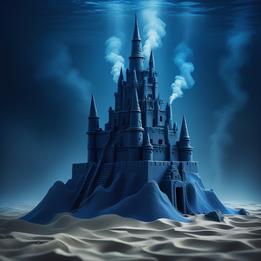
Sandcastle
The sandcastle symbolizes transient beauty and the impermanence of human achievements.
Sandcastle Dream Meaning
The sandcastle symbolizes transient beauty and the impermanence of human achievements.
Interpretive Themes
Creativity
highBuilding a sandcastle often reflects personal expression.
Transience
highSandcastles wash away, reminding dreamers of life's fleeting moments.
Playfulness
mediumRepresents joy and the importance of play in life.
Childhood Innocence
mediumSandcastles are often associated with childhood memories.
Endurance
lowDespite their impermanence, the act of building can represent resilience.
Mythological Resonance
Maya
HinduThe cosmic illusion, the divine play where the eternal appears as the transient, much like a sandcastle that seems solid yet is destined to dissolve.
Sisyphus
GreekCondemned to roll a boulder up a hill only for it to roll down again, his eternal task mirrors the building and unbuilding of the sandcastle—a lesson in finding meaning in the cycle itself.
Cultural Lenses
Modern Western Perspective
View Context →Sandcastle contests are popular at beaches, emphasizing creativity and competition. Family outings and vacations at the beach. [American] Often reflects summer nostalgia.
European Perspective
View Context →Sand art participated in pilgrimages, symbolizing journeys. Rituals near coastal areas. [Celtic] Imbued with spiritual significance.
Historical Authorities
Want a deeper analysis?
Get a personalized interpretation of your entire dream including this symbol.
Interpret My DreamThe Oracle's Prediction
Combine multiple symbolsA profound insight into the nature of impermanence will arrive, bringing peace with transient phases of life.
Timeframe
Seasonal (~3 Months)
Intensity
Deep
Common Appearances & Contexts
| Context | Emotion | Interpretation |
|---|---|---|
| Context Building a sandcastle on the beach | Emotion Joy | Interpretation Reflects a desire to reconnect with simple pleasures. |
| Context Watching a sandcastle get destroyed by waves | Emotion Sadness | Interpretation Conveys concerns about loss and disappointment. |
| Context Competing against others to build the best sandcastle | Emotion Competition | Interpretation Indicates a drive to excel or compare oneself with others. |
| Context Finding an abandoned sandcastle | Emotion Longing | Interpretation May signal unresolved nostalgia for childhood. |
| Context Decorating a sandcastle with shells | Emotion Creativity | Interpretation Highlights a need for self-expression and personal embellishment. |
| Context Witnessing other children building sandcastles | Emotion Joy | Interpretation Represents admiration for untouched joy in childhood. |
| Context Building a massive sandcastle alone | Emotion Isolation | Interpretation Suggests feelings of loneliness despite engaging in joyful activities. |
| Context Dreaming of an elaborate sandcastle fort | Emotion Empowerment | Interpretation Can symbolize a desire for protection or a safe space in life. |
| Context Seeing a city made of sandcastles | Emotion Wonder | Interpretation Might indicate a craving for creativity and fantasy in urban life. |
| Context Getting swept away while trying to rebuild a sandcastle | Emotion Frustration | Interpretation Illustrates struggles with control and maintaining stability. |
Interpret Your Full Dream
Beyond this symbol, every dream carries a unique story. Share your dream for a personalized AI-powered interpretation.