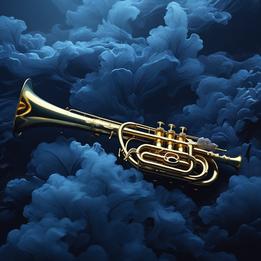
Wavy Piccolo Trumpet Dream Meaning
A unique brass instrument that represents playfulness and creativity, often associated with unconventional musical pieces.
Common Appearances & Contexts
| Context | Emotion | Interpretation |
|---|---|---|
| Playing a cheerful tune on the trumpet | Happiness | Sparks inner joy and spontaneity. |
| Improvising a playful solo | Excitement | Represents the thrill of creativity and self-expression. |
| Using the trumpet in a unique collaboration | Connection | Highlights the joy found in artistic partnerships. |
Interpretive Themes
Cultural Lenses
Global/Universal Perspective
Full Hub →Globally, this hybrid instrument symbolizes creative fusion and boundary-crossing. Historically, trumpets announce change; piccolos add lightness. Emotionally, it suggests joyful innovation and playful communication, representing modern cultural blending in music and arts.
Jungian Perspective
Full Hub →In Jungian analysis, this symbolizes individuation's playful, transformative aspect. The wavy shape represents the unconscious's fluid nature; the trumpet heralds emerging consciousness. It's an archetype of creative synthesis between opposing forces within the psyche.
East Asian Perspective
Full Hub →In East Asian traditions, wind instruments like the xiao connect heaven and earth. The wavy form echoes water's flow in Daoism, symbolizing adaptability. Historically used in rituals, it represents harmonious balance between structure (trumpet) and fluidity (waves).
South Asian Perspective
Full Hub →In South Asian culture, similar to the sankha conch, wind instruments hold ritual significance in Hindu ceremonies. The wavy shape mirrors kundalini energy's serpentine movement. Emotionally, it signifies spiritual awakening and the divine sound (nada) manifesting creatively.
Middle Eastern Perspective
Full Hub →Historically, Middle Eastern cultures used trumpets like the naffr in military and ceremonial contexts. The wavy design may reflect Islamic geometric art, symbolizing infinite divine creativity. Emotionally, it combines authority (trumpet) with ornamental beauty, suggesting dignified artistic expression.
European Perspective
Full Hub →In European history, trumpets signaled royalty and battle; piccolos appear in folk music. The wavy Baroque style suggests artistic flourish. Emotionally, it blends solemnity with whimsy, reflecting Renaissance innovation where art and music intertwined ceremonially.
African Perspective
Full Hub →In African traditions, trumpets like the kakaki convey status and communication. The wavy form may relate to ancestral symbols of rivers or snakes in rituals. Emotionally, it represents community voice, creativity, and connecting spiritual realms through vibrant sound.
North American Perspective
Full Hub →In Native American cultures, flutes like the courting flute carry emotional expression. The wavy shape could mirror natural landscapes. Modernly, it symbolizes jazz innovation and cultural fusion, reflecting North America's diverse artistic heritage and experimental music trends.
Latin American Perspective
Full Hub →In Latin America, wind instruments like quenas are central to Andean rituals. The wavy form evokes rhythmic dance movements. Emotionally, it signifies festive celebration, ancestral connection, and syncretism—blending indigenous, African, and European influences in vibrant musical expression.
Freudian Perspective
Full Hub →Freudian interpretation views this as phallic symbolism (trumpet) with playful, wavy modifications representing sexual curiosity or inhibition. The piccolo's high pitch may relate to childhood or feminine aspects, suggesting unresolved psychosexual conflicts manifesting in creative, yet conflicted, expression.
Gestalt Perspective
Full Hub →In Gestalt therapy, this symbolizes the dreamer's unfinished business with self-expression. The wavy shape versus straight trumpet highlights tension between fluidity and structure. It represents how one projects creativity or communication issues onto this artistic, hybrid object.
Cognitive Perspective
Full Hub →Cognitively, this reflects memory consolidation of musical or artistic experiences. The wavy element may symbolize cognitive flexibility, while the trumpet represents focused attention. It illustrates how the brain processes novelty and integrates sensory inputs during sleep for problem-solving.
Evolutionary Perspective
Full Hub →Evolutionarily, wind instruments mimic primal communication like animal calls. The wavy shape may signal non-verbal cues for social bonding or mating. It taps into ancient auditory processing for group cohesion, creativity, and signaling status through artistic innovation.
Interpret Your Full Dream
Beyond this symbol, every dream carries a unique story. Share your dream for a personalized AI-powered interpretation.