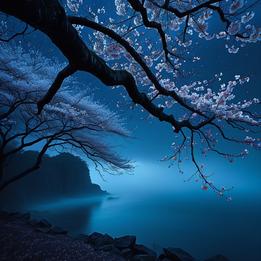
Sakura Blossoms
Ephemeral beauty and the transient nature of life, representing renewal, mortality, and spiritual awakening.
Sakura Blossoms Dream Meaning
Ephemeral beauty and the transient nature of life, representing renewal, mortality, and spiritual awakening.
Interpretive Themes
Impermanence
highCentral to Buddhist and Japanese aesthetics.
Renewal
highAssociated with spring and life cycles.
Mortality
mediumBlossoms fall quickly, symbolizing death.
Spiritual Awakening
mediumMoments of profound insight or clarity.
Aesthetic Appreciation
highCore to hanami (flower viewing) tradition.
Mythological Resonance
Konohana Sakuya Hime
JapaneseThe blossom princess who symbolizes delicate life and the fleeting nature of beauty in Shinto mythology.
Mono no aware
BuddhistThe aesthetic concept of the pathos of things, capturing the bittersweet awareness of impermanence.
Cultural Lenses
Jungian Perspective
View Context →Archetype of the anima (feminine principle) and the Self, representing individuation through embracing life's transient beauty and the unconscious's cyclical nature.
Freudian Perspective
View Context →Symbol of repressed desires for beauty and renewal, possibly linked to sexual awakening (blossoming) or fear of mortality (falling petals) from childhood experiences.
Gestalt Perspective
View Context →Projection of the dreamer's relationship with change—blossoms may represent parts of the self that are blooming or fading, urging integration of impermanence.
Cognitive Perspective
View Context →Mental schema for processing transience and renewal, possibly triggered by recent life changes, aiding in emotional regulation through metaphorical thinking.
Evolutionary Perspective
View Context →Adaptive symbol tied to seasonal cycles, signaling resource abundance (spring) and mortality awareness, enhancing group cohesion through shared aesthetic rituals.
East Asian Perspective
View Context →In Japanese culture, sakura (cherry blossoms) embody mono no aware (pathos of things), central to hanami festivals, samurai ethos of fleeting life, and modern pop culture as symbols of beauty and transience.
Global/Universal Perspective
View Context →Widely recognized as a symbol of spring, renewal, and life's brevity, appearing in art and literature globally to evoke universal themes of beauty and mortality.
South Asian Perspective
View Context →In Hindu and Buddhist contexts, similar to ashoka or parijata flowers, representing impermanence (anitya) and spiritual enlightenment, often used in rituals and meditative practices.
European Perspective
View Context →Historically, cherry blossoms in European art symbolize the fleeting nature of youth and love, influenced by Romanticism, with modern associations to Japanese cultural exchange and spring.
Modern Western Perspective
View Context →Often aestheticized in media and fashion, representing ephemeral beauty or mindfulness, sometimes commercialized in wellness contexts as a symbol of transient joy.
Middle Eastern Perspective
View Context →In Persian poetry, blossoms like cherry or almond flowers symbolize fleeting beauty and divine creation, reflecting Sufi themes of spiritual awakening through nature's cycles.
Latin American Perspective
View Context →Influenced by indigenous and Spanish traditions, blossoms may represent life cycles and renewal, with modern contexts tying to festivals and environmental awareness of seasonal change.
Historical Authorities
Want a deeper analysis?
Get a personalized interpretation of your entire dream including this symbol.
Interpret My DreamThe Oracle's Prediction
Combine multiple symbolsA profound moment of awakening to life's transient beauty.
Timeframe
Immediate (Next 48h)
Intensity
Deep
A meaningful connection that blooms quickly but may transform.
Timeframe
Lunation (~29 Days)
Intensity
Deep
Common Appearances & Contexts
| Context | Emotion | Interpretation |
|---|---|---|
| Context Watching sakura petals fall gently | Emotion peaceful | Interpretation Acceptance of change and life's natural flow. |
| Context Sakura blossoms in full bloom | Emotion joyful | Interpretation Celebration of peak moments and beauty. |
| Context Blossoms falling rapidly in a storm | Emotion anxious | Interpretation Fear of sudden loss or impermanence. |
| Context Planting a sakura tree | Emotion hopeful | Interpretation Investing in future growth or legacy. |
| Context Sakura blossoms out of season | Emotion confused | Interpretation Disruption of natural cycles or timing. |
| Context Blossoms turning brown and wilting | Emotion sad | Interpretation Grieving loss or the end of a phase. |
| Context Sakura petals covering a path | Emotion inspired | Interpretation Guidance through transitional life stages. |
| Context Blossoms in a dream of a loved one | Emotion nostalgic | Interpretation Memory of shared moments or loss. |
| Context Sakura tree blooming alone | Emotion lonely | Interpretation Isolation amidst beauty or success. |
| Context Catching a falling petal | Emotion determined | Interpretation Attempt to hold onto fleeting moments. |
| Context Sakura blossoms in a war scene | Emotion somber | Interpretation Beauty amidst destruction or sacrifice. |
| Context Blossoms blooming at night | Emotion mystified | Interpretation Hidden beauty or unseen aspects of self. |
Interpret Your Full Dream
Beyond this symbol, every dream carries a unique story. Share your dream for a personalized AI-powered interpretation.