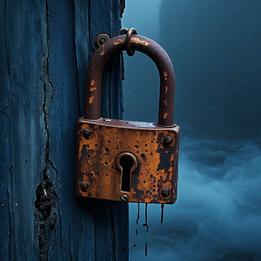
Rust
Rust symbolizes decay, neglect, and the inevitable passage of time. It can represent both deterioration and a natural process of transformation.
Rust Dream Meaning
Rust symbolizes decay, neglect, and the inevitable passage of time. It can represent both deterioration and a natural process of transformation.
Interpretive Themes
Mythological Resonance
Jörmungandr
NorseThe Midgard Serpent that circles the world, biting its own tail—its scales constantly rusting in the sea and renewing, symbolizing eternal cycles of decay and rebirth.
Tetsubin
JapaneseThe iron kettles used in tea ceremony develop rust (sabi) that is cherished as wabi-sabi—the beauty of imperfection, impermanence, and authenticity.
Cultural Lenses
Jungian Perspective
View Context →Rust represents the shadow aspect—unconscious neglect or repressed material corroding the psyche. It symbolizes the natural aging of archetypes and the need to integrate decay as part of wholeness.
Freudian Perspective
View Context →Rust symbolizes repressed sexual energy (libido) that has stagnated or deteriorated. It may represent fears of impotence, aging, or the corrosive effects of unresolved childhood conflicts on adult life.
Gestalt Perspective
View Context →Rust is the unfinished business—the neglected parts of self or relationships that are deteriorating from lack of attention. It asks: 'What in your life is rusting and needs care?'
Cognitive Perspective
View Context →Rust represents cognitive schemas of decay or failure—automatic thoughts about things deteriorating. It may indicate distorted thinking patterns that magnify neglect or underestimate resilience.
Evolutionary Perspective
View Context →Rust triggers ancestral warnings about tool deterioration threatening survival. It activates modern anxieties about resource depletion, infrastructure failure, or social bonds weakening over time.
East Asian Perspective
View Context →In Taoist and Buddhist contexts, rust symbolizes natural wu wei (non-action) decay. In Japanese aesthetics, sabi finds beauty in rust's patina as acceptance of impermanence (mono no aware).
European Perspective
View Context →Historically, rust symbolized industrial decline in post-industrial regions. In alchemical traditions, it represented nigredo—the decay necessary for transformation. Rustic aesthetics romanticize decay.
Middle Eastern Perspective
View Context →In desert cultures, rust symbolizes precious water's corrosive absence. Ancient metallurgy viewed rust as metal's 'death,' while Islamic art sometimes incorporates rust hues to signify earthly transience.
African Perspective
View Context →In some traditions, rust-colored ochre symbolizes earth connection and ritual transformation. Modern contexts may associate rust with colonial infrastructure decay or resilient adaptation.
Latin American Perspective
View Context →Rust appears in magical realism as time's tangible marker. It may symbolize revolutionary ideals decaying or indigenous resilience against colonial corrosion. Rust hues in art signify memory.
Modern Western Perspective
View Context →Rust embodies 'ruin porn' aesthetics and climate anxiety about corroding infrastructure. It represents planned obsolescence, vintage nostalgia, and debates about preservation versus progress.
Global/Universal Perspective
View Context →Universally, rust signifies oxidation—the inevitable process of change. It represents the tension between human constructs and natural forces, appearing in dreams as a memento mori across cultures.
Historical Authorities
Want a deeper analysis?
Get a personalized interpretation of your entire dream including this symbol.
Interpret My DreamThe Oracle's Prediction
Combine multiple symbolsAn old health issue will resurface but in a transformed, manageable state.
Timeframe
Seasonal (~3 Months)
Intensity
Deep
A neglected skill or project will return to your attention with new value.
Timeframe
Lunation (~29 Days)
Intensity
Deep
Common Appearances & Contexts
| Context | Emotion | Interpretation |
|---|---|---|
| Context Rusted machinery | Emotion frustration | Interpretation Stalled progress. |
| Context Rusted jewelry | Emotion sadness | Interpretation Lost value. |
| Context Rusted gate | Emotion anxiety | Interpretation Blocked access. |
| Context Rusted tools | Emotion helplessness | Interpretation Lost capability. |
| Context Rusted vehicle | Emotion regret | Interpretation Missed opportunities. |
| Context Rusted bridge | Emotion fear | Interpretation Unstable foundation. |
| Context Rusted coins | Emotion disappointment | Interpretation Wasted resources. |
| Context Rusted armor | Emotion vulnerability | Interpretation Weakened defenses. |
| Context Rusted pipes | Emotion worry | Interpretation Internal decay. |
| Context Rusted sculpture | Emotion nostalgia | Interpretation Aged beauty. |
| Context Rusted lock | Emotion frustration | Interpretation Secrets kept. |
| Context Rusted ship | Emotion melancholy | Interpretation Abandoned journeys. |
Interpret Your Full Dream
Beyond this symbol, every dream carries a unique story. Share your dream for a personalized AI-powered interpretation.