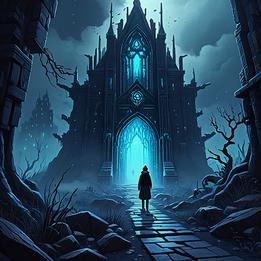
Roguelike
A video game genre characterized by procedural generation, permanent death, and replayability, symbolizing life's unpredictability and resilience through failure.
Roguelike Dream Meaning
A video game genre characterized by procedural generation, permanent death, and replayability, symbolizing life's unpredictability and resilience through failure.
Interpretive Themes
Mythological Resonance
Sisyphus
GreekCondemned to roll a boulder uphill eternally, yet finding meaning in the struggle itself—a myth of resilience through repetition.
Odin
NorseThe god who hung on Yggdrasil for nine nights to gain wisdom, sacrificing comfort for perpetual renewal and knowledge.
Cultural Lenses
Jungian Perspective
View Context →Represents the individuation process—repeatedly confronting the shadow self through different archetypal challenges to achieve wholeness. The procedural generation mirrors the psyche's endless creative potential.
Freudian Perspective
View Context →Symbolizes the death drive (Thanatos) and repetition compulsion—the unconscious desire to return to earlier states through failure. Permanent death represents castration anxiety and rebirth fantasies.
Gestalt Perspective
View Context →Represents the here-and-now experience of pattern recognition and adaptation. Each playthrough is a complete gestalt where the whole (success) emerges from understanding parts (mechanics).
Cognitive Perspective
View Context →Mirrors problem-solving and learning processes—building mental models through trial and error. The procedural generation represents cognitive flexibility and schema development through varied experiences.
Evolutionary Perspective
View Context →Represents adaptive behavior and survival strategies—learning through failure in safe environments. The permadeath mechanism mimics natural selection pressures without real-world consequences.
Modern Western Perspective
View Context →Reflects contemporary values of resilience, growth mindset, and embracing failure as learning. The genre's popularity speaks to a cultural shift toward non-linear success narratives.
East Asian Perspective
View Context →Echoes Buddhist concepts of samsara (cycle of rebirth) and impermanence. Each playthrough represents a lifetime where accumulated wisdom (karma) influences subsequent attempts toward enlightenment.
European Perspective
View Context →Connects to existentialist themes of creating meaning through repeated action in an absurd universe. The random generation reflects life's inherent unpredictability and the hero's journey.
North American Perspective
View Context →Embodies the pioneer spirit and self-reinvention mythology—starting over with nothing and building success through grit. Reflects cultural narratives of second chances and meritocracy.
Global/Universal Perspective
View Context →Represents the human experience of trial and error across cultures—myths of heroes failing repeatedly (Sisyphus, Odysseus). The core appeal transcends specific cultural contexts as fundamental learning pattern.
African Perspective
View Context →Echoes oral tradition storytelling where each telling varies while preserving core truths. The procedural generation mirrors ancestral wisdom adapting to new circumstances while maintaining cultural continuity.
Middle Eastern Perspective
View Context →Reflects Sufi concepts of spiritual progression through multiple lifetimes or states. Each failure represents a station (maqam) on the path to divine knowledge, with randomness as divine will.
Historical Authorities
Want a deeper analysis?
Get a personalized interpretation of your entire dream including this symbol.
Interpret My DreamThe Oracle's Prediction
Combine multiple symbolsA project or endeavor will require multiple attempts before success, but each failure will build crucial skills.
Timeframe
Seasonal (~3 Months)
Intensity
Deep
A period of personal reinvention or resilience testing is approaching.
Timeframe
Lunation (~29 Days)
Intensity
Deep
Common Appearances & Contexts
| Context | Emotion | Interpretation |
|---|---|---|
| Context Losing repeatedly | Emotion Frustration | Interpretation Feeling stuck. |
| Context Discovering new paths | Emotion Excitement | Interpretation Finding opportunities. |
| Context Starting over fresh | Emotion Hope | Interpretation Renewed beginnings. |
| Context Facing impossible odds | Emotion Anxiety | Interpretation Overwhelming challenges. |
| Context Unexpected success | Emotion Euphoria | Interpretation Breakthrough moment. |
| Context Pattern recognition | Emotion Satisfaction | Interpretation Learning from experience. |
| Context Resource management | Emotion Calculating | Interpretation Strategic planning. |
| Context Random events | Emotion Surprise | Interpretation Unpredictable outcomes. |
| Context Building knowledge | Emotion Confidence | Interpretation Growing competence. |
| Context Time pressure | Emotion Urgency | Interpretation Limited opportunities. |
| Context Cooperative play | Emotion Connection | Interpretation Shared struggle. |
| Context Solo challenge | Emotion Isolation | Interpretation Personal journey. |
Interpret Your Full Dream
Beyond this symbol, every dream carries a unique story. Share your dream for a personalized AI-powered interpretation.