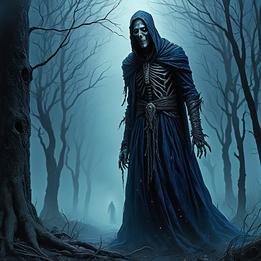
Revenant
A spirit or animated corpse that returns from the dead, often seeking resolution, revenge, or connection with the living.
Revenant Dream Meaning
A spirit or animated corpse that returns from the dead, often seeking resolution, revenge, or connection with the living.
Interpretive Themes
Unresolved Past
highPast actions or relationships resurface.
Moral Accountability
highKarmic justice or guilt manifesting.
Ancestral Connection
mediumFamily history influencing present.
Psychological Shadow
mediumDenied traits seeking integration.
Existential Fear
lowMortality concerns made tangible.
Cultural Lenses
Jungian Perspective
View Context →Represents the shadow archetype or collective unconscious content returning for integration. Historically seen in myths of returning heroes; modernly indicates parts of psyche demanding acknowledgment.
Freudian Perspective
View Context →Symbolizes repressed desires or traumatic memories from childhood resurfacing. Historically linked to death drive (Thanatos); modernly represents unconscious material breaking through repression.
Gestalt Perspective
View Context →An unfinished situation or relationship from the past requiring closure. Historically seen in ghost stories; modernly represents incomplete emotional business needing resolution.
Cognitive Perspective
View Context →Mental representation of persistent thoughts or memories the brain cannot process. Historically explained as sleep paralysis; modernly indicates cognitive schemas about loss or injustice.
Evolutionary Perspective
View Context →Adaptive mechanism for processing social debts, ancestral threats, or memory of deceased. Historically served survival functions; modernly manifests as anxiety about social obligations.
Global/Universal Perspective
View Context →Cross-cultural archetype of the returning dead, found in nearly all human societies. Historically connected to burial rituals; modernly represents universal human concerns about mortality and legacy.
East Asian Perspective
View Context →Often hungry ghosts or ancestors requiring rituals. Historically tied to Confucian filial piety; modernly appears in horror films as social commentary on forgotten traditions.
European Perspective
View Context →Medieval ghosts, vampires, or zombies seeking justice or vengeance. Historically connected to Christian concepts of purgatory; modernly represents historical trauma or class resentment.
African Perspective
View Context →Ancestral spirits returning to guide, warn, or maintain community bonds. Historically central to many religious systems; modernly represents cultural continuity amidst change.
Modern Western Perspective
View Context →Psychological metaphor for trauma, guilt, or nostalgia. Historically secularized from religious ghosts; modernly appears in therapy as 'unfinished business' needing processing.
Middle Eastern Perspective
View Context →Jinn or spirits returning with messages or warnings. Historically Islamic and pre-Islamic traditions; modernly represents cultural memory and supernatural belief systems.
Latin American Perspective
View Context →Day of the Dead spirits or La Llorona figures. Historically syncretic Catholic-indigenous beliefs; modernly represents cultural identity and remembrance practices.
Want a deeper analysis?
Get a personalized interpretation of your entire dream including this symbol.
Interpret My DreamCommon Appearances & Contexts
| Context | Emotion | Interpretation |
|---|---|---|
| Context Chasing you | Emotion Terror | Interpretation Avoiding unresolved issues. |
| Context Delivering message | Emotion Awe | Interpretation Important wisdom from past. |
| Context Seeking revenge | Emotion Guilt | Interpretation Consequences of past actions. |
| Context Peaceful presence | Emotion Comfort | Interpretation Ancestral protection or guidance. |
| Context Warning you | Emotion Anxiety | Interpretation Unheeded advice returning. |
| Context Observing silently | Emotion Unease | Interpretation Unacknowledged memory watching. |
| Context Asking forgiveness | Emotion Pity | Interpretation Unresolved guilt seeking closure. |
| Context Guiding somewhere | Emotion Curiosity | Interpretation Past leading to discovery. |
| Context Merging with you | Emotion Confusion | Interpretation Integrating past identity. |
| Context Protecting others | Emotion Gratitude | Interpretation Legacy acting as guardian. |
| Context Repeating actions | Emotion Frustration | Interpretation Patterns that won't die. |
| Context Disintegrating slowly | Emotion Sadness | Interpretation Memory finally fading away. |
Interpret Your Full Dream
Beyond this symbol, every dream carries a unique story. Share your dream for a personalized AI-powered interpretation.