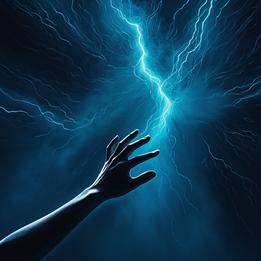
Reflex
An involuntary, automatic response to a stimulus, often representing primal instincts, unconscious reactions, or lack of conscious control.
Reflex Dream Meaning
An involuntary, automatic response to a stimulus, often representing primal instincts, unconscious reactions, or lack of conscious control.
Interpretive Themes
Mythological Resonance
Medusa
GreekHer gaze turns viewers to stone through immediate reflex, representing how trauma can freeze us in automatic survival responses.
Berserker
NorseWarriors who entered battle trances where reflexes took over completely, losing conscious control to primal fighting instincts.
Cultural Lenses
Jungian Perspective
View Context →Represents the collective unconscious and archetypal responses; automatic reactions that connect to universal human experiences and inherited psychological patterns.
Freudian Perspective
View Context →Manifestation of the id's primal impulses breaking through ego control; repressed desires or traumas expressing themselves through involuntary physical responses.
Gestalt Perspective
View Context →The organism's holistic response to environmental stimuli; represents unfinished business or unmet needs that trigger automatic completion-seeking behaviors.
Cognitive Perspective
View Context →Automatic thought patterns and schemas activating without conscious processing; indicates deeply ingrained beliefs or learned associations triggering immediate responses.
Evolutionary Perspective
View Context →Ancient survival mechanisms preserved through natural selection; adaptive responses that once protected ancestors from predators or environmental dangers.
East Asian Perspective
View Context →In Taoist and Buddhist traditions, represents the body's natural flow of qi or prana; involuntary movements may indicate energy blockages or spiritual awakening processes.
South Asian Perspective
View Context →In Ayurvedic and yogic traditions, reflexes show the balance of doshas; automatic responses reveal karmic imprints (samskaras) from past lives affecting present behavior.
Middle Eastern Perspective
View Context →In Islamic dream interpretation, reflexes may represent divine protection or tests of faith; involuntary responses show submission to Allah's will or spiritual reflexes.
European Perspective
View Context →In medieval European medicine, reflexes indicated humoral balance; in modern psychology, they represent conditioned responses from cultural and personal history.
African Perspective
View Context →In many African traditions, reflexes connect to ancestral spirits; automatic movements may be interpreted as communication from ancestors or spiritual possession indicators.
Latin American Perspective
View Context →In curanderismo and folk healing, reflexes reveal spiritual or emotional imbalances; involuntary responses may indicate susto (soul loss) or mal de ojo (evil eye) effects.
Modern Western Perspective
View Context →Seen through neuroscience as hardwired neural pathways; in popular psychology, represents automatic negative thoughts or trauma responses requiring conscious reprogramming.
Historical Authorities
Want a deeper analysis?
Get a personalized interpretation of your entire dream including this symbol.
Interpret My DreamThe Oracle's Prediction
Combine multiple symbolsAn automatic response from past trauma will be triggered in a current situation.
Timeframe
Immediate (Next 48h)
Intensity
Deep
You will experience a moment where instinct and intuition merge, creating a superconscious reflex.
Timeframe
Seasonal (~3 Months)
Intensity
Deep
Common Appearances & Contexts
| Context | Emotion | Interpretation |
|---|---|---|
| Context Falling suddenly | Emotion Fear | Interpretation Loss of control |
| Context Touching hot surface | Emotion Pain | Interpretation Immediate protection needed |
| Context Loud noise startles | Emotion Shock | Interpretation Sudden threat perceived |
| Context Doctor testing knee | Emotion Vulnerability | Interpretation Body's automatic response |
| Context Avoiding falling object | Emotion Alertness | Interpretation Quick self-preservation |
| Context Blinking at bright light | Emotion Discomfort | Interpretation Sensory overload response |
| Context Catching dropped item | Emotion Surprise | Interpretation Unplanned quick action |
| Context Pulling hand back | Emotion Caution | Interpretation Risk assessment automatic |
| Context Jumping at shadow | Emotion Anxiety | Interpretation Perceived danger reaction |
| Context Yawning when tired | Emotion Fatigue | Interpretation Body's natural rhythm |
| Context Sneezing unexpectedly | Emotion Irritation | Interpretation Sudden physical release |
| Context Flinching at touch | Emotion Defensiveness | Interpretation Boundary violation response |
Interpret Your Full Dream
Beyond this symbol, every dream carries a unique story. Share your dream for a personalized AI-powered interpretation.