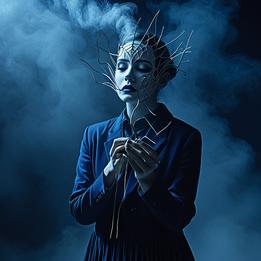
Prop
A portable object used in performance to enhance storytelling, representing artifice, support, and transformation between reality and illusion.
Prop Dream Meaning
A portable object used in performance to enhance storytelling, representing artifice, support, and transformation between reality and illusion.
Interpretive Themes
Identity Performance
highProps facilitate character embodiment.
Artificial Support
mediumMay indicate dependency on externals.
Reality Illusion Boundary
highQuestions authenticity of situations.
Creative Expression
mediumSymbolizes need for self-expression.
Temporary Transformation
highSuggests desire for change.
Mythological Resonance
Proteus
GreekThe shape-shifting sea god who could transform into any form or object to avoid capture, representing fluid identity.
Props in Theater
ShakespeareanObjects like Yorick's skull in Hamlet or the handkerchief in Othello that become central to narrative transformation and revelation.
Cultural Lenses
Jungian Perspective
View Context →Archetypal tool representing persona construction; the mask worn for social performance. Historically used in rituals for transformation, now symbolizes the conscious presentation of self versus shadow aspects.
Freudian Perspective
View Context →Phallic or yonic symbol representing sexual sublimation through artistic expression; displacement of unconscious desires onto acceptable objects. Modern context shows props as socially sanctioned outlets for repressed impulses.
Gestalt Perspective
View Context →Projection of self-aspects onto external objects; the prop represents disowned parts of personality seeking integration. In modern therapy, props facilitate role-playing for self-discovery and wholeness.
Cognitive Perspective
View Context →Mental schema for role performance; cognitive tool for simulating social scenarios. Evolutionarily developed for social learning, now manifests in rehearsal thinking and social anxiety preparation through mental props.
Evolutionary Perspective
View Context →Tool extension for social signaling and status display; ritual objects evolved for group cohesion. Modern props serve similar functions in cultural performances, reinforcing social bonds through shared symbolic objects.
East Asian Perspective
View Context →In traditional Chinese opera, props (qi) carry symbolic meanings (flags represent armies, whips symbolize horses) with strict conventions. Modernly, props maintain ritual significance in ceremonies while appearing in pop culture as identity markers.
South Asian Perspective
View Context →In Hindu rituals, props (yantras, murtis) serve as divine conduits; in classical dance, props extend the body's expressive capacity. Contemporary Bollywood uses props extravagantly to amplify emotional narratives and cultural identity.
Middle Eastern Perspective
View Context →In Islamic storytelling traditions, props in shadow puppetry (Karagöz) represent social types; in Sufi rituals, objects facilitate spiritual journey. Modern props in cinema often carry political or religious symbolism.
European Perspective
View Context →Medieval mystery plays used props for biblical symbolism; Renaissance theater developed elaborate props for spectacle. Today, European avant-garde theater uses minimalist props to challenge perception and reality boundaries.
African Perspective
View Context →In mask ceremonies, props complete transformative rituals connecting to ancestors; objects carry spiritual power (nkisi). Contemporary African theater uses props to bridge traditional symbolism with modern political commentary.
Latin American Perspective
View Context →Pre-Columbian rituals used props for shamanic journeys; colonial religious dramas incorporated indigenous objects. Modern Day of the Dead altars and political theater use props for cultural memory and resistance expression.
Oceanian Perspective
View Context →Polynesian navigation props (stick charts) encoded environmental knowledge; Melanesian ceremonial props facilitated ancestor communication. Contemporary Pacific art uses traditional props to assert cultural sovereignty and environmental awareness.
Historical Authorities
Want a deeper analysis?
Get a personalized interpretation of your entire dream including this symbol.
Interpret My DreamThe Oracle's Prediction
Combine multiple symbolsYou will temporarily adopt a new role or identity that leads to meaningful connection.
Timeframe
Seasonal (~3 Months)
Intensity
Deep
Beware of becoming overly attached to a temporary identity or role.
Timeframe
Immediate (Next 48h)
Intensity
Deep
Common Appearances & Contexts
| Context | Emotion | Interpretation |
|---|---|---|
| Context Holding broken prop | Emotion Frustration | Interpretation Failed performance attempt. |
| Context Forgot prop backstage | Emotion Panic | Interpretation Unprepared for role. |
| Context Multiple props scattered | Emotion Confusion | Interpretation Too many roles. |
| Context Magical prop transformation | Emotion Wonder | Interpretation Desire for change. |
| Context Stealing someone's prop | Emotion Guilt | Interpretation Identity appropriation. |
| Context Prop becomes real | Emotion Awe | Interpretation Illusion becoming reality. |
| Context Ancient ritual prop | Emotion Reverence | Interpretation Connecting to tradition. |
| Context Prop disintegrating mid-use | Emotion Terror | Interpretation Losing support system. |
| Context Creating new prop | Emotion Pride | Interpretation Crafting new identity. |
| Context Prop too heavy | Emotion Exhaustion | Interpretation Role overwhelming. |
| Context Prop with hidden mechanism | Emotion Curiosity | Interpretation Discovering hidden aspects. |
| Context Audience ignoring prop | Emotion Invisibility | Interpretation Efforts unnoticed. |
Interpret Your Full Dream
Beyond this symbol, every dream carries a unique story. Share your dream for a personalized AI-powered interpretation.