Prana
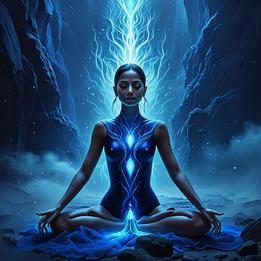
In Hindu and yogic traditions, prana is the universal life force or vital energy that animates all living beings and permeates the cosmos.
Prana Dream Meaning
In Hindu and yogic traditions, prana is the universal life force or vital energy that animates all living beings and permeates the cosmos.
Interpretive Themes
Mythological Resonance
Vayu
HinduThe wind god who embodies prana as the breath of the cosmos, the force that moves through all living things.
Pneuma
GreekThe Stoic concept of divine breath or spirit that animates the universe and gives life to all creatures.
Cultural Lenses
South Asian Perspective
View Context →In Hinduism and yoga, prana is the vital breath (pranayama) controlling life functions, linked to the five vayus (winds) and central to Ayurvedic health, meditation, and spiritual liberation (moksha).
East Asian Perspective
View Context →Analogous to Qi (Chi) in Chinese philosophy and Japanese Ki, it's the circulating life energy in Traditional Chinese Medicine, acupuncture, and martial arts, essential for balance and vitality.
Middle Eastern Perspective
View Context →Similar to Ruh (spirit) in Islamic and Sufi thought, representing the divine breath or soul infused by God, with mystical practices focusing on spiritual energy and connection.
European Perspective
View Context →Historically akin to 'pneuma' in ancient Greek philosophy (Stoicism) as vital spirit or breath, and later in Hermeticism as a universal life force influencing alchemy and esoteric traditions.
African Perspective
View Context →Resonates with concepts like 'Nyama' in Mande culture or 'Ashe' in Yoruba, a vital force in nature and rituals, channeled through ancestors, healers, and community practices.
Latin American Perspective
View Context →Reflected in concepts like 'Aché' in Afro-Caribbean religions (e.g., Santería) as spiritual energy or power, and in curanderismo healing traditions emphasizing energy balance and cleansing.
Modern Western Perspective
View Context →Often secularized in wellness culture as 'energy' for stress relief, mindfulness, and holistic health, popularized through yoga, breathwork, and alternative therapies, sometimes commercialized.
Jungian Perspective
View Context →Symbolizes libido or psychic energy, the dynamic force of the psyche driving individuation, appearing in dreams as a motif of vitality, transformation, or connection to the collective unconscious.
Freudian Perspective
View Context →Represents libidinal energy or life instincts (Eros), possibly manifesting in dreams as sublimated sexual drives, breath symbolism linked to primal urges or anxiety about vitality.
Gestalt Perspective
View Context →Seen as a projection of the dreamer's own life force or awareness, with prana symbolizing how energy is experienced in the present moment—blocked, flowing, or integrated into self.
Cognitive Perspective
View Context →A mental construct for processing experiences of vitality or stress, where prana in dreams may reflect schemas related to energy management, health concerns, or metaphors for motivation.
Evolutionary Perspective
View Context →May stem from adaptive concerns with respiration and vitality, symbolizing biological fitness, resource allocation, or social bonding energy in dreams, tied to survival and well-being instincts.
Historical Authorities
Want a deeper analysis?
Get a personalized interpretation of your entire dream including this symbol.
Interpret My DreamThe Oracle's Prediction
Combine multiple symbolsA significant improvement in respiratory or energy-related conditions.
Timeframe
Seasonal (~3 Months)
Intensity
Deep
A moment of profound connection to the universal life force.
Timeframe
Immediate (Next 48h)
Intensity
Deep
Common Appearances & Contexts
| Context | Emotion | Interpretation |
|---|---|---|
| Context Breathing deeply | Emotion Calm | Interpretation Seeking inner peace. |
| Context Energy flowing | Emotion Euphoric | Interpretation Vitality and empowerment. |
| Context Blocked energy | Emotion Frustrated | Interpretation Life stagnation felt. |
| Context Sharing energy | Emotion Connected | Interpretation Empathetic bonds forming. |
| Context Cosmic energy | Emotion Awestruck | Interpretation Transcendent experience occurring. |
| Context Losing energy | Emotion Anxious | Interpretation Fear of depletion. |
| Context Healing with energy | Emotion Hopeful | Interpretation Recovery or renewal. |
| Context Controlling energy | Emotion Empowered | Interpretation Mastery over self. |
| Context Energy imbalance | Emotion Unsettled | Interpretation Internal conflict present. |
| Context Ancient energy rituals | Emotion Reverent | Interpretation Connecting to tradition. |
| Context Energy as light | Emotion Inspired | Interpretation Clarity or enlightenment. |
| Context Energy depletion | Emotion Exhausted | Interpretation Burnout or overwhelm. |
Interpret Your Full Dream
Beyond this symbol, every dream carries a unique story. Share your dream for a personalized AI-powered interpretation.