Poltergeist
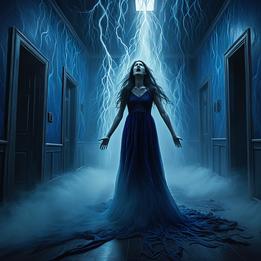
A noisy, disruptive spirit representing unconscious turmoil, repressed emotions, or psychological energy manifesting as external chaos.
Poltergeist Dream Meaning
A noisy, disruptive spirit representing unconscious turmoil, repressed emotions, or psychological energy manifesting as external chaos.
Interpretive Themes
Cultural Lenses
Jungian Perspective
View Context →Represents the shadow archetype or autonomous complex - unconscious content that disrupts consciousness. Historically seen in spiritualism, now viewed as psychological projection requiring integration.
Freudian Perspective
View Context →Symbolizes repressed sexual energy or childhood trauma manifesting as displacement. Historically linked to hysteria, modernly represents subconscious desires breaking through repression.
Gestalt Perspective
View Context →Represents disowned parts of self projected outward. Historically seen in psychodrama, modernly viewed as fragmented personality aspects seeking acknowledgment and integration.
Cognitive Perspective
View Context →Metaphor for cognitive dissonance or processing errors. Historically unexplained phenomena, now represents brain's attempt to make sense of internal conflicts during sleep.
Evolutionary Perspective
View Context →Represents hyperactive agency detection - evolved tendency to perceive intentional forces. Historically survival mechanism, modernly manifests as pattern-seeking in ambiguous situations.
European Perspective
View Context →Traditionally a mischievous house spirit causing disturbances. Historically blamed on restless dead or demons, modernly represents domestic tension or psychological unrest in Western cultures.
East Asian Perspective
View Context →Often represents unsettled ancestors or disrupted feng shui. Historically seen as angry spirits requiring ritual appeasement, modernly viewed as family disharmony or environmental imbalance.
African Perspective
View Context →Frequently represents ancestral displeasure or witchcraft. Historically addressed through ritual cleansing, modernly interpreted as social discord or spiritual warning requiring community resolution.
Latin American Perspective
View Context →Commonly viewed as lost souls or brujería manifestations. Historically Catholic-syncretic beliefs, modernly represents cultural memory of colonization or personal spiritual crisis.
Modern Western Perspective
View Context →Psychological metaphor for stress or trauma. Historically paranormal phenomenon, now represents mental health issues, repressed memories, or societal anxiety in secular contexts.
Middle Eastern Perspective
View Context →Often represents jinn interaction or spiritual testing. Historically Islamic folklore, modernly viewed as psychological disturbance or divine warning requiring prayer and introspection.
Global/Universal Perspective
View Context →Cross-cultural symbol of unexplained disturbance. Historically attributed to supernatural forces, universally represents human anxiety about the unknown and need for explanation.
Want a deeper analysis?
Get a personalized interpretation of your entire dream including this symbol.
Interpret My DreamCommon Appearances & Contexts
| Context | Emotion | Interpretation |
|---|---|---|
| Context Home disturbance | Emotion Fear | Interpretation Personal security threatened. |
| Context Object manipulation | Emotion Confusion | Interpretation Control being lost. |
| Context Chasing presence | Emotion Panic | Interpretation Unresolved issues pursuing. |
| Context Noise without source | Emotion Anxiety | Interpretation Internal noise externalized. |
| Context Witnessing activity | Emotion Helplessness | Interpretation Observer of chaos. |
| Context Confronting spirit | Emotion Courage | Interpretation Facing inner demons. |
| Context Protecting others | Emotion Determination | Interpretation Defending against intrusion. |
| Context Poltergeist calming | Emotion Relief | Interpretation Resolution of turmoil. |
| Context Multiple poltergeists | Emotion Overwhelm | Interpretation Multiple issues surfacing. |
| Context Poltergeist communication | Emotion Curiosity | Interpretation Seeking message within. |
| Context Childhood home | Emotion Nostalgia | Interpretation Past trauma resurfacing. |
| Context Workplace haunting | Emotion Stress | Interpretation Professional anxiety manifesting. |
Interpret Your Full Dream
Beyond this symbol, every dream carries a unique story. Share your dream for a personalized AI-powered interpretation.