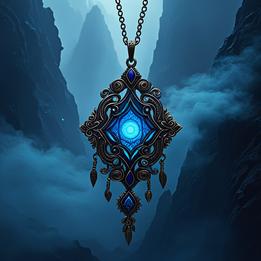
Pendant
A personal ornament worn close to the body, often symbolizing identity, connection, protection, or hidden meaning.
Pendant Dream Meaning
A personal ornament worn close to the body, often symbolizing identity, connection, protection, or hidden meaning.
Interpretive Themes
Cultural Lenses
Jungian Perspective
View Context →A mandala-like symbol of the Self; the center point of personality. The pendant's design and placement near the heart suggest integration of conscious and unconscious elements, a personal totem in the individuation process.
Freudian Perspective
View Context →Often a phallic symbol (hanging object) or a representation of female genitalia (the locket/container). Can symbolize sexual attachment, desire for union, or fixation on a love object given as a gift.
Gestalt Perspective
View Context →You are the pendant. What is it like to be worn, displayed, hidden, or lost? This explores your relationship with your environment and how you present or protect your core self.
Cognitive Perspective
View Context →A mental schema for 'personal significance' or 'attachment.' The dream processes memories or concerns about relationships, self-concept, or valued objects, consolidating emotional experiences during sleep.
Evolutionary Perspective
View Context →A modern proxy for ornamental display signaling mate value, social status, or group affiliation. May tap into ancient instincts for personal adornment for protection (amulets) or to attract allies/mates.
Middle Eastern Perspective
View Context →Historically, amulets (like the Hamsa or Evil Eye) for protection against malevolent forces. In modern context, pendants often bear religious symbols (Star of David, Cross, Crescent) as public declarations of faith and identity.
East Asian Perspective
View Context →Jade pendants are traditional for protection, health, and wisdom. A locket might hold a portrait, symbolizing ancestral veneration or deep familial bonds. Modern pendants often feature zodiac signs or lucky charms.
European Perspective
View Context →Heraldic pendants signified family lineage and nobility. Lockets became Victorian symbols of mourning and secret love. Today, they are common heirlooms, connecting wearers to personal and collective history.
African Perspective
View Context →Worn as powerful talismans containing medicinal herbs, sacred symbols, or ancestral blessings. Adinkra symbols or cowrie shell pendants communicate proverbs, status, and spiritual protection within many cultural traditions.
South Asian Perspective
View Context →Mangalsutra or thaali pendants are sacred marriage symbols. Other pendants feature deities (Om, Ganesha) for divine protection and blessing. They are integral to ritual identity and life stage ceremonies.
Latin American Perspective
View Context →Often religious (Crucifix, Virgin of Guadalupe) for faith and protection. Milagros (small charm pendants) represent prayers for healing. Pre-Columbian designs may connect to indigenous heritage and earth-based spirituality.
Modern Western Perspective
View Context →A highly personalized accessory expressing individual style, fandom, or cause (awareness ribbons). Often holds sentimental data (ashes, photos) or functions as a tech device, blending memory, identity, and utility.
Want a deeper analysis?
Get a personalized interpretation of your entire dream including this symbol.
Interpret My DreamCommon Appearances & Contexts
| Context | Emotion | Interpretation |
|---|---|---|
| Context Receiving a pendant | Emotion Joyful | Interpretation Gift of affection or recognition. |
| Context Losing a pendant | Emotion Panicked | Interpretation Fear of losing identity. |
| Context Finding a pendant | Emotion Curious | Interpretation Discovering hidden aspect. |
| Context Giving a pendant | Emotion Loving | Interpretation Offering connection or trust. |
| Context A broken pendant | Emotion Grieving | Interpretation Relationship or self fractured. |
| Context A glowing pendant | Emotion Awed | Interpretation Inner wisdom or power. |
| Context Stealing a pendant | Emotion Guilty | Interpretation Taking undeserved identity. |
| Context An empty pendant | Emotion Empty | Interpretation Lack of core meaning. |
| Context Multiple pendants | Emotion Conflicted | Interpretation Conflicting roles or loyalties. |
| Context A heavy pendant | Emotion Burdened | Interpretation Responsibility weighing down. |
| Context A pendant unlocking | Emotion Hopeful | Interpretation Access to new potential. |
| Context A pendant changing | Emotion Unsettled | Interpretation Identity in flux. |
Interpret Your Full Dream
Beyond this symbol, every dream carries a unique story. Share your dream for a personalized AI-powered interpretation.