Arts & Music

Nod Dream Meaning

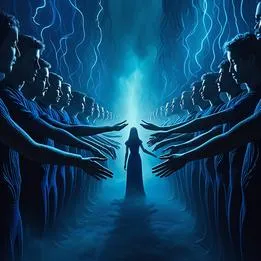
A subtle head movement indicating agreement, acknowledgment, or rhythmic connection, often carrying layered social and artistic meanings.

Common Appearances & Contexts

Context Emotion Interpretation
Music concert Joy Rhythmic immersion, unity.
Silent agreement Relief Conflict resolution, peace.
Art gallery Awe Appreciation, understanding.
Teacher's lecture Respect Learning, acknowledgment.
Secret signal Intrigue Covert communication.
Dance performance Excitement Sync, participation.
Heavy disagreement Anxiety Forced compliance.
Meditative state Peace Inner harmony.
Crowd unison Belonging Collective identity.
Artistic critique Satisfaction Approval, validation.
Lost in thought Contemplation Internal dialogue.
Breaking rhythm Frustration Disruption, discord.

Interpretive Themes

Cultural Lenses

Jungian Perspective

View Context →

Represents the collective unconscious's approval or the Self's alignment with archetypal patterns. Historically, nods in rituals affirmed communal bonds; modernly, it signals integration of unconscious content.

Freudian Perspective

View Context →

Symbolizes repressed agreement or sexual sublimation, often linked to oral or phallic stages. Historically, nods in art masked desires; modernly, they reveal subconscious consent or conflict.

Perspective

View Context →

Indicates awareness of the 'here and now,' a holistic response to environmental stimuli. Historically, nods completed social gestures; modernly, they reflect immediate perceptual integration.

Cognitive Perspective

View Context →

A mental schema for processing agreement or rhythm, reducing cognitive load. Historically, nods streamlined communication; modernly, they aid in memory and attention during artistic experiences.

Evolutionary Perspective

View Context →

An adaptive gesture for social cohesion and non-verbal signaling, enhancing group survival. Historically, nods prevented conflict; modernly, they facilitate artistic collaboration and trust.

East Asian Perspective

View Context →

In traditions like Noh theater, a nod signifies deep respect and harmony with nature. Modernly, it maintains social hierarchy and subtle artistic appreciation in contexts like tea ceremonies.

European Perspective

View Context →

Historically, nods in courtly music indicated patronage and approval. In modern Western art, they often denote critical acclaim or passive engagement in performances.

African Perspective

View Context →

In rituals like drum circles, nods sync with ancestral rhythms, affirming community. Modernly, they connect to diaspora music, expressing identity and collective memory.

Middle Eastern Perspective

View Context →

In Sufi whirling, nods align with divine rhythm, symbolizing spiritual surrender. Modernly, they appear in music as gestures of poetic agreement and cultural continuity.

South Asian Perspective

View Context →

In classical dance, nods (like in Bharatanatyam) convey narrative beats and devotional focus. Modernly, they blend tradition with contemporary artistic expression.

Latin American Perspective

View Context →

In folk music, nods engage with communal rhythms, affirming cultural resilience. Modernly, they signal participation in vibrant artistic movements and social solidarity.

Global/Universal Perspective

View Context →

A cross-cultural gesture for agreement and rhythmic connection, evolving from ancient rituals to modern digital interactions, often bridging artistic and social realms universally.

AI-Powered

Interpret Your Full Dream

Beyond this symbol, every dream carries a unique story. Share your dream for a personalized AI-powered interpretation.