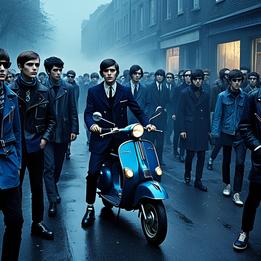
Mod
A subculture of the 1960s focused on fashion, music, and scooters, representing youthful rebellion, style consciousness, and social identity.
Mod Dream Meaning
A subculture of the 1960s focused on fashion, music, and scooters, representing youthful rebellion, style consciousness, and social identity.
Interpretive Themes
Identity Formation
highDream may reflect self-definition struggles.
Rebellion
highSymbolizes nonconformity or desire for change.
Nostalgia
mediumMay indicate idealization of simpler times.
Communication
mediumDreamer values appearance or creativity.
Adaptability
lowCould signal desire for renewal.
Mythological Resonance
Dionysus
GreekGod of ecstasy, theater, and liberation who challenged social conventions through revelry and artistic expression.
The Dandy
CelticA folkloric figure of excessive elegance and style who uses appearance as a weapon of social commentary.
Cultural Lenses
Jungian Perspective
View Context →Represents the Persona archetype—the social mask one presents. Dreaming of Mod culture may indicate exploration of how one presents oneself to the world, balancing individuality with social conformity.
Freudian Perspective
View Context →Symbolizes sublimated sexual energy through fashion and music. The sleek scooters and tailored suits may represent phallic symbols, while the group dynamics reflect latent desires for social and sexual acceptance.
Gestalt Perspective
View Context →The dreamer IS the Mod—every element represents an aspect of self. The scooter is mobility, the clothes are self-presentation, the music is emotional expression. What part feels most authentic?
Cognitive Perspective
View Context →Represents schema of 'youth rebellion' or 'stylish identity.' Dream may process memories of social belonging or activate mental models about conformity versus individuality in current life situations.
Evolutionary Perspective
View Context →Symbolizes group identification and mating display behaviors. The meticulous fashion signals resource allocation for attraction, while the subculture membership represents tribal affiliation for survival advantage.
Modern Western Perspective
View Context →Nostalgic symbol of counterculture now commodified. Represents tension between authentic rebellion and commercialized identity, often appearing in dreams during life transitions or identity reevaluations.
European Perspective
View Context →Specifically British post-war youth movement representing class mobility and American cultural influence. Dreams may reflect anxieties about social status or transatlantic cultural exchange in personal identity.
East Asian Perspective
View Context →Viewed as Western cultural import representing modernization. In dreams, may symbolize conflict between traditional values and globalized identity, or desire for individual expression within collective societies.
African Perspective
View Context →Seen as colonial cultural imposition or creative adaptation. Dream appearances might reflect tensions between indigenous identity and global influences, or innovative blending of cultural elements.
Latin American Perspective
View Context →Interpreted through lens of cultural hybridity and resistance. May symbolize creative adaptation of foreign influences or youthful challenges to traditional hierarchies in dreams about social change.
Global/Universal Perspective
View Context →Archetype of youth subculture transcending specific location. Represents universal human experiences of generational identity formation, rebellion against elders, and search for belonging through shared aesthetics.
Historical Authorities
Want a deeper analysis?
Get a personalized interpretation of your entire dream including this symbol.
Interpret My DreamThe Oracle's Prediction
Combine multiple symbolsA connection with someone who mirrors your authentic style will emerge.
Timeframe
Seasonal (~3 Months)
Intensity
Deep
Common Appearances & Contexts
| Context | Emotion | Interpretation |
|---|---|---|
| Context Riding scooter | Emotion Freedom | Interpretation Desire for independence. |
| Context Dancing to music | Emotion Joy | Interpretation Social connection pleasure. |
| Context Choosing clothes | Emotion Anxiety | Interpretation Identity pressure. |
| Context Group confrontation | Emotion Defiance | Interpretation Rebellion against norms. |
| Context Looking in mirror | Emotion Pride | Interpretation Self-image satisfaction. |
| Context Lost in crowd | Emotion Confusion | Interpretation Identity loss fear. |
| Context Time travel | Emotion Nostalgia | Interpretation Past idealization. |
| Context Fashion show | Emotion Excitement | Interpretation Creative expression. |
| Context Abandoned club | Emotion Melancholy | Interpretation Lost youth. |
| Context Teaching others | Emotion Confidence | Interpretation Cultural transmission. |
| Context Being judged | Emotion Insecurity | Interpretation Social acceptance anxiety. |
| Context Reviving movement | Emotion Hope | Interpretation Renewal desire. |
Interpret Your Full Dream
Beyond this symbol, every dream carries a unique story. Share your dream for a personalized AI-powered interpretation.