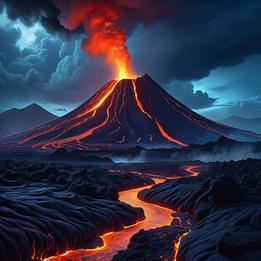
Lavaflow
A powerful, unstoppable natural force representing overwhelming transformation, destruction, and rebirth.
Lavaflow Dream Meaning
A powerful, unstoppable natural force representing overwhelming transformation, destruction, and rebirth.
Interpretive Themes
Mythological Resonance
Pele
HawaiianGoddess of volcanoes who destroys with lava to create new land, embodying both creative and destructive forces.
Hephaestus
GreekGod of fire and forge whose volcanic workshop transforms raw materials into divine artifacts through intense heat.
Cultural Lenses
Jungian Perspective
View Context →Represents the eruption of unconscious material from the collective unconscious. Symbolizes the shadow's raw power forcing integration through destructive yet creative transformation of the psyche.
Freudian Perspective
View Context →Symbolizes repressed libidinal energy or aggressive drives violently surfacing. May represent sexual release, anger toward authority figures, or the id overwhelming ego defenses in a cathartic eruption.
Gestalt Perspective
View Context →Represents an overwhelming aspect of the self demanding integration. The dreamer IS the lavaflow - their own unstoppable energy that needs acknowledgment rather than avoidance or control.
Cognitive Perspective
View Context →Metaphor for overwhelming cognitive load or emotional processing. The brain uses this vivid imagery to represent situations where coping mechanisms are overwhelmed by stress, change, or trauma.
Evolutionary Perspective
View Context →Primal threat response to environmental danger. Activates ancient survival circuits related to fire, earth instability, and uncontrollable natural disasters that shaped human fear responses.
Global/Universal Perspective
View Context →Cross-cultural symbol of divine wrath, earth's creative power, and inevitable change. Found in creation myths worldwide as both destructive force and source of fertile new land.
East Asian Perspective
View Context →In Chinese and Japanese traditions, represents yang energy at its most extreme - creative fire that must be balanced by yin. Associated with volcanic deities and the Dragon's fiery breath.
South Asian Perspective
View Context →In Hindu mythology, Shiva's third eye emits destructive fire that purifies. Lava flows symbolize tapas (austerity heat) that burns away karma to enable spiritual transformation.
Middle Eastern Perspective
View Context →In Islamic and pre-Islamic traditions, represents divine punishment (like Sodom) and Allah's power. Also appears in Persian mythology as the fiery breath of dragons guarding treasures.
European Perspective
View Context →In Greek/Roman myth, Hephaestus/Vulcan's forge and the Phlegraean Fields. Medieval Christian symbolism of hellfire and purification. Norse mythology's Muspelheim fire realm.
African Perspective
View Context →In various traditions, represents the earth's menstrual blood or ancestral anger. Volcanic deities like Nyamulagira (Congo) embody both destructive power and fertile renewal of land.
North American Perspective
View Context →In Native traditions, particularly Pacific Northwest, represents the Earth Mother's transformative power. Pele (Hawaiian) embodies lava's creative destruction - both goddess of volcanoes and shaper of islands.
Historical Authorities
Want a deeper analysis?
Get a personalized interpretation of your entire dream including this symbol.
Interpret My DreamThe Oracle's Prediction
Combine multiple symbolsA profound personal transformation will occur, burning away old patterns.
Timeframe
Seasonal (~3 Months)
Intensity
Deep
Suppressed emotions may erupt with destructive force if not acknowledged.
Timeframe
Immediate (Next 48h)
Intensity
Deep
Common Appearances & Contexts
| Context | Emotion | Interpretation |
|---|---|---|
| Context Watching from afar | Emotion Awe | Interpretation Observing major life changes. |
| Context Running from flow | Emotion Terror | Interpretation Avoiding overwhelming emotions. |
| Context Directly in path | Emotion Panic | Interpretation Facing unavoidable crisis. |
| Context Creating the lava | Emotion Power | Interpretation Harnessing destructive creativity. |
| Context Swimming in lava | Emotion Ecstasy | Interpretation Embracing transformative pain. |
| Context Lava cools to land | Emotion Relief | Interpretation Crisis leads to stability. |
| Context Lava destroys home | Emotion Grief | Interpretation Foundation being erased. |
| Context Lava shapes landscape | Emotion Wonder | Interpretation Destruction creates beauty. |
| Context Containing lava flow | Emotion Determination | Interpretation Managing overwhelming forces. |
| Context Lava as barrier | Emotion Frustration | Interpretation Blocked by fiery obstacle. |
| Context Lava heals wounds | Emotion Hope | Interpretation Pain leads to healing. |
| Context Lava meets ocean | Emotion Awe | Interpretation Opposing forces colliding. |
Interpret Your Full Dream
Beyond this symbol, every dream carries a unique story. Share your dream for a personalized AI-powered interpretation.