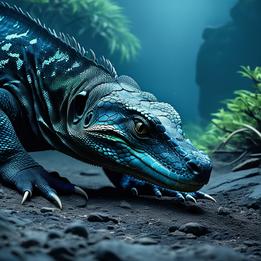
Komodo Dragon
The Komodo dragon embodies fearlessness, primal instincts, and the power of nature untamed.
Komodo Dragon Dream Meaning
The Komodo dragon embodies fearlessness, primal instincts, and the power of nature untamed.
Interpretive Themes
Mythological Resonance
Ora
IndonesianIn local folklore, the Komodo dragon is called 'Ora,' a revered earth dragon believed to be the ancestor of the islands, embodying ancient power and territorial sovereignty.
Python
GreekLike the primordial serpent Python who guarded Delphi, the Komodo dragon represents the raw, untamed earth power that must be respected rather than conquered.
Cultural Lenses
Jungian Perspective
View Context →Represents a confrontation with the instinctual part of the self. Involved in the exploration of fears and primal instincts through dreams. Helps in facing one's shadows and embracing inner strength.
Historical Authorities
Want a deeper analysis?
Get a personalized interpretation of your entire dream including this symbol.
Interpret My DreamThe Oracle's Prediction
Combine multiple symbolsYou will face a significant test of authority or leadership in your professional sphere.
Timeframe
Seasonal (~3 Months)
Intensity
Deep
A situation requiring fierce boundaries may arise, where passivity could lead to being undermined.
Timeframe
Lunation (~29 Days)
Intensity
Deep
Common Appearances & Contexts
| Context | Emotion | Interpretation |
|---|---|---|
| Context Hiding from a Komodo dragon | Emotion Fear | Interpretation Signifies feelings of vulnerability and being threatened. |
| Context Respectfully observing a Komodo dragon | Emotion Respect | Interpretation Reflects the acknowledgment of one's own power and the challenges ahead. |
Interpret Your Full Dream
Beyond this symbol, every dream carries a unique story. Share your dream for a personalized AI-powered interpretation.