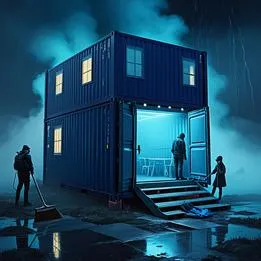
Household Dream Meaning
Represents the self, family dynamics, and personal psychological structure. It's a container for identity and relationships.
Common Appearances & Contexts
| Context | Emotion | Interpretation |
|---|---|---|
| Exploring new rooms | Curiosity | Discovering hidden aspects. |
| House on fire | Panic | Core self under threat. |
| Locked out | Frustration | Excluded from own psyche. |
| Cleaning house | Determination | Organizing thoughts, purging baggage. |
| Childhood home | Longing | Nostalgia, unresolved past. |
| Strangers inside | Violation | Boundaries being crossed. |
| Building a house | Hope | Constructing new identity. |
| Abandoned house | Loss | Neglected parts of self. |
| Moving houses | Transition | Life phase change. |
| Perfectly organized house | Control | Rigid self-management. |
| House collapsing | Despair | Identity crisis. |
| Guests arriving | Anticipation | New influences entering. |
Interpretive Themes
Self-Identity
highRooms represent different aspects of self.
Family Dynamics
highConflict or harmony within the unit.
Security & Vulnerability
mediumDoors, locks, and boundaries matter.
Memory & Nostalgia
mediumOften linked to childhood homes.
Order & Chaos
lowCleanliness reflects mental state.
Cultural Lenses
Global/Universal Perspective
View Context →Nearly universal symbol for family unit and personal sanctuary. Historically tied to hearth and protection, now represents privacy, consumer identity, and digital home spaces.
Jungian Perspective
View Context →The house represents the Self. Different rooms are aspects of the psyche (attic=conscious mind, basement=unconscious). Exploring it is individuation.
Freudian Perspective
View Context →Symbolizes the body and family dynamics. Rooms often represent sexual or developmental stages. Household objects may be phallic or womb symbols.
Gestalt Perspective
View Context →The dreamer IS the house. Every part represents a projected aspect of self. Interpretation focuses on ownership and relationship to each element.
Cognitive Perspective
View Context →Reflects schemas about safety, family, and order. May process daily concerns about domestic life, security threats, or social belonging through metaphor.
Evolutionary Perspective
View Context →Rooted in need for secure shelter for survival and reproduction. Modern dreams tap into ancient neural pathways about territory, kinship, and predator protection.
East Asian Perspective
View Context →In Confucian tradition, represents family hierarchy and ancestral continuity. Feng shui principles may appear, with layout affecting dreamer's qi (energy flow).
South Asian Perspective
View Context →Often tied to concepts of dharma (duty) within family roles. Joint family structures may appear. The threshold holds ritual importance for blessings.
Middle Eastern Perspective
View Context →Strongly associated with hospitality and family honor. Courtyard dreams may reflect public/private self divisions. Historical nomadic traditions contrast with settled home symbolism.
European Perspective
View Context →Varies from Nordic emphasis on hearth warmth to Mediterranean patio socializing. Castle dreams may tap into feudal heritage of protection and social status.
African Perspective
View Context →Often extends to compound including ancestors. The hearth is sacred space. In many traditions, dreams of house construction require ritual consultation.
North American Perspective
View Context →Heavily influenced by frontier mythology of homesteading. Modern dreams often feature suburban ideals, mortgage stress, or smart home technology anxieties.
Interpret Your Full Dream
Beyond this symbol, every dream carries a unique story. Share your dream for a personalized AI-powered interpretation.